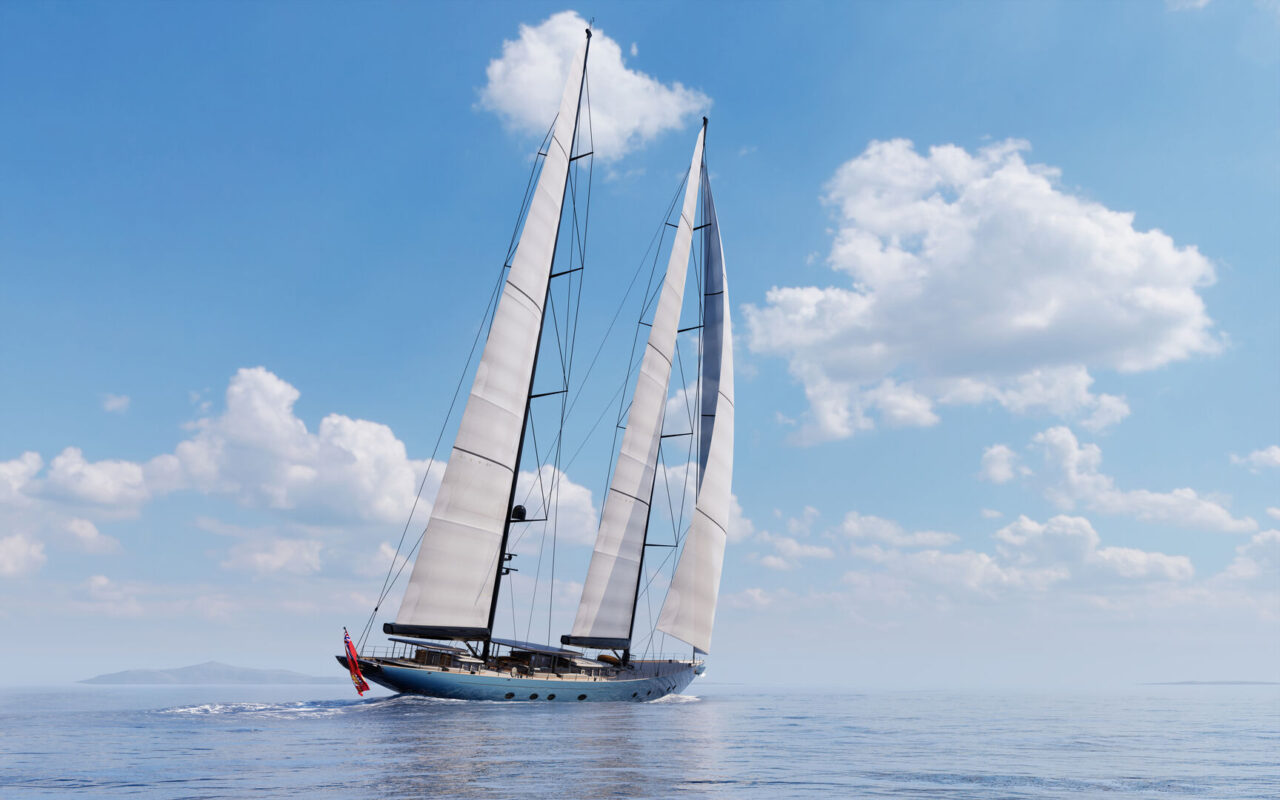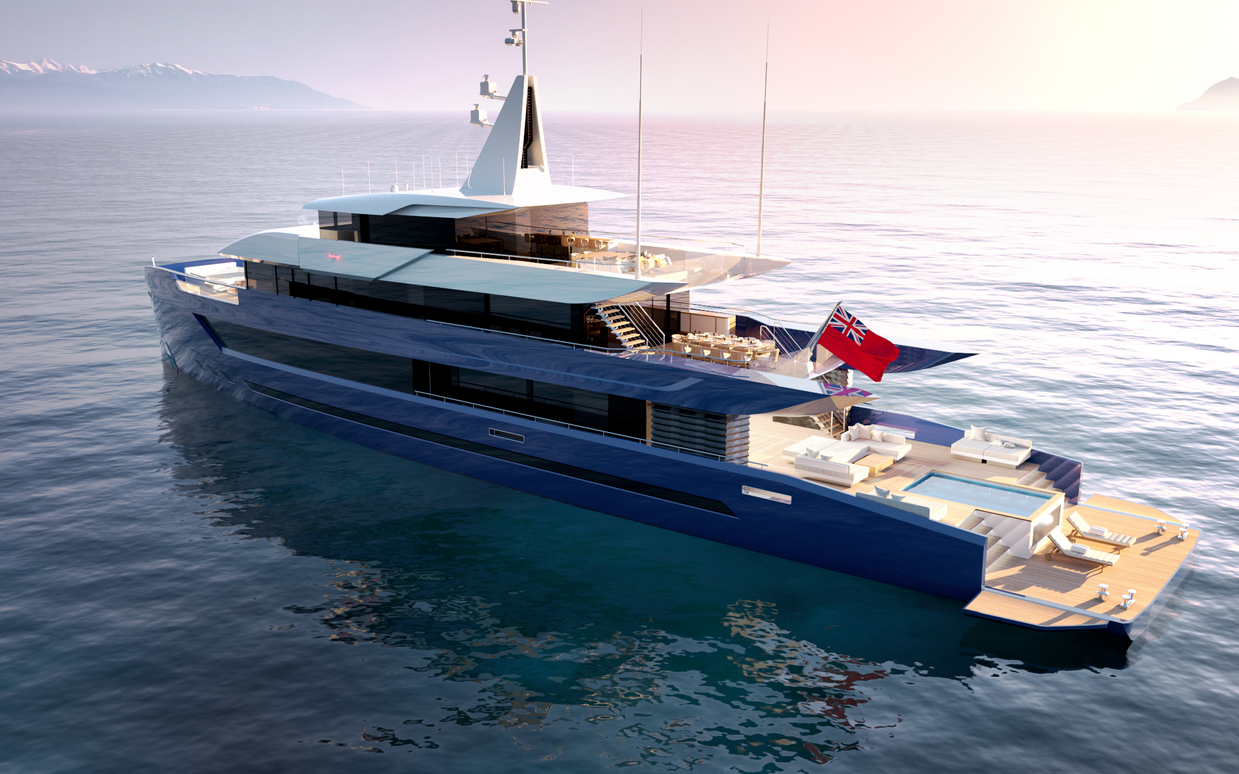
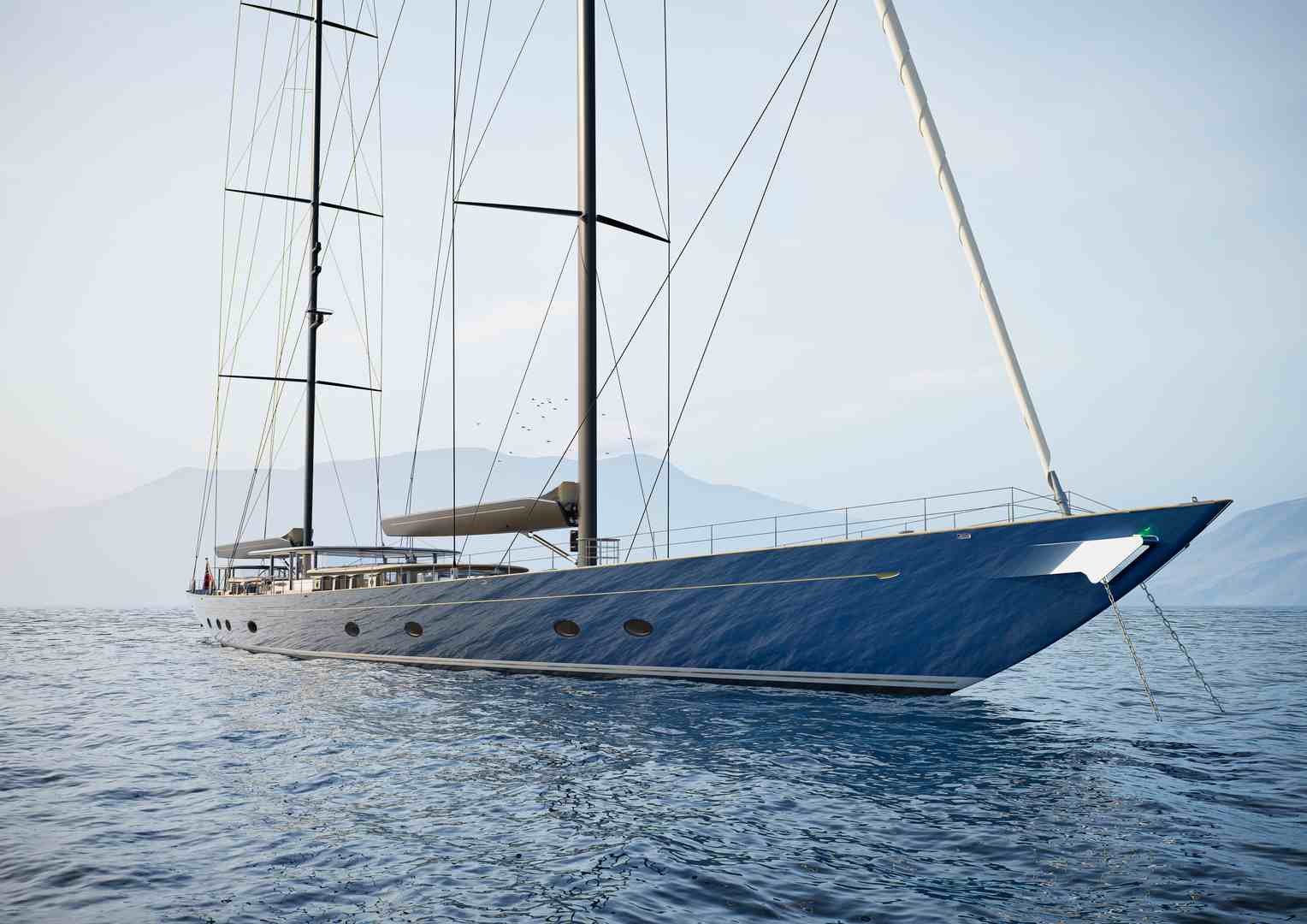
New renderings of the 69-metre sailing yacht Project Zero have revealed one of the most ambitious sustainability projects ever attempted in the superyacht industry ahead of the vessel’s scheduled launch later this summer.
Developed over six years by Dutch studio Vripack together with naval specialists Dykstra Naval Architects, the yacht takes an unconventional approach to sustainable yachting – focusing not only on reducing energy consumption but generating energy onboard.
According to the designers, Project Zero can operate for up to two weeks using only renewable energy sources without relying on fossil fuels.
A Superyacht Designed Around Energy Generation
Rather than treating renewable systems as supplementary technology, Project Zero was designed from the beginning around onboard energy production.
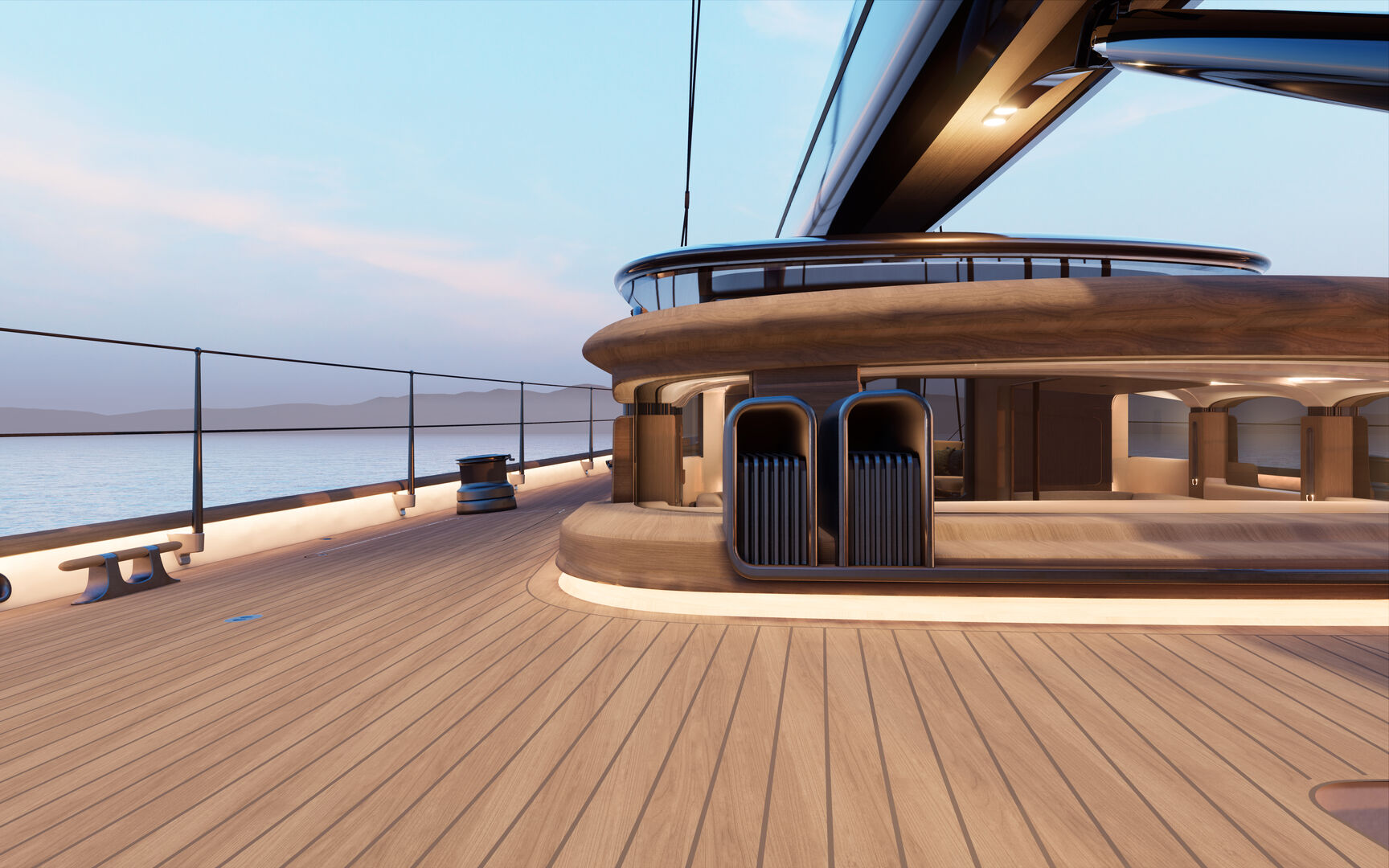
The yacht combines regenerative turbine propellers capable of producing electricity while sailing with more than 100 square metres of photovoltaic thermal panels integrated into the vessel’s bimini structures.
These solar installations generate both electrical and thermal energy, powering onboard systems while contributing to heating and cooling requirements.
This energy-focused philosophy fundamentally shaped the yacht’s engineering and layout.
Traditional Sailing Inspiration Meets Custom Design
While the yacht embraces advanced technology, Project Zero was also designed to reflect its owners’ appreciation for classic sailing yachts.
Exterior details include a spoon-shaped bow, matte-finished deck hardware, sculpted stern sections and a distinctive metallic blue hull finished with a feather-inspired stripe.
The design references the black-browed albatross, which became a major source of inspiration throughout the project.
Custom solutions continue throughout the yacht, with electrically operated cockpit windows allowing exterior spaces to transform into enclosed lounges at the touch of a button.
Interiors Focus on Natural Materials and Long-Term Living
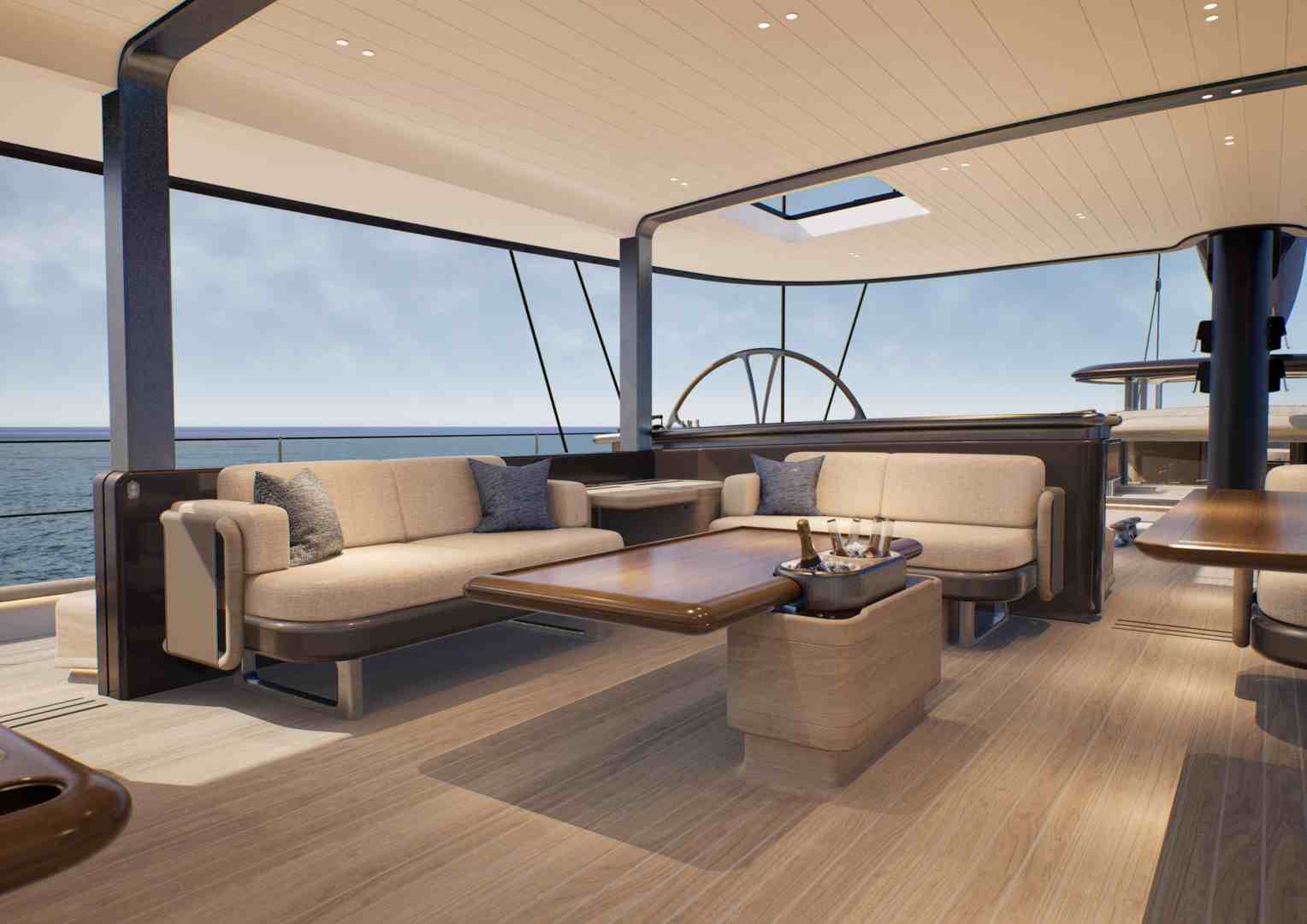
Inside, Project Zero rejects traditional high-gloss superyacht interiors in favor of tactile materials and natural finishes.
Smoked European oak, reclaimed bark materials, leathered stone surfaces and hand-selected veneers dominate the spaces.
Natural imperfections including knots, grain variations and cracks were intentionally preserved rather than hidden.
Curved architectural forms create continuity throughout the yacht, with furniture, lighting and structural elements designed around flowing shapes and rounded transitions.
The main saloon includes a flexible dining table that converts into a craft and puzzle table – reflecting how the owners expect to spend extended periods onboard.
Designed for Extended Voyages and Remote Living
Accommodation onboard includes four personalized staterooms inspired by locations important to the owners, ranging from Italy to French Polynesia.
The owner’s suite is centered around the mizzen mast, which features bespoke artwork created by American sculptor Sienna Martz.
A dedicated office space was also incorporated to support remote working during long voyages.
Behind the scenes, designers removed the traditional full-beam engine room entirely and replaced it with concealed service corridors that allow crew members to move discreetly without disturbing guests.
Performance Gains Through America’s Cup Technology
Project Zero’s performance also benefited from collaboration with Emirates Team New Zealand.
Advanced computational fluid dynamics testing reportedly produced a hull shape capable of increasing sailing performance by approximately 2.5 percent.
At the same time, designers say the optimized shape increases electric power generation by around eight percent.
Currently under construction at Vitters Shipyard, Project Zero is scheduled to launch during summer 2026.