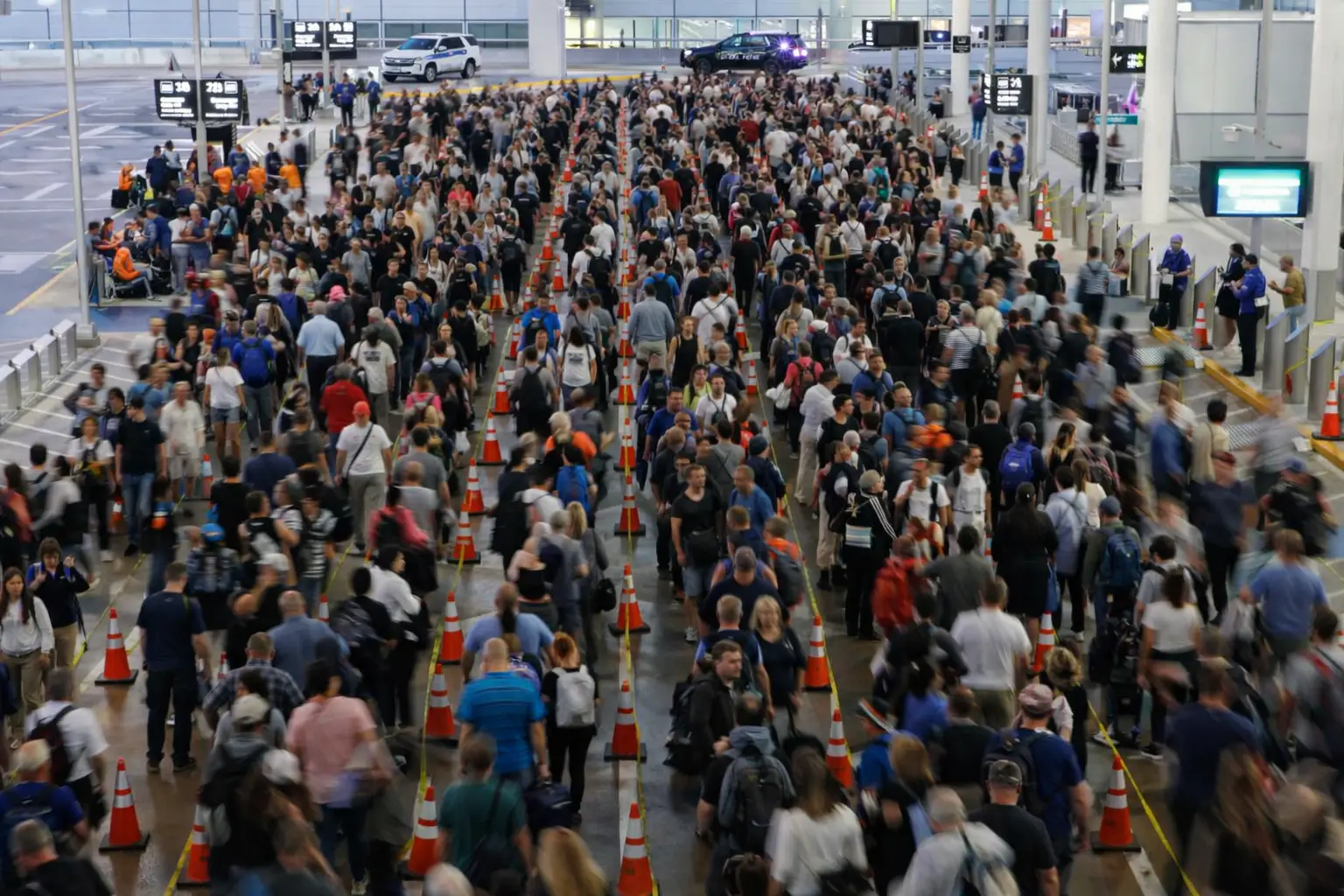
Travel disruption across the United States is continuing into the new week, as the aviation system struggles to recover from a chaotic Easter weekend that saw tens of thousands of delays nationwide.
On April 6, more than 13,000 flight delays were recorded globally, with over 800 affecting flights within, into, or out of the United States. While significantly lower than the peak of nearly 11,000 delays on Easter Sunday alone, the figures show that the system remains under pressure.
The disruption follows several days of intense travel demand and severe weather. In the lead-up to Easter, more than 15,000 delays were recorded on both Thursday and Friday, with an additional 5,600 on Saturday, creating a backlog that continues to ripple across airline schedules.
Major travel hubs are still experiencing instability. Airports in the New York region – including JFK, LaGuardia, and Newark – remain among the most affected, alongside Washington DC and San Francisco. These locations are particularly sensitive to congestion, where even small disruptions can trigger widespread delays.
The underlying causes remain largely unchanged. Volatile weather continues to impact key flight corridors, with low clouds and storm activity forcing capacity reductions. At the same time, aircraft and crews are still out of position following the weekend surge, creating a cascading effect that delays flights throughout the day.
Operational strain is also being compounded by staffing challenges. The Transportation Security Administration has lost nearly 500 workers during the ongoing partial government shutdown, adding pressure to airport operations even as passenger volumes remain high.
The combination of peak travel demand, weather disruption, and system congestion has left airports operating with little margin for recovery. Once delays begin in the morning, they can quickly spread across the network, affecting flights well into the evening.
For travellers, the situation means continued uncertainty. While widespread cancellations have eased compared to the weekend, delays remain frequent, particularly on routes connecting through major hubs such as New York, Chicago, and Miami.
Passengers are being advised to allow extra time at airports, monitor flight updates closely, and avoid tight connections where possible. Early departures may offer the best chance of avoiding delays, as disruption tends to build throughout the day.
As the spring travel season continues, the events of the past few days highlight how quickly pressure can build across the US aviation system – and how long it can take to fully recover once it does.