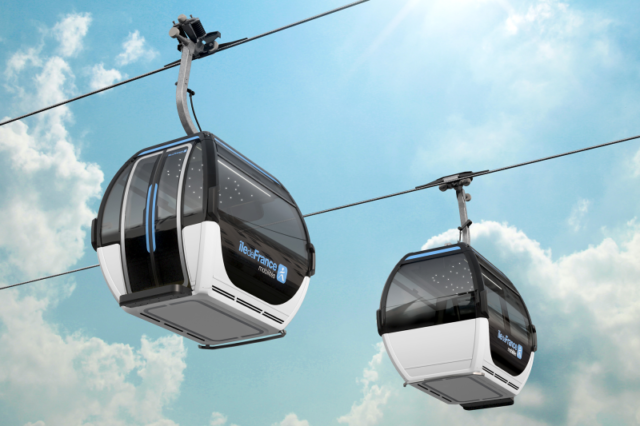
Paris has officially launched Paris Téléphérique, an ambitious urban transport project that has been in development for 17 years and is already being described as a landmark moment for public mobility in the French capital. Known as Line C1, the new cable car is now the longest urban cable line in Europe, designed not as a tourist attraction but as a fully integrated part of the metropolitan transport network.
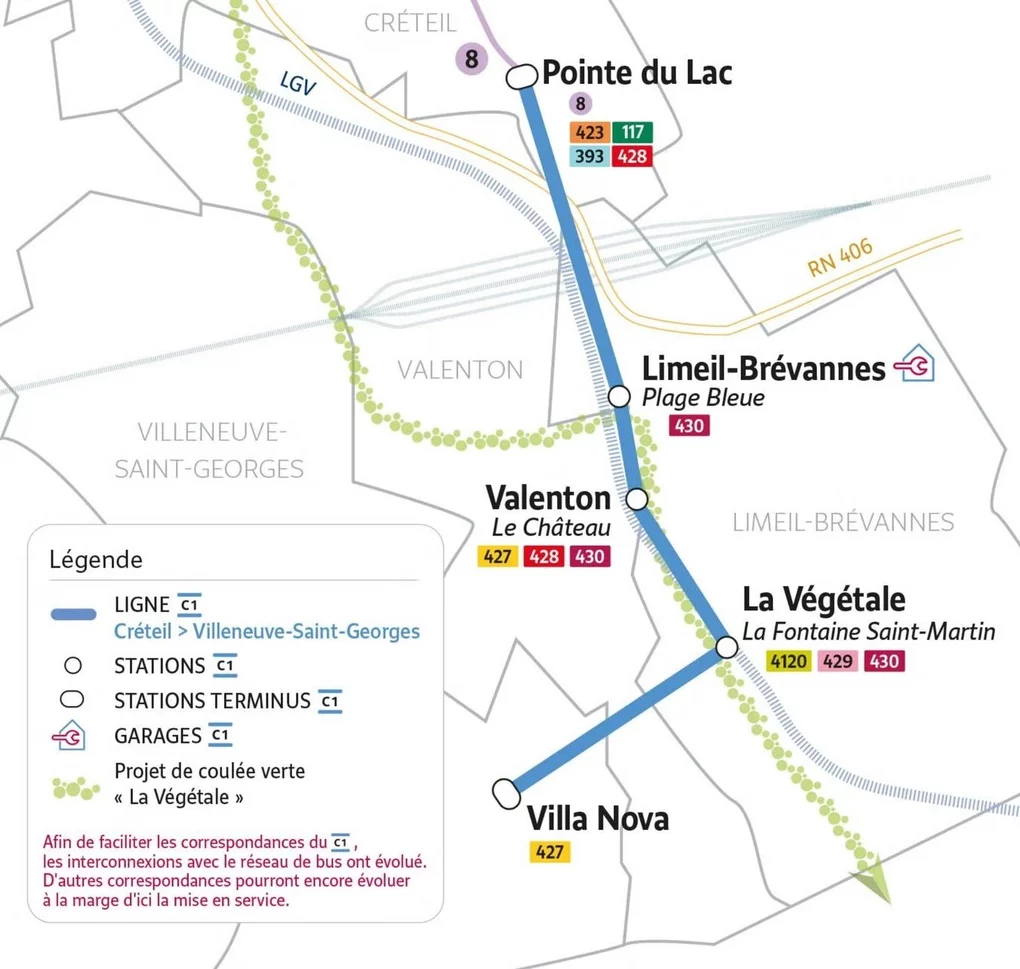
The line connects the southeastern suburb of Villeneuve-Saint-Georges with Créteil, where passengers can transfer directly to Metro Line 8. For residents of these outer districts, the opening represents a structural improvement to daily life, addressing long-standing issues of weak and unreliable transport links to the wider Paris region.
The route stretches 4.5 kilometres and takes approximately 18 minutes end to end. By comparison, a similar journey by bus can take twice as long, particularly during peak traffic hours. Suspended above roads, housing estates, and green spaces, the cable car bypasses congestion entirely, offering a level of reliability that traditional surface transport has struggled to achieve in this part of the metropolitan area.
Paris Téléphérique operates with 105 gondolas, each accommodating up to 10 passengers. During busy periods, cabins arrive every 23 to 37 seconds, creating a steady, high-capacity flow rather than the stop-start rhythm typical of buses. Transport authorities estimate that more than 11,000 passengers will use the line each day, primarily commuters travelling to work, education, and local services.
Accessibility has been built into the system from the outset. The gondolas are fully adapted for passengers using wheelchairs, as well as for those travelling with prams or bicycles. Level boarding eliminates the need for steps, and the cabin layout prioritises ease of movement rather than maximising seating density. For many residents, particularly those with reduced mobility, this marks a rare example of infrastructure that removes barriers rather than adding workarounds.
Operating hours align closely with the wider Paris transport network. The cable car runs daily from 05:30 to 23:30, with extended service until 00:30 on Saturdays. This schedule allows it to function as a genuine everyday transport option rather than a limited-hours supplement, covering early-morning commutes as well as late evening returns.
Ticketing has been fully integrated into the city’s fare system. Holders of the Navigo travel pass can use Paris Téléphérique at no additional cost. For occasional users, a single journey costs 2 euros, matching the standard public transport fare in Paris. Tickets can be purchased from machines at the cable car stations or by using existing Navigo cards, reinforcing the message that this is public transport in the conventional sense, not a premium or novelty service.
The total cost of the project reached 138 million euros. City and regional authorities have consistently framed the investment as a faster and more environmentally sustainable alternative to extending metro lines or building new tram corridors. Cable cars require far less excavation, generate lower construction disruption, and produce a smaller carbon footprint, particularly in densely built or geographically constrained areas.
The project also reflects a broader shift in how major cities think about mobility in peripheral neighbourhoods. While central Paris benefits from an exceptionally dense metro network, outer suburbs have often relied on slow, indirect bus routes. By introducing a mode of transport that is both rapid and resilient to road conditions, Paris Téléphérique challenges the assumption that high-quality transit must always run underground or on rails.
From an urban planning perspective, the line is also significant for its visual and spatial impact. Unlike heavy infrastructure, the cable car’s footprint on the ground is relatively light, limited mainly to stations and pylons. This has allowed it to be inserted into existing neighbourhoods with fewer demolitions and less permanent alteration of the urban fabric, a factor that helped overcome political and community resistance during the long approval process.
The launch of Line C1 fits into Paris’s wider strategy to reduce car dependency, cut emissions, and rebalance mobility between the city centre and its suburbs. If passenger numbers meet expectations, officials have indicated that similar cable car projects could be considered elsewhere in the Île-de-France region, particularly in areas where traditional rail solutions are either too costly or technically complex.
For now, the impact is most tangible at street level in southeastern Paris. What was once a slow and fragmented commute has become a predictable, uninterrupted journey above traffic. After nearly two decades of planning and construction, Paris Téléphérique has moved from concept to everyday reality, reshaping how thousands of residents navigate the city each day.