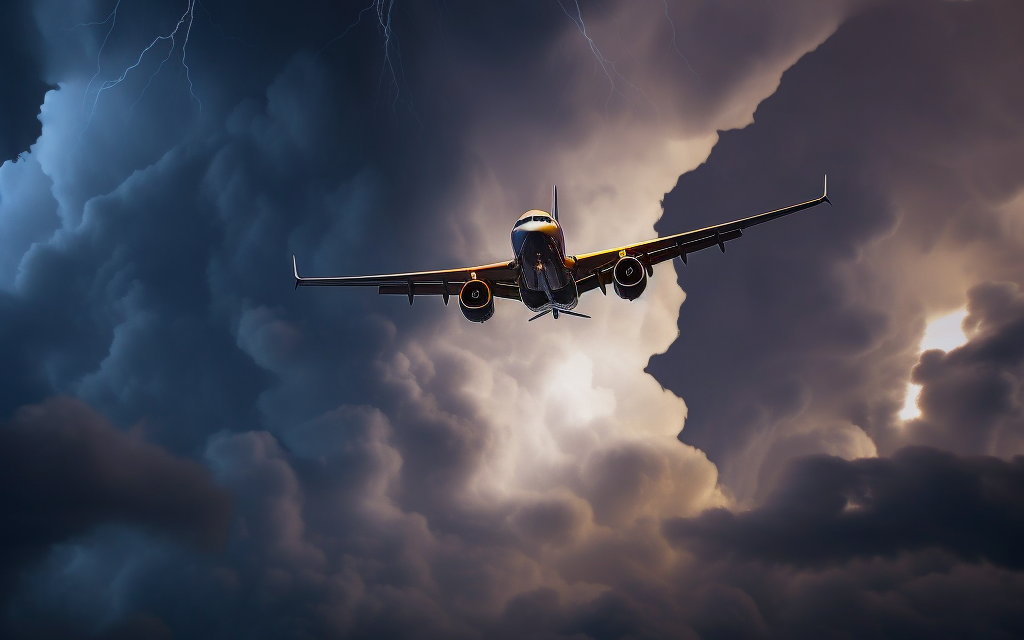
The world’s flight routes and airports with the worst turbulence during descent and landing in 2025 have been published in the annual ranking by aviation data service Turbli. The data is based on information provided by the National Oceanic and Atmospheric Administration (NOAA) and the UK’s Met Office.
Experts note that turbulence is caused by changes in atmospheric conditions, jet streams and weather patterns, and is also influenced by mountainous terrain and surface features where air temperature can shift rapidly, creating vortices and sudden air movements. It is therefore unsurprising that many of the routes on the list are located near mountain ranges.
In total, analysts compared around 10,000 routes connecting 550 of the world’s largest airports. The routes were ranked using a “turbulence dissipation rate” metric, ranging from weak to extreme.
The most turbulent flight route in the world in 2025 was the service between Mendoza and Santiago, a 196-kilometre journey crossing the rugged peaks of the Andes. The second most turbulent route was between Xining and Yinchuan in north-western China, covering a distance of 443 kilometres.
Five of the ten most turbulent routes in 2025 are located in Asia, primarily in China, the report notes.
All of the top ten routes were short- or medium-haul flights. The most turbulent long-haul route in the world was identified as the flight between Avarua and Sydney.
The world’s 10 most turbulent flight routes in 2025, according to Turbli:
Mendoza – Santiago
Xining – Yinchuan
Chengdu – Xining
Córdoba – Santiago
Santa Cruz de la Sierra – Santiago
Chengdu – Lanzhou
Mendoza – Salta
Chengdu – Yinchuan
Xining – Lhasa
Denver – Jackson
Turbli also identified the most turbulent routes by continent:
North America: Denver – Jackson
South America: Mendoza – Santiago
Europe: Nice – Geneva
Asia: Xining – Yinchuan
Africa: Durban – Johannesburg
Oceania: Christchurch – Wellington