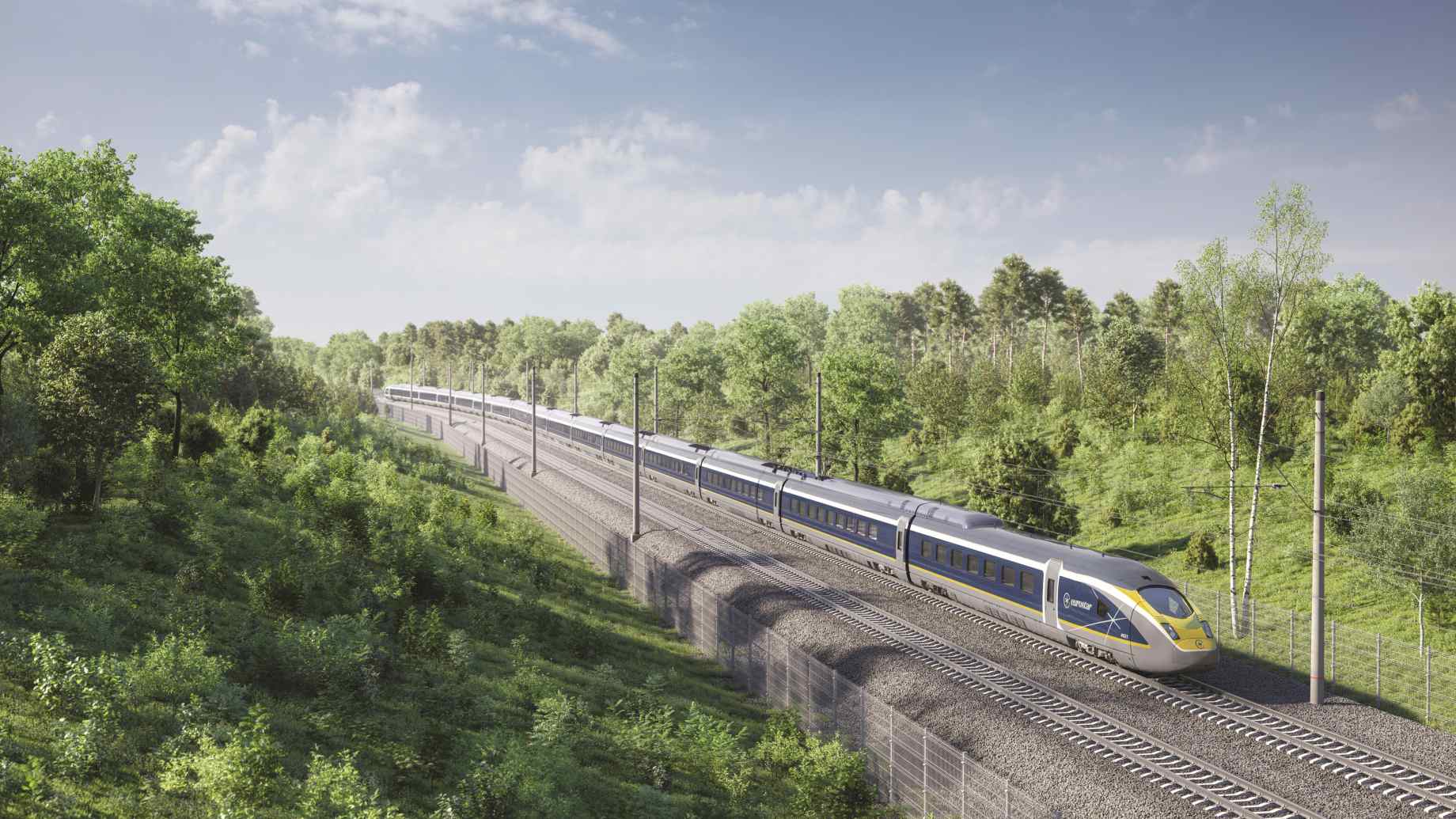
Eurostar has upgraded its next-generation train order to ensure the new fleet can withstand temperatures of up to 55°C, as Europe experiences increasingly frequent and intense heatwaves.
The international rail operator has amended its contract with French manufacturer Alstom, requiring the onboard systems of its new double-decker Celestia trains to operate reliably in conditions comparable to those found in the Sahara Desert.
Designed for a Hotter Future
The original €2 billion order for 50 Celestia trains, announced in October last year, specified air conditioning capable of keeping passengers comfortable in temperatures of up to 45°C. Under the revised agreement, the trains must now function in temperatures reaching 55°C.
Eurostar Chief Executive Gwendoline Cazenave said the additional investment was justified given the long-term nature of the fleet. The first trains are expected to enter service in 2031 and remain in operation for around 30 years, by which time climate projections suggest parts of Europe could experience temperatures similar to those currently seen in North Africa and the Arabian Peninsula.
“Sahara Option” Introduced
The revised specifications, internally referred to as the “Sahara option,” include more powerful air-conditioning systems, upgraded electronic components and heat-resistant microprocessors designed to continue operating safely during extreme temperatures.
The changes come after Europe experienced another summer of exceptional heat. France recently recorded three of its hottest days on record, with temperatures exceeding 40°C across more than 40% of the country. The town of Pissos, near Bordeaux, reached 44.3°C, while heat-related deaths increased significantly.
Heat Already Affecting Rail Operations
Extreme temperatures have already disrupted Eurostar services. Around one in ten trains was affected during the recent heatwave due to equipment failures and operational issues.
In one incident in Belgium, passengers were left stranded for more than two hours aboard a disabled Eurostar train without air conditioning during extreme heat. Several people reportedly became unwell before emergency services arrived.
The investment reflects the growing challenge climate change poses for Europe’s transport infrastructure, with rail operators increasingly adapting rolling stock and networks to cope with more frequent periods of extreme weather.