A new global walkability index from Skyscanner has identified the top 10 walkable cities that travellers should explore on foot in 2026. Using flight demand to filter out 30 rising destinations beyond the usual hotspots, the study evaluated 14 data points ranging from distance between major attractions to elevation, safety, pollution, walking trails, air quality and population density.
The result is a curated list of cities that are not only rich in character, culture, and scenery, but also genuinely walkable, comfortable to explore, and well-suited to travelers seeking slower-paced, immersive city breaks.
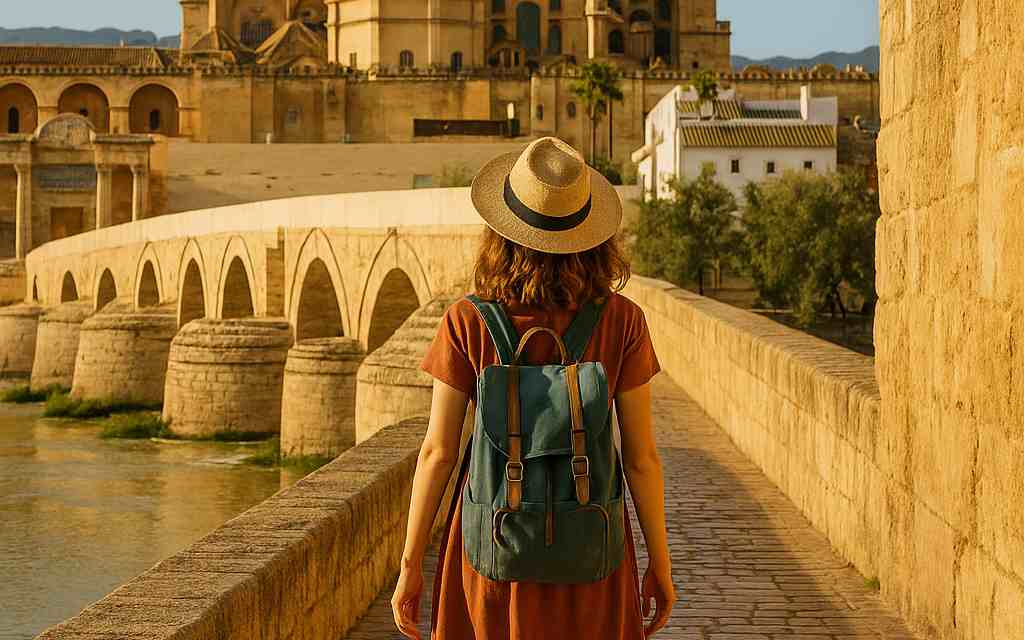
Córdoba in southern Spain tops the ranking with its compact, UNESCO-listed Old Town, winding streets, and iconic Mezquita. Visitors can walk between major attractions in just 26 minutes, covering just 2,730 steps. With 29 walking trails and some of the shortest distances of any city in the index, Cordoba stands out as an effortless city for on-foot exploration.
Japan claims two places on the list. Nagasaki impresses with its low crime rate, gentle elevation and 531 attractions, from the poignant Atomic Bomb Museum to Dejima and Peace Park. Hiroshima offers another highly walkable experience, taking only 41 minutes and 3,959 steps to cover its major cultural landmarks, including the Peace Memorial Park and Okonomimura food hall.
Reggio Calabria in southern Italy emerges as one of the most compact destinations, with only 2,321 steps needed to reach its waterfront, the Rabarama statue and the National Archaeological Museum. Monte Carlo follows with its famously small footprint of just 0.44 square kilometres, though visitors should be prepared for steep hills as they explore the principality’s museums, harbour and casino district.
Tartu, Estonia’s cultural capital and European Capital of Culture 2024, earns its place thanks to excellent sustainability credentials, low pollution and a charming Old Town filled with parks, river walks and museums. Bursa in northwest Türkiye offers a different kind of walkability, blending Ottoman heritage with low population density and over 400 attractions.
Bolzano, set in a valley surrounded by vineyards and close to the Dolomites, features strong safety scores and an impressive 505 walking trails. Sarajevo, with its riverside scenery, compact historic centre and low population density, takes only 22 minutes to navigate between major attractions such as the Bascarsija bazaar and the Latin Bridge.
Rounding out the top ten is Victoria, British Columbia, one of Canada’s most picturesque cities, known for its Victorian architecture and exceptional air quality. With 457 walking trails and compact city limits, it offers one of the richest walking environments in North America.
Together, these destinations highlight a growing trend: travellers in 2026 are leaning toward cities where they can slow down, explore at ground level and experience culture, cuisine and history without ever stepping into a car or metro.