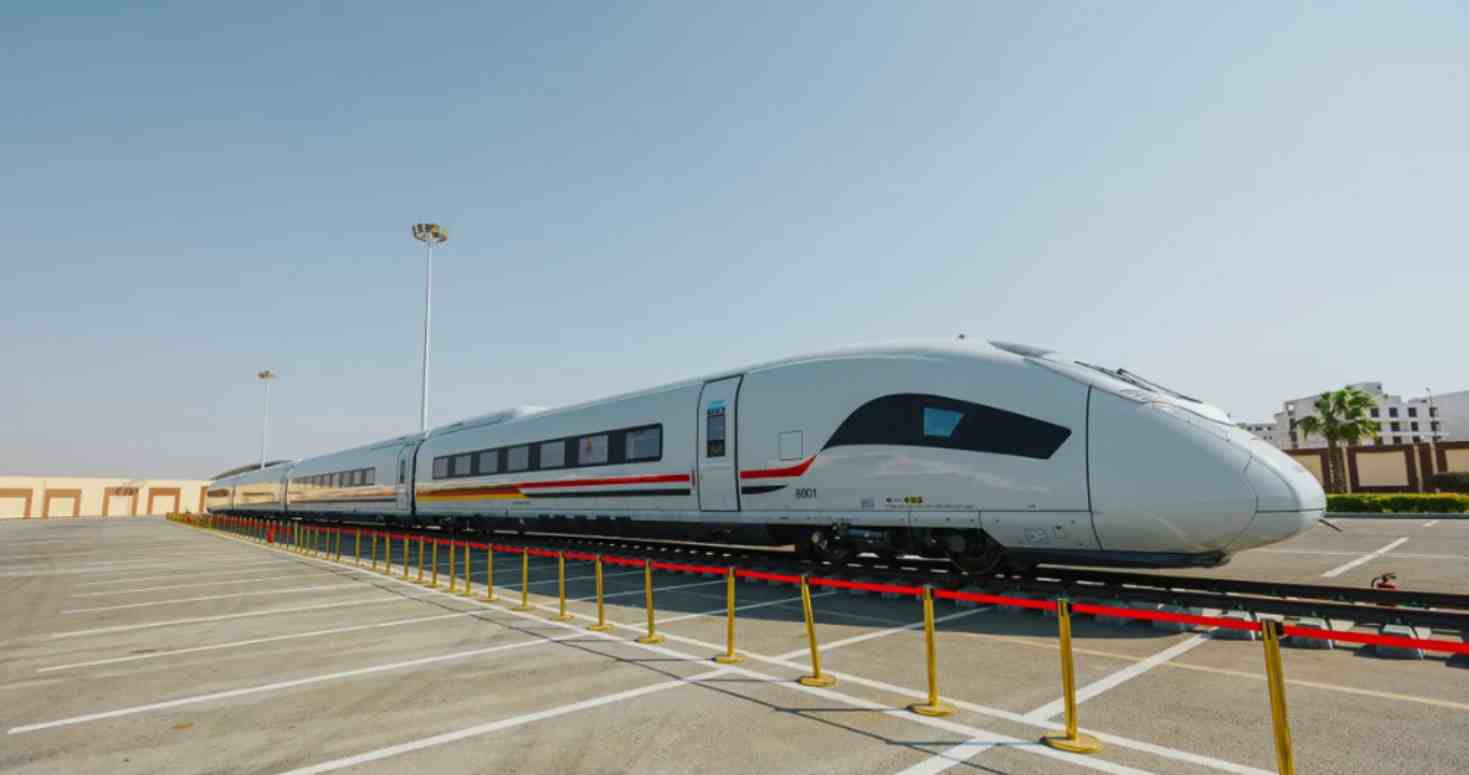
Egypt has taken a significant step toward building one of Africa’s largest and fastest rail networks, unveiling its first Siemens Velaro high-speed trains at TransMEA 2025 in New Cairo. The 250 km/h units mark the beginning of a new era in national transport as 41 trains are set to run across the country’s planned 2,000-kilometre system.
The high-speed network will eventually stretch across three major lines connecting nearly 90 percent of Egypt’s population. The first corridor links Ain Sokhna to Cairo, Alexandria, and Marsa Matrouh, creating a direct east-west route across the country. Future phases will extend through Upper Egypt, tying the Greater Cairo region to Aswan, and linking Luxor with Safaga via Hurghada. The network is designed to cut long-distance travel times by up to half, reshaping both passenger mobility and freight logistics.
Siemens built the Velaro fleet in Germany, adapting the units for Egypt’s harsh desert environment. Each train can carry 489 passengers and incorporates enhanced cooling and filtration systems to handle heat, dust, and sand. The rollout follows a multibillion-dollar agreement signed in 2021, which set the foundation for Egypt’s transformation of its national rail infrastructure.
Alongside the Velaro debut, Siemens completed the first test run of its 160 km/h Desiro High-Capacity regional train near the 6th of October Dry Port. The dry port, with room for 260,000 containers and five rail lines, sits on the developing Green Line—an ambitious 660-kilometre freight corridor known as the “Suez Canal on Rails” for its role in accelerating cargo flows between the Red Sea and the Mediterranean. Siemens says Egypt’s freight capacity will rise by more than 40 percent once the network is fully operational.
Transport minister Lieutenant General Kamel El-Wazir says the trial run represents a milestone in Egypt’s broader modernisation strategy, which includes metro expansions, the creation of new cities such as the New Administrative Capital, and nationwide infrastructure upgrades.
Egypt’s progress fits into a wider push for modern rail across Africa. Morocco currently operates the continent’s fastest service at 320 km/h, while Nigeria is moving ahead with plans for a 4,000-kilometre high-speed line between Lagos and Port Harcourt. The African Union’s Agenda 2063 also outlines future cross-border high-speed corridors aimed at boosting trade and cutting transport costs.
By pairing long-distance passenger routes with major freight lines, Egypt is positioning its high-speed rail project as one of the continent’s most transformative infrastructure undertakings, designed to connect more cities, move millions faster, and strengthen regional economic mobility.