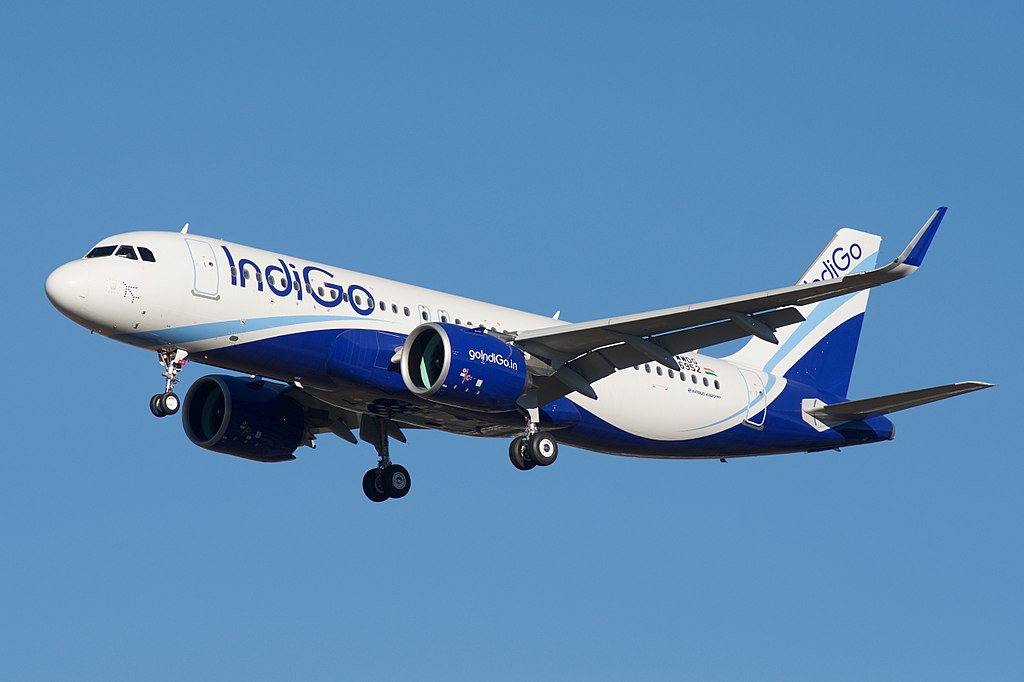
IndiGo will suspend its direct services to Manchester from 31 August 2026, ending the route just over a year after launch and leaving Manchester without any direct connections to India.
The decision highlights mounting pressure facing long-haul operators as geopolitical disruptions, higher fuel prices and extended flight times continue affecting international networks.
The route closure also marks an early setback in IndiGo’s ambitions to rapidly expand its European footprint before the arrival of its own long-haul fleet.
Manchester loses direct connectivity to India
IndiGo launched Manchester services in July 2025 using leased Boeing 787-9 aircraft.
The airline currently operates three weekly flights from Delhi and four weekly flights from Mumbai to Manchester.
Once operations cease at the end of August, Manchester Airport will no longer have direct scheduled passenger services connecting it with Indian cities.
The move affects one of the UK’s largest regional airports, which has increasingly focused on expanding long-haul connectivity outside London.
Middle East disruptions and costs force route rethink
According to IndiGo, the suspension stems primarily from prolonged airspace restrictions and rapidly rising operational costs.
The airline pointed to multiple factors driving the decision, including:
- Extended flight times caused by international airspace restrictions
- Higher aviation turbine fuel costs
- Geopolitical instability across the Middle East
- Foreign exchange volatility increasing operating expenses
These pressures have made operating costs significantly higher than initially expected when the route was launched.
The carrier specifically highlighted ongoing international airspace constraints as a major challenge, forcing longer routings and increasing both fuel consumption and crew costs.
Leased Dreamliner fleet reduced as IndiGo adjusts strategy
Alongside the Manchester withdrawal, IndiGo will also return one leased Boeing 787-9 Dreamliner to lessor Norse Atlantic Airways.
The airline had previously leased six Dreamliners from Norse through damp lease arrangements as part of its accelerated entry into long-haul markets.
The leased aircraft were intended as a temporary solution while IndiGo prepares for deliveries of its future Airbus A350 fleet.
Despite closing the route, IndiGo insists customer demand was strong.
According to the airline, Manchester generated encouraging booking trends, suggesting the withdrawal is more closely tied to cost pressures than weak passenger demand.
European ambitions remain despite Manchester exit
The closure represents one of the first major adjustments to IndiGo’s rapidly expanding international strategy.
Over recent years the carrier has aggressively expanded beyond its traditional short-haul network while positioning itself as a larger global player.
However, the Manchester decision illustrates how difficult long-haul expansion remains even for fast-growing airlines when operating conditions deteriorate quickly.
For now, passengers travelling between Manchester and India will need to rely on one-stop connections through hubs in the Gulf, Europe or elsewhere.