Operations at the international airports of Copenhagen and Oslo were severely disrupted last night after unidentified drones were detected in restricted airspace, forcing hours-long shutdowns and widespread flight delays.
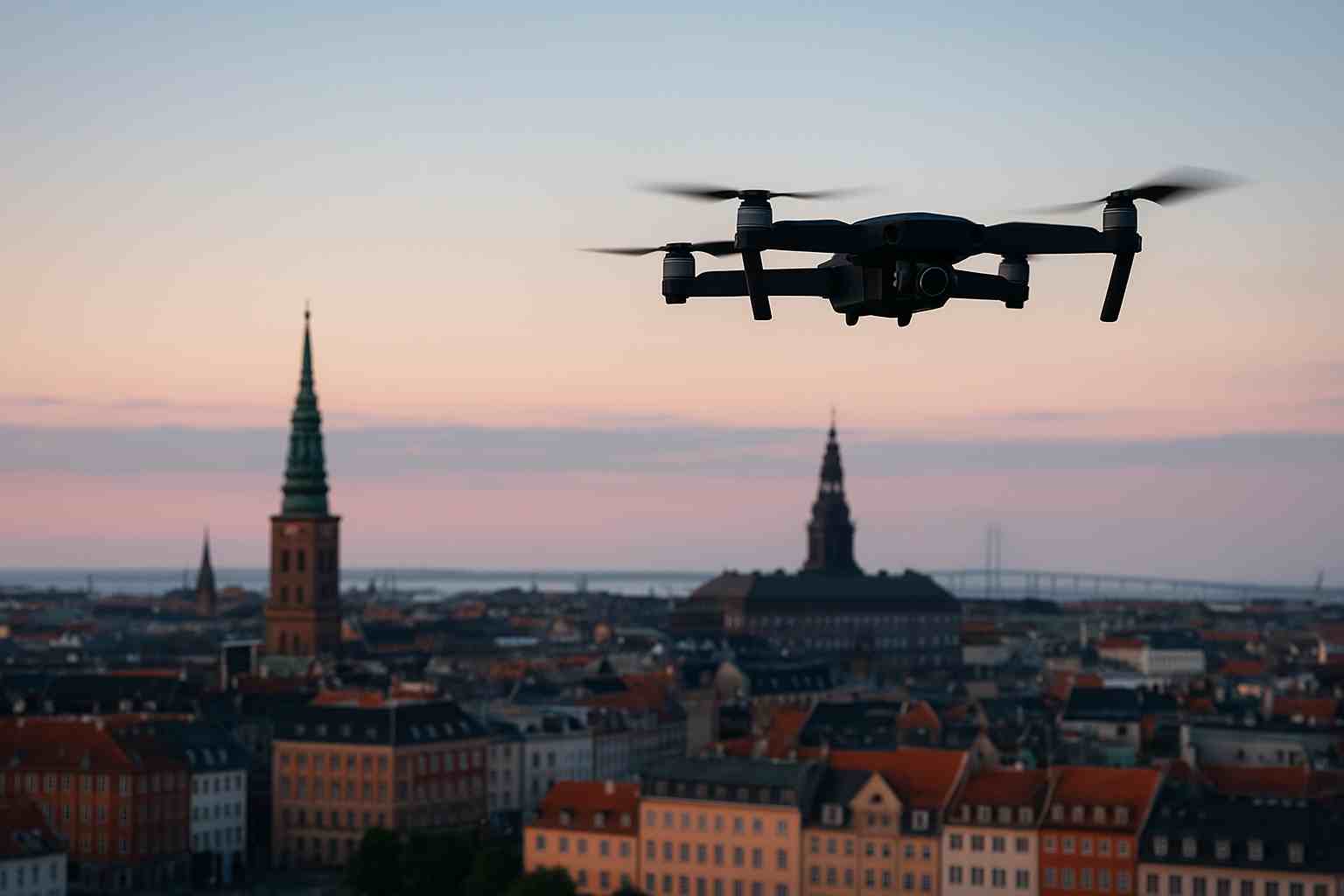
At approximately 20:30 on 22 September, air traffic controllers in Copenhagen reported spotting “two or three drones” near the capital’s airport. Just a few hours later, shortly before midnight, a similar incident occurred at Oslo Airport, where one drone was seen hovering in the vicinity of the runways.
As a precaution, more than 50 flights were diverted, and over 20,000 passengers were affected. No drones were intercepted, and their origin remains unknown.
“This was not the work of hobbyists,” Copenhagen Police lead investigator Jens Jespersen said at a morning press conference. “The number and size of these drones point to a qualified actor. The drones maneuvered with lights turning on and off and along changing flight paths, which indicates advanced operation.”
Danish authorities have gone further, describing the incident as a deliberate act against national infrastructure. The Danish Ministry of Transport stated that the event underscores the vulnerability of airports to drone incursions and announced tighter airspace monitoring in cooperation with NATO partners.
Airports across Scandinavia are now on high alert, with security agencies, military units, and aviation regulators coordinating their response. Investigations are underway to determine whether the incidents in Copenhagen and Oslo were coordinated.
For passengers, the drone disruptions resulted in cascading delays across Europe, with connecting flights affected as far away as Frankfurt, Amsterdam, and London. Aviation experts warn that even a short drone incursion can cause massive economic and logistical consequences, highlighting the urgent need for enhanced counter-drone systems at major European hubs.