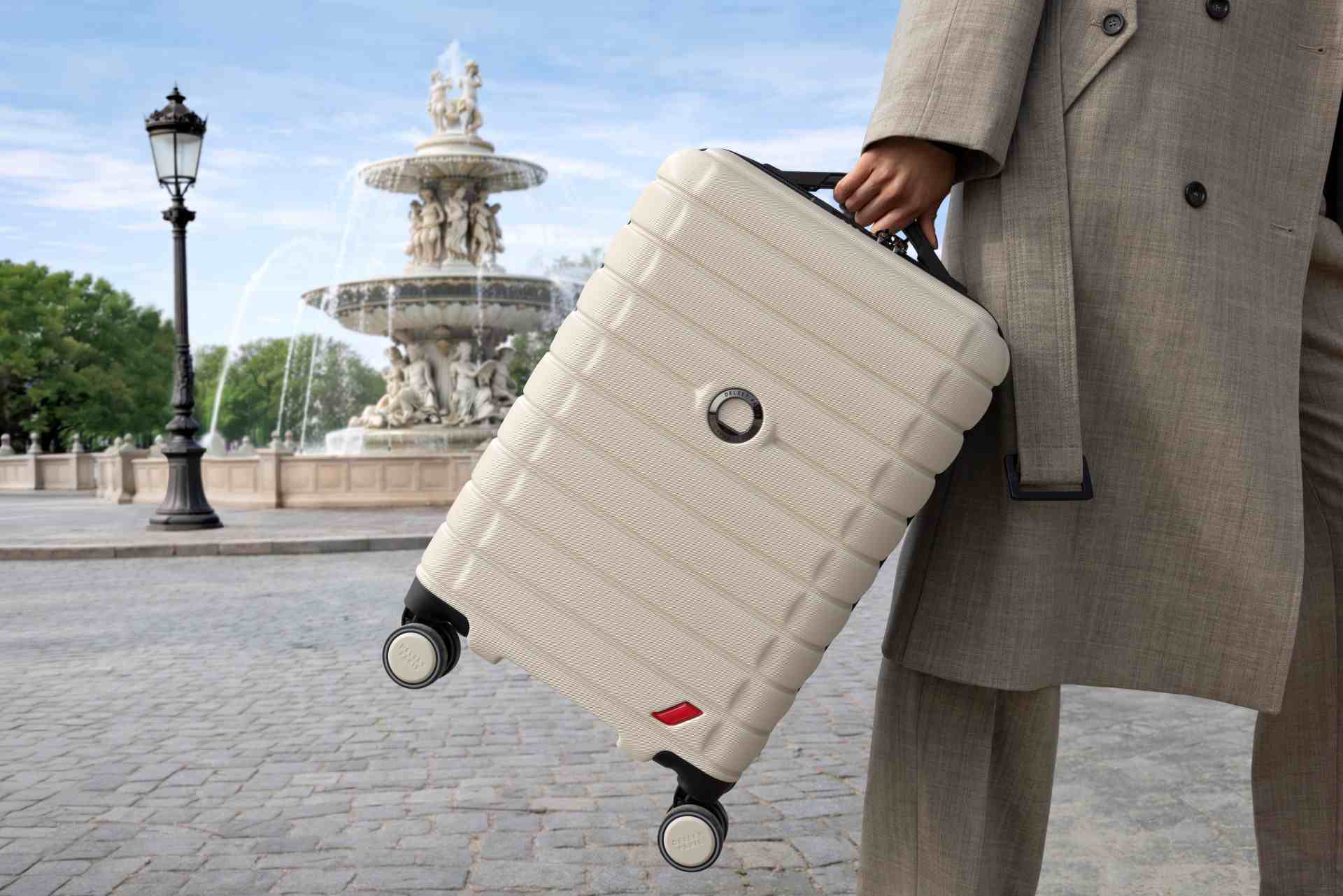
The collection builds on the earlier New Envol and Allure lines and has been designed to reflect what Air France calls the French art of travel. That phrase is doing a lot of work. The real story here is not simply that Air France has new luggage to sell, but that the airline is continuing to position itself as a lifestyle brand rather than just a transport operator – one that wants to remain visible in a traveller’s life from the moment they pack to the moment they arrive.
Air France is not just selling bags – it is selling an airline identity you can carry through the airport
The most interesting angle in this launch is that it reveals how airlines are trying to extend their relevance beyond the aircraft cabin. For a premium carrier like Air France, the product is no longer just the seat, the meal, the lounge or the route network. It is also the wider emotional ecosystem around travel – the objects, rituals and visual cues that shape how a journey feels before the boarding gate and after baggage reclaim.
That is where a collection like Elegance fits in. A suitcase is one of the most visible travel products a passenger owns. It moves through airports, hotels, train stations and city streets. It is photographed, checked, wheeled and lived with in a way that airline seats and amenity kits are not. By putting its name on a luggage line with DELSEY, Air France is effectively trying to place its brand inside the traveller’s journey at a much earlier stage – and keep it there much longer.
This is not just about merchandising. It is about brand extension through habit. If the suitcase, backpack or garment bag becomes part of a traveller’s routine, the airline brand gains a kind of low-level daily visibility that no boarding pass can provide.
The bigger strategy is airline retail, not just luggage design
Luxury and premium airlines have long sold model aircraft, amenity kits, fragrances and occasional collaborations, but the economics and ambition of airline retail are changing. As carriers look for higher-margin ancillary revenue and new ways to deepen customer loyalty, branded products have become more than side projects. They are increasingly part of a broader effort to monetise identity, especially when the airline in question has a strong national or aesthetic signature.
Air France is particularly well positioned for this because its brand has always traded on more than aviation. It draws on ideas of French style, refinement, design and hospitality – qualities that can travel relatively easily into fashion, dining, interiors and luggage. A collaboration with DELSEY makes sense precisely because it sits at the intersection of travel utility and French brand storytelling. The airline does not have to persuade consumers that luggage is relevant to its world. It simply has to persuade them that its version of luggage reflects the kind of journey they aspire to have.
That is why the Elegance launch matters. It is another signal that airlines no longer see retail as peripheral. For the right brand, it can be an extension of the core business.
The product design is practical, but the real sell is aspiration
Air France and DELSEY are positioning the range around performance and polish. The new suitcases feature lightweight polycarbonate shells, a scratch-resistant satin twill finish, expandable capacity, removable recycled lining, TSA-approved locks, patented SECURITECH zips and silent double wheels. The hold luggage includes an overload indicator built into the handle, while the 55cm cabin case comes in both a standard layout and a business model with a front compartment for laptops and travel essentials.
Those details matter because luggage has to perform, especially in the premium segment where consumers expect convenience as much as aesthetics. But the commercial appeal of this collection will not rest on wheel engineering alone. What Air France is really selling is a version of travel that feels ordered, elegant and self-aware – the kind of trip where your bag is not an afterthought but part of the experience.
The language of the launch makes that clear. The emphasis on sleek design, clean lines, French travel culture and thoughtful finishes is doing more than describing product specifications. It is constructing a mood. The luggage is being framed not as equipment, but as a companion to a certain kind of journey – one that is stylish without looking showy and premium without becoming overtly flashy.
There is also a quiet battle here over who owns the premium travel customer before take-off
One reason this kind of collaboration is strategically interesting is that it pushes airlines into territory traditionally occupied by luxury luggage brands, department stores and travel retailers. In other words, Air France is not only speaking to passengers as an airline customer. It is speaking to them as a shopper preparing to travel. That changes the competitive frame.
The premium traveller does not move through the journey as a single transaction. They book flights, choose hotels, buy luggage, think about airport outfits, organise tech accessories, perhaps upgrade their backpack or garment bag, and make decisions about convenience products that shape the trip. Every one of those moments is a retail opportunity. Airlines increasingly want a presence in those moments because they know the value of the customer extends beyond airfare.
By partnering with DELSEY, Air France gets to enter that pre-trip purchasing phase with credibility. It can offer luggage that feels purpose-built for flying rather than simply licensed merchandise. That is especially important in a market where premium consumers are already surrounded by choices from established travel goods specialists.
The business cabin suitcase is a clue to who Air France thinks the customer is
One of the most revealing parts of the collection is the 55cm business cabin case with a front compartment designed for a laptop, tablet and travel essentials, plus a slot for a Bluetooth tracker. That is not just a functional update – it is a signal about who Air France is targeting and how it imagines modern premium travel.
This is a traveller who moves through security frequently, values fast access to devices, wants airport friction reduced, and likely blends work and personal travel rather than separating them neatly. It is also a customer who has internalised the habits of contemporary aviation: digital boarding passes, carry-on optimisation, Bluetooth trackers for peace of mind, and the expectation that airport processes should feel fluid rather than cumbersome.
In other words, the luggage is not only reflecting Air France’s aesthetic values. It is reflecting its view of the premium flyer as a mobile, tech-equipped, efficiency-conscious traveller who still wants style to be part of the equation.
The accessories expansion is where this starts to look like a proper travel ecosystem
The most strategically significant part of the launch may not be the suitcases at all, but the fact that the collection now extends into backpacks, garment bags and future accessories. That matters because it moves the partnership away from a single hero product and closer to a branded travel system.
The two backpacks are made from 100% recycled polyester and positioned as everyday travel companions, with padded back panels, multiple compartments, laptop sleeves and trolley loops. One takes its cues from a tote bag and is aimed at short breaks or daily use, while the second is sized to fit under an aircraft seat and includes RFID protection. The garment bag adds another layer, aimed at travellers who care about arriving with clothes in good condition and who are likely to see business or event travel as part of their routine.
Once a brand moves from one suitcase to an interconnected family of products, it begins to feel less like a souvenir line and more like an ecosystem. That is the point where airline retail becomes more serious, because the goal is no longer to sell a one-off item. It is to become the default set of travel tools for a certain kind of customer.
Air France is leaning into the power of “French travel” as a product category
There is also a cultural branding layer to this launch that should not be overlooked. Air France and DELSEY are both trading on a particular idea of Frenchness – not in an overtly nostalgic way, but in the softer language of refinement, design confidence and ease. The collection’s name, Elegance, makes that explicit. So do the muted colour options, the clean silhouettes and the emphasis on polished practicality rather than loud fashion cues.
This matters because Air France’s strongest competitive asset is not only its network or service. It is also its ability to embody a recognisable travel identity that many customers already associate with France itself: understated luxury, design coherence, and a sense that travel should feel pleasurable rather than purely functional. Luggage is an especially effective place to express that identity because it sits at the intersection of object design and travel aspiration.
In that sense, the collaboration is not just a product exercise. It is part of a larger effort to package “French travel” as something you can buy into materially, not just experience onboard.
The airline industry increasingly wants to be part of the whole journey, not only the flight
Air France is hardly alone in trying to stretch its brand beyond transport, but the Elegance collection is a particularly clear example of how airlines are rethinking their role in the traveller’s life. Carriers are no longer satisfied with being judged only on punctuality, seat comfort and route maps. They want to participate in the broader travel economy – in shopping, hospitality, loyalty, digital services and branded products that keep them relevant outside the aircraft.
For full-service airlines with strong brand identities, that opens up interesting possibilities. Luggage, homeware, fashion collaborations, airport services and curated travel retail all become ways of extending the brand relationship beyond the moment of booking. They also create more touchpoints through which airlines can reinforce premium positioning without having to rely solely on fare classes or in-flight perks.
That is why the DELSEY partnership is more than a retail footnote. It reflects an industry-wide shift in how airlines think about value creation. The flight may still be the core product, but it is increasingly being surrounded by a wider branded universe designed to keep customers emotionally and commercially engaged.
The launch is small compared with an aircraft order, but it says a lot about where airline brands are heading
No one is going to mistake a luggage launch for a route announcement or a fleet renewal programme. In pure scale terms, the Elegance collection is a modest story. But strategically, it is quite revealing. It shows Air France continuing to invest in the idea that its brand can travel beyond aviation and into the broader culture of premium mobility. It shows DELSEY reinforcing its credentials through association with one of the world’s most recognisable airline brands. And it shows how the travel sector increasingly understands that what passengers buy around a journey can be almost as important as what they buy to take the journey itself.
The result is a collection that will appeal on two levels. On the surface, it offers practical, high-spec luggage and accessories with a clean premium design language. Underneath, it is part of a much larger commercial logic – one where airlines seek to own more of the travel experience by becoming lifestyle brands in their own right.
Air France is not just asking travellers to fly with it. With Elegance, it is asking them to pack with it too.