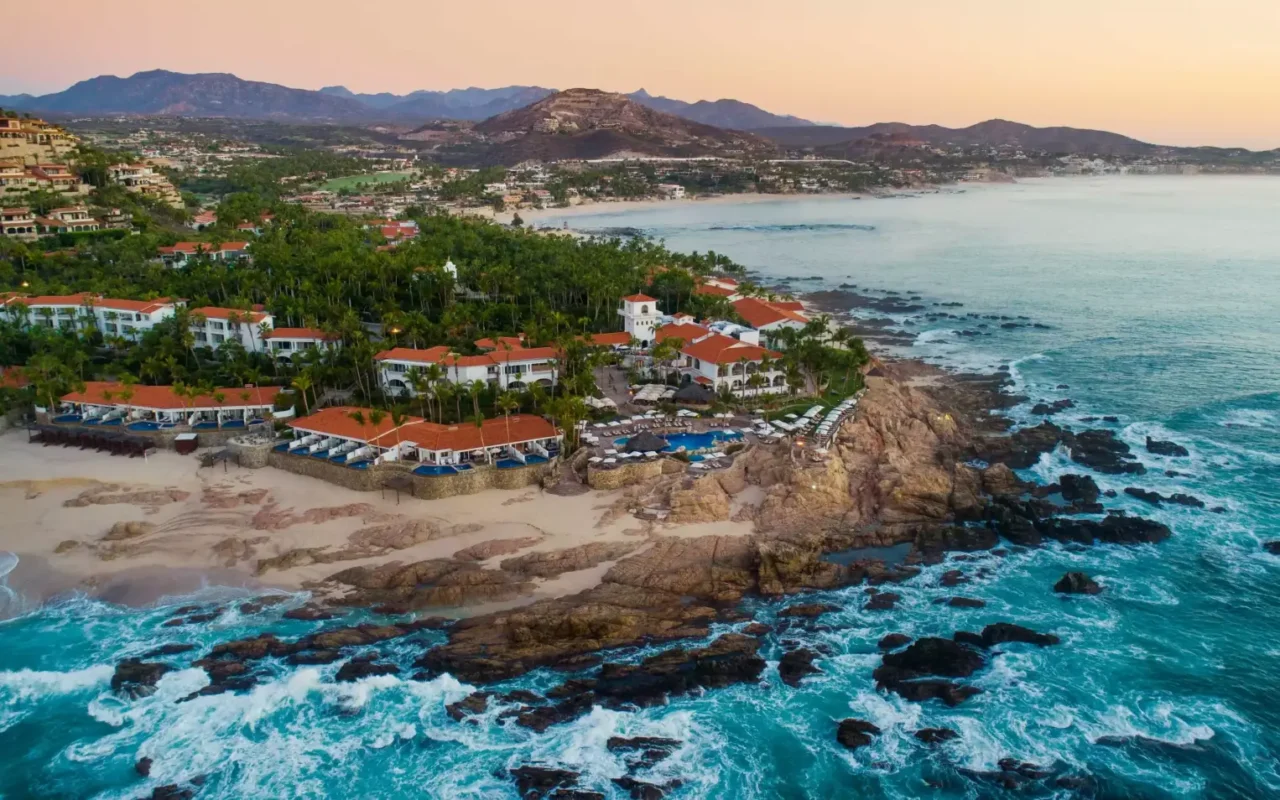
Set in Glyfada within a protected forest reserve, the resort is one of the most atmospheric hospitality addresses on the Athenian Riviera, carrying the cinematic legacy of a location that served as a popular filming backdrop in the 1950s and 1960s. That mood makes it a natural fit for Burberry’s latest hospitality push, which reimagines the brand’s signature house check in turquoise inspired by the surrounding sea and extends it across the main pool area, gardens, tennis and padel courts. Yet the significance of the partnership lies less in the pattern placement and more in what Burberry is trying to achieve: a branded destination experience that turns a hotel stay into a live, immersive expression of the label’s travel fantasy.
Burberry is no longer just dressing travellers – it is dressing the destination itself
The most interesting angle in the Burberry x One&Only Aesthesis collaboration is that it pushes fashion branding beyond product and into environment. Luxury brands have always sold an idea of place – the city, the coast, the season, the mood – but increasingly they are trying to control the setting too. Instead of relying on a campaign image or a glossy store display to evoke a summer world, Burberry is building that world physically inside a resort where guests can walk through it, lounge in it and post it in real time.
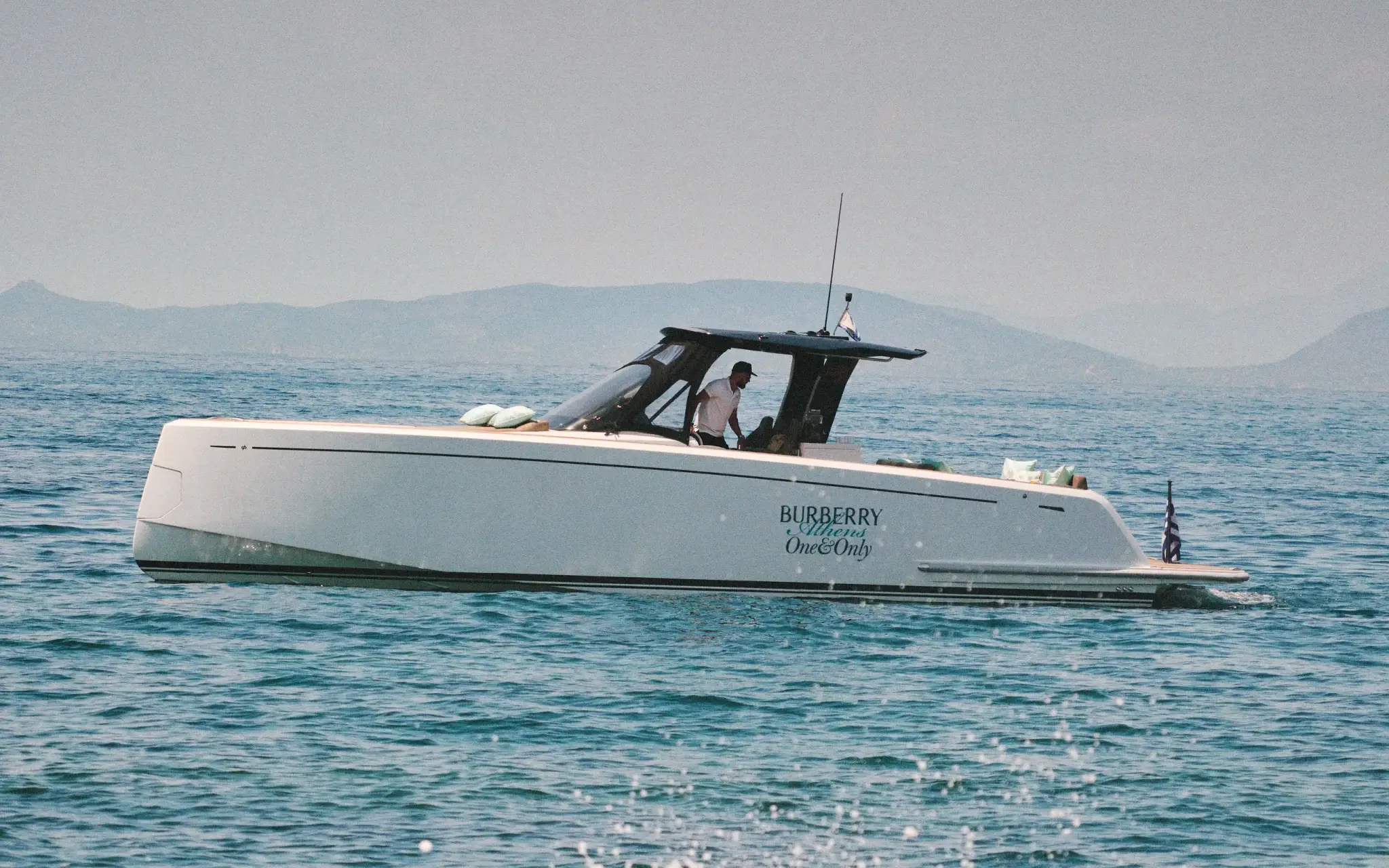
That shift matters because it changes how a fashion brand behaves. A hotel takeover is not just a sponsorship or a visual exercise. It is a temporary piece of hospitality design, guest experience strategy and destination storytelling all at once. The pool, the gardens, the sports courts, the bicycles and the boats become not only amenities, but brand touchpoints. Burberry is no longer simply associated with the idea of resort life – it is curating the conditions in which that resort life is experienced.
For a luxury house, that is commercially powerful. It means the customer is not just buying a swimsuit, tote or pair of sunglasses. They are buying into a mood, a setting and a memory that has been branded from the poolside outward.
The Athenian Riviera is becoming a serious luxury stage, not just a Mediterranean alternative
There is also a destination story here. Burberry’s decision to extend its hospitality strategy to the Athenian Riviera says something about the changing status of Athens within the luxury travel conversation. For years, the Riviera’s biggest Mediterranean competitors were obvious: the Côte d’Azur, Capri, Ibiza, Mykonos and parts of the Amalfi Coast. Athens often played a different role – gateway city, pre-island stop, cultural detour. That is changing.
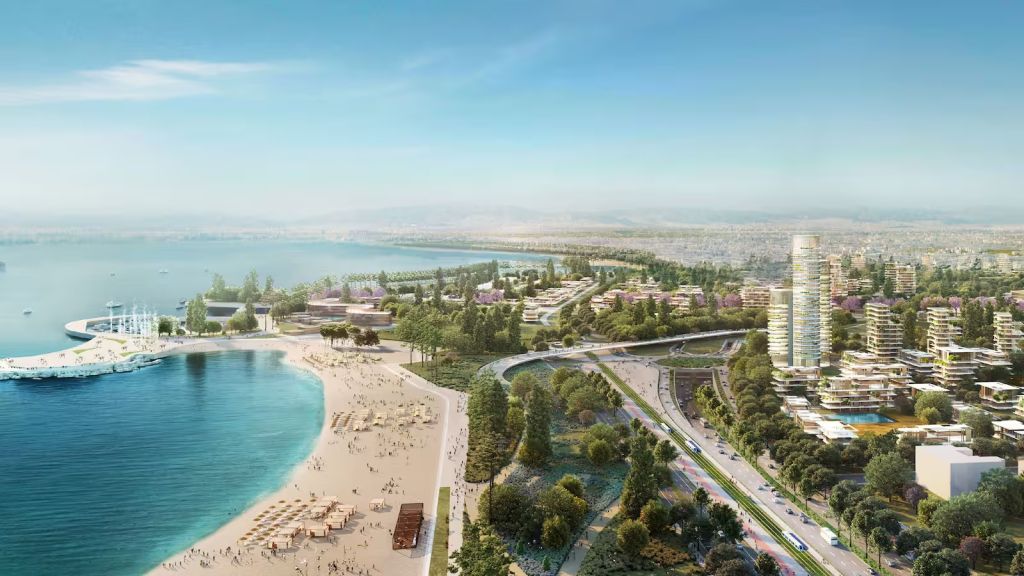
The Athenian Riviera has increasingly become a destination in its own right, helped by a wave of luxury hotel investment, a growing beach-club and wellness culture, and a stronger international appetite for urban-coastal combinations that offer both city energy and resort ease. One&Only Aesthesis is one of the clearest symbols of that repositioning. By choosing it as the site of a full seasonal takeover, Burberry is effectively validating the Riviera as a luxury summer stage worthy of the same kind of brand theatre long reserved for Saint-Tropez, Capri or Cap d’Antibes.
That matters not only for the hotel, but for the wider Athens luxury narrative. Fashion brands tend to go where cultural relevance, high-spending guests and visual storytelling opportunities overlap. Burberry’s arrival suggests Athens now fits that brief more comfortably than it once did.
This is part of a bigger luxury trend: the hotel takeover as a live campaign
Burberry’s move in Greece is not an isolated stunt. It fits into a much larger shift in luxury marketing where seasonal takeovers, branded beach clubs and hotel partnerships have become a preferred way to turn brand identity into physical experience. The logic is simple: luxury customers are no longer encountered only in boutiques, airports and magazines. They are encountered on holiday, by the pool, at lunch, on a hotel buggy, on a branded boat and across the social content they create while travelling.
That makes resort takeovers unusually efficient as a form of marketing. They deliver visibility, hospitality relevance, product placement, social-media reach and customer immersion all at once. A beach towel in a resort is no longer just a towel. It is a campaign asset, a backdrop, a retail suggestion and a piece of brand world-building. When executed well, the takeover functions as a live editorial spread that guests themselves help distribute.
Burberry has already been moving in this direction through its presence at Hôtel Belles Rives in Cap d’Antibes, where a blue reinterpretation of the house check has been dressing the beach club, terrace and jetty. The Athenian Riviera project shows that this is no longer an isolated seasonal flourish. It is becoming a repeatable hospitality strategy.
The turquoise check is not just decorative – it is destination branding in fashion form
One of the more revealing details in the project is Burberry’s decision to rework its signature check in turquoise to reflect the waters around the resort. That may sound like a small design note, but it is actually central to how luxury fashion brands adapt themselves to hospitality environments. The goal is not to simply transplant the brand unchanged into a resort, but to create the illusion that the brand belongs to the place – that it has absorbed the coastline, the light, the mood and the geography around it.
In this case, the colour shift allows Burberry to make its visual language feel native to the Greek setting while still remaining unmistakably Burberry. It is a useful balancing act. Too much consistency and the takeover can feel imposed. Too much localisation and the brand identity weakens. The turquoise check solves that by keeping the core code intact while letting the destination tint the experience.
That is a broader lesson in modern luxury branding. The strongest travel collaborations are not the ones that simply stamp a logo onto a hotel. They are the ones that make the brand look as if it has entered into a conversation with the destination itself.
Burberry is also using the takeover to rewrite its own travel story
The partnership is not just about Greece – it is also about Burberry. The brand has made a point of drawing on its own history of bathing suits and cruisewear from the 1930s, using the Riviera setting to reconnect itself with ideas of water, leisure and travel. That is significant because hospitality partnerships allow fashion houses to revisit older parts of their archive in a way that feels less retrospective and more experiential.
Rather than referencing heritage in a runway show or campaign film alone, Burberry is using the resort as a living context for those ideas. The boats, swimwear references and Riviera styling all help position the brand not only as a British outerwear house with a famous trench coat, but as a label with a longer and more versatile relationship to travel culture than consumers may immediately associate with it.
That is strategically useful. Luxury brands increasingly need to stretch their identity across categories, climates and use cases without losing coherence. Burberry’s resort takeovers help broaden its narrative from rainy British sophistication to a more expansive travel lifestyle brand that can move from London to Antibes to Athens without seeming out of place.
The real luxury product here is immersion, not merchandise
Of course, there will be an obvious commercial dimension to the takeover. Guests encounter the brand in a heightened emotional setting, which can create stronger affinity and a more direct path to purchase. But the more important product being sold may not be a bag or a kaftan at all. It is immersion.
Luxury hospitality has become one of the few places where a brand can still control atmosphere in a near-total way. In a world of fragmented media and distracted consumers, that matters. A guest at One&Only Aesthesis does not just see Burberry for three seconds in a feed. They spend hours inside a Burberry-shaped environment. They arrive by a branded buggy, walk through a branded poolscape, see the check reframed through Greek light, and perhaps head out on a branded boat along the coast. That is not exposure. It is saturation, softened into pleasure.
For luxury fashion, that is increasingly valuable because it builds emotional texture around the brand in a way digital campaigns alone rarely can. It turns Burberry from a label into part of a holiday memory – and holiday memory is one of the most commercially potent forms of brand association there is.
Hospitality has become one of luxury fashion’s most important battlegrounds
What Burberry is doing in Greece is part of a broader structural shift. Luxury brands are moving deeper into hospitality because hotels, clubs and destination partnerships now offer something stores alone cannot: time. A boutique visit may last 20 minutes. A resort stay can last a week. That gives brands a much longer runway to shape perception, create ritual and embed themselves into the traveller’s idea of what luxury feels like.
It also aligns neatly with how affluent consumers increasingly spend. For many high-net-worth travellers, the line between shopping, travel and lifestyle has blurred. A summer holiday is not separate from luxury consumption – it is one of its most important contexts. The resort, the restaurant, the beach club and the airport lounge all become extensions of the same premium ecosystem.
Burberry’s growing slate of hospitality activations suggests it understands this clearly. These takeovers are not side projects. They are becoming part of how the brand performs relevance in the luxury market – not just through fashion weeks and retail launches, but through physical presence in the places where affluent customers actually want to spend time.
Why the Athenian Riviera takeover matters now
The Burberry residency at One&Only Aesthesis matters because it captures several luxury travel and fashion trends at once. It shows how resort takeovers have become a serious marketing tool rather than a seasonal gimmick. It highlights the Athenian Riviera’s growing status as a premium Mediterranean destination. And it reflects the way heritage brands are trying to turn archive, travel fantasy and product storytelling into immersive experiences that live far beyond the boutique floor.
Most of all, it shows that in 2026, luxury is increasingly about context. The product still matters, but so does the setting in which it is seen, used and remembered. Burberry is not just dressing a resort in turquoise check. It is trying to stage an entire version of summer – one where fashion, hospitality and destination merge into a single branded atmosphere.
For guests, that may feel like a stylish seasonal collaboration. For Burberry, it looks much more like a long-term strategy: using the world’s most desirable resorts to turn luxury branding into something you can actually step inside.