A major new museum dedicated to the history of Lofoten fishing and Norway’s coastal heritage is taking shape in northern Norway. Known as SKREI, the project is being described as the largest new museum development in Northern Norway in decades and aims to bring one of the country’s most important historical industries to a wider audience.
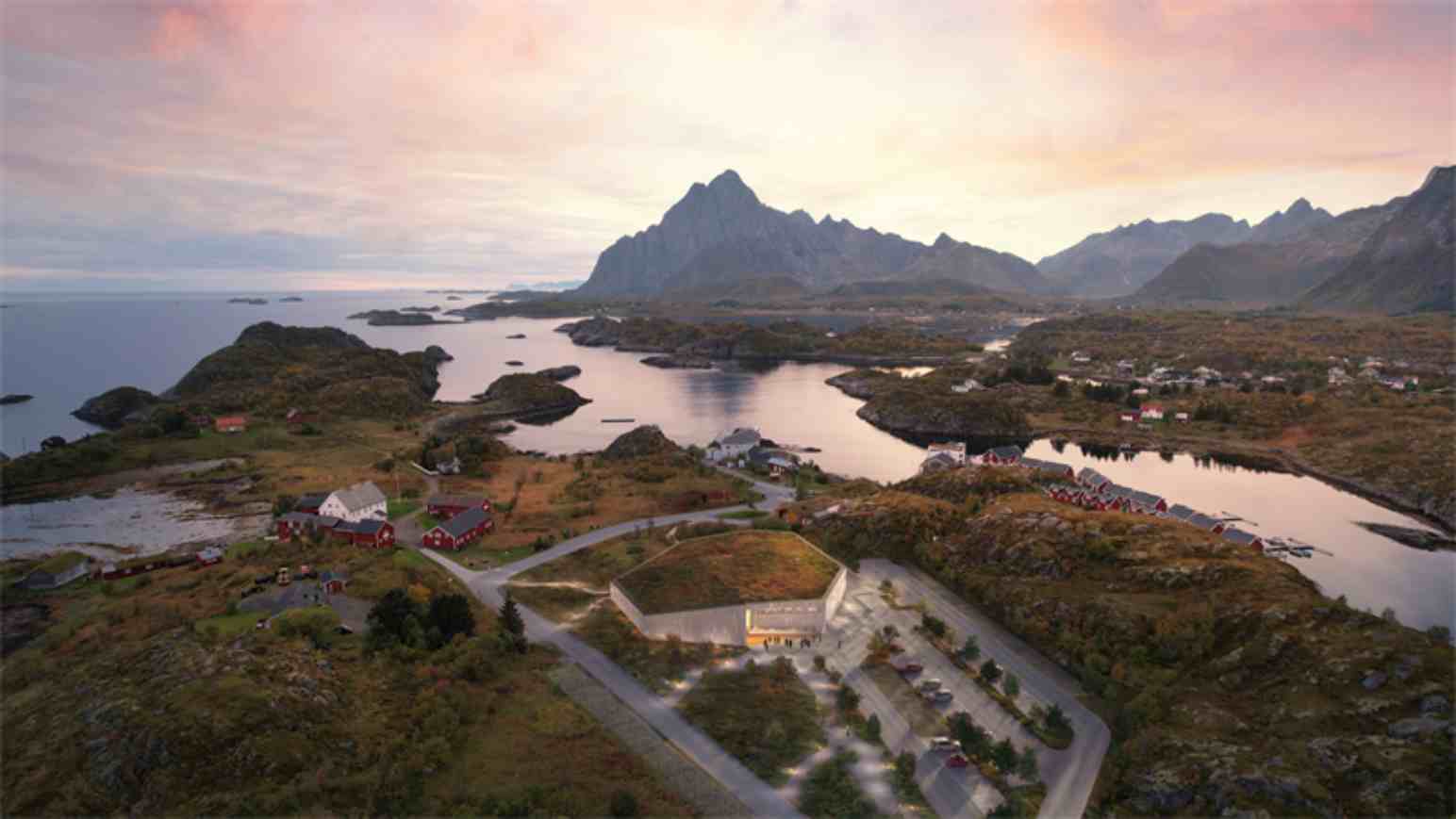
Located in Storvågan near Kabelvåg in the Lofoten Islands, SKREI will combine history, culture, nature and art within a new visitor experience designed to highlight the significance of cod fishing and stockfish production in shaping Norway’s identity as a coastal nation.
A museum inspired by the journey of cod
At the centre of the project is Otolitten, a new 5,000-square-metre building designed by LPO Arkitekter. The architecture takes inspiration from the otolith, a small ear stone found in fish that records growth and migration patterns throughout their lives.
The new building will join existing attractions including the Lofoten Museum, Galleri Espolin and the Lofoten Aquarium, creating a larger cultural and educational destination focused on the region’s maritime heritage.
According to Museum Nord, the ambition is to create more than a traditional museum by combining exhibitions, research, storytelling and immersive visitor experiences.
The industry that helped build Norway
For centuries, stockfish was Norway’s most valuable export product and played a central role in the country’s economic development. During parts of the medieval and early modern periods, stockfish accounted for the majority of Norwegian export value and connected the country to major trade networks across Europe.
The annual migration of skrei, the Arctic cod that travels south to spawn along the Norwegian coast, created one of the world’s largest seasonal fisheries. The industry supported settlements, businesses and communities across much of Norway’s coastline.
Storvågan itself holds particular historical significance. The site was home to the medieval trading town of Vágar, Northern Norway’s first town and one of the earliest centres of stockfish commerce. Archaeological discoveries show the area maintained trading links with destinations far beyond Scandinavia.
From here, stockfish was exported through Bergen and the Hanseatic trade routes to markets across Europe, helping establish Norway as a significant maritime trading nation.
Telling the stories behind the industry
While fishing remains central to the exhibition, SKREI also aims to highlight the lives of families and communities that supported the industry on land.
Particular attention will be given to the often-overlooked role of women, who managed households, prepared equipment, cared for children and maintained communities while fishermen spent months at sea.
Historical research suggests that preparing a single fisherman for the seasonal cod fishery could require hundreds of hours of work, illustrating how the industry depended on entire families rather than fishermen alone.
Through personal stories, historical artefacts and interactive exhibits, Museum Nord hopes visitors will gain a deeper understanding of the social and cultural impact of Lofoten fishing.
Twenty years in development
The SKREI project has been under development for approximately two decades. Following years of planning and research, the Norwegian government gave final approval in 2021, allowing construction and exhibition development to move forward.
The project has brought together historians, researchers, architects, artists and cultural organisations to create an interdisciplinary experience exploring both the natural world of cod migration and the broader historical significance of the fishing industry.
Boost for tourism in Lofoten
Beyond its cultural role, SKREI is expected to become a major tourism attraction for the Lofoten Islands. Museum Nord estimates the destination could attract around 140,000 visitors annually in the long term.
The organisation hopes the attraction will encourage longer stays and help strengthen year-round tourism in a region that has become increasingly popular with international visitors.
While many travellers are drawn to Lofoten’s dramatic landscapes, SKREI aims to provide greater insight into the history that shaped the islands long before they became a global tourism destination.
By telling the story of the skrei, the fishermen, their families and the trade networks that connected Norway to the wider world, the new museum seeks to secure Lofoten fishing’s place in the country’s national narrative for future generations.