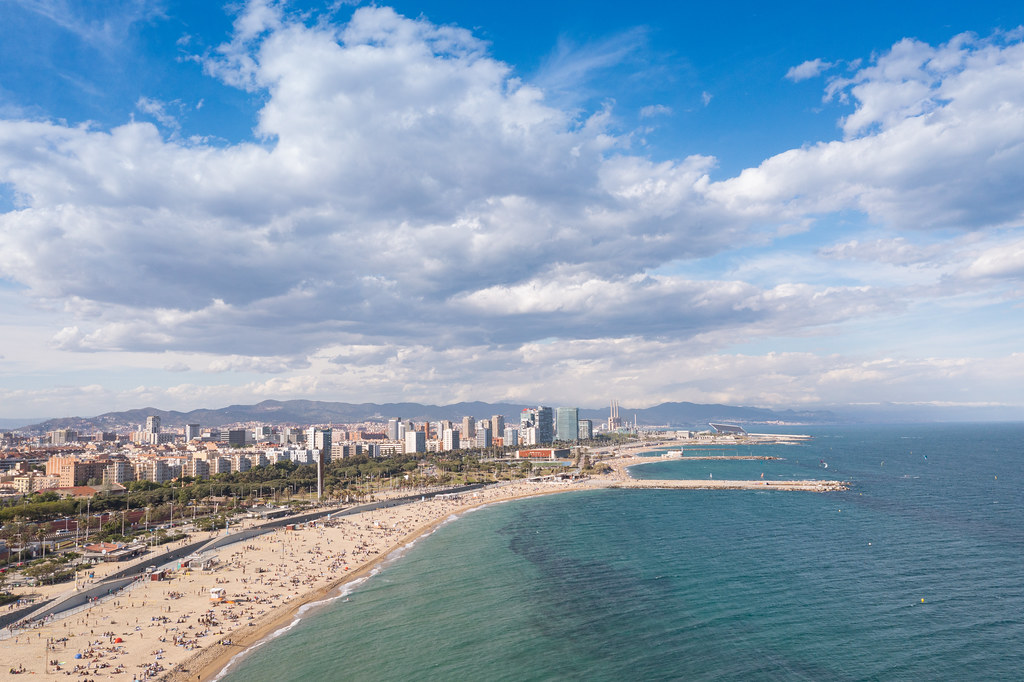
Barcelona has been officially named Europe’s Christmas capital for next year, receiving international recognition for its festive atmosphere shaped by centuries of history, art and living local traditions that continue to define how the city celebrates the holiday season.
The Spanish city was awarded the title for its ability to combine deeply rooted Christmas customs with contemporary values, including sustainability, community participation and accessibility. According to the jury, Barcelona stands out for preserving authentic traditions while ensuring they remain relevant and inclusive in a modern European city.
Among the most distinctive customs highlighted is aguinaldo, a tradition in which festively dressed children and young people go from door to door singing Christmas carols, known locally as villancicos, and offering good wishes in exchange for small gifts, sweets or coins. The ritual has ancient roots dating back to the Roman Saturnalia, a December festival honouring the god Saturn that celebrated generosity, role reversal and communal joy. While Aguinaldo is observed across Spain, it remains particularly vibrant in Barcelona and throughout Catalonia.
The city’s historic centre also hosts one of the most iconic Christmas markets in Europe. The Santa Llúcia Christmas Market, held in front of Barcelona Cathedral, transforms the square into a dense maze of stalls selling nativity figures, traditional decorations, crafts and festive greenery. The market is widely seen as the symbolic heart of the city’s Christmas season.
Another major highlight is the Parade of the Three Kings, which takes place on 5 January. During the procession, the biblical Magi – Caspar, Melchior and Balthazar – travel through the streets of Barcelona, reenacting their journey to bring gifts to the infant Jesus. The parade attracts large crowds every year and remains one of the most anticipated family events of the festive calendar.
Sustainability played a key role in Barcelona’s selection. The city has increasingly focused on environmentally responsible celebrations, favouring affordable and reusable decorations, organising workshops dedicated to eco-friendly crafts, and hosting green Christmas markets. After the holidays, collection points are set up to recycle Christmas trees and organic decorations, reinforcing the city’s commitment to circular practices even during peak festive consumption.
Alongside Barcelona, the jury also announced winners in other categories. The title of European Christmas City for 2026 – reserved for cities with fewer than 100,000 residents – was awarded to Wels, a town located in the foothills of the Alps. Wels impressed judges with its traditional carriage rides, a Christmas parade on Perchten Square, and its strong culinary culture centred around punch and mulled wine tastings. The city also creates interactive festive zones for children, offering performances and hands-on holiday activities.
The Christmas Village of the Year 2026 title went to Kirkop, a small village in Malta recognised for its strong sense of community. Local residents decorate the streets with handmade ornaments crafted from recycled materials, each telling stories drawn from Maltese folklore. Kirkop was also praised for its extensive volunteer programmes during the Christmas period, supporting elderly residents and people with disabilities.
A special jury award was given to Valduvieco, a tiny settlement in Spain’s León province with a population of just 32 people. Judges highlighted the fact that every resident participates in organising the Christmas celebrations, personally creating festive lighting and handmade decorations, turning the entire village into a collective creative project.
The awards are designed to promote the diversity of European culture and the wide range of Christmas traditions practiced across the continent. The international jury was composed of representatives from the International Congress of European Christmas Cities and Festivals, supported by the European Union and the Network of Christmas Cities.
By recognising destinations of vastly different scales – from a major metropolis like Barcelona to villages with only a few dozen inhabitants – the organisers aim to underline that the spirit of Christmas in Europe is not defined by size or budget, but by tradition, creativity and community.