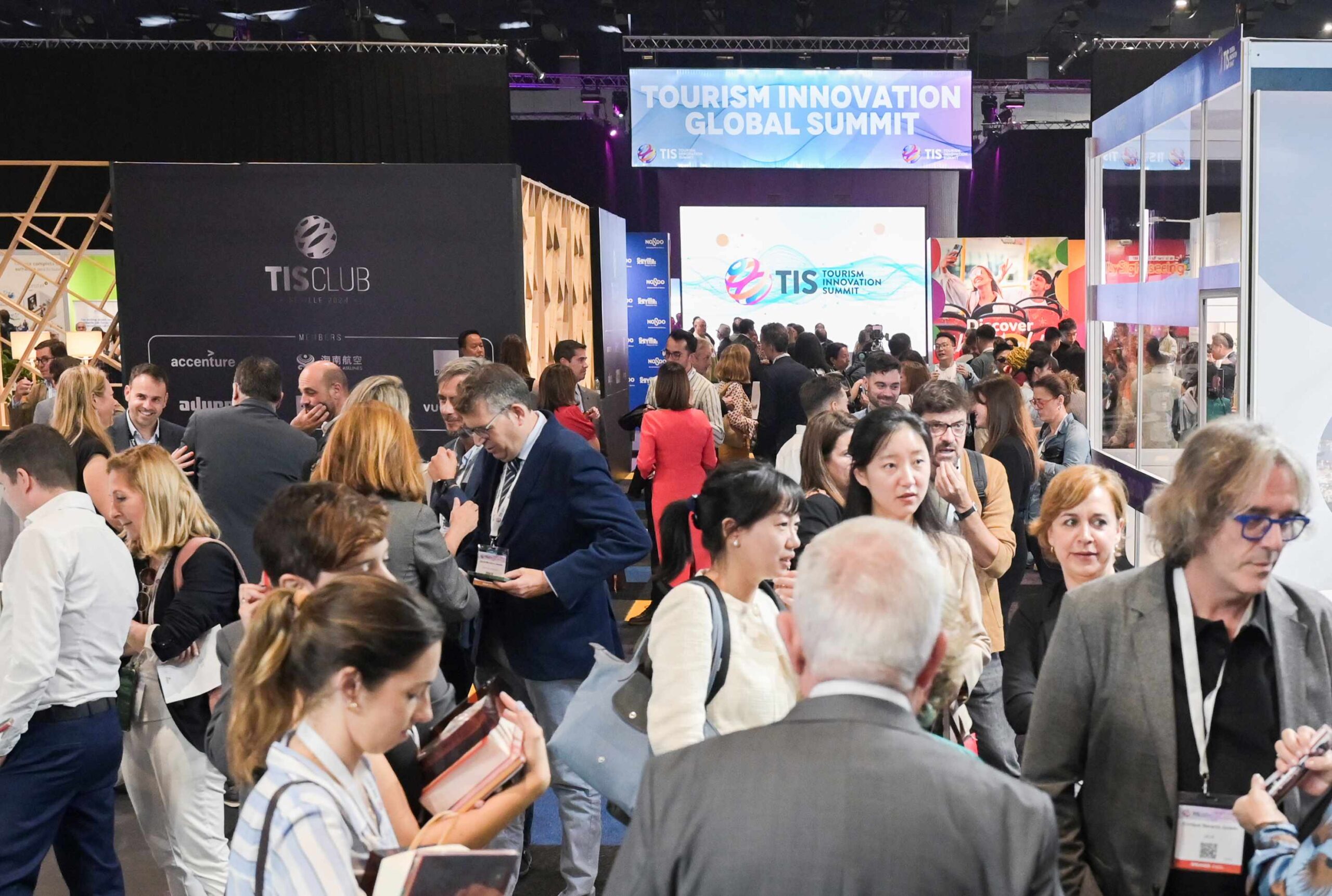
Agentic AI -designed to act autonomously based on specific objectives or goals- is already revolutionizing the sector, turning the complexity of trip planning into a streamlined, simple, and intuitive experience. This has been made evident during the first day of the TIS2025, which opened the doors to its sixth edition this Wednesday in Seville.
Experts from the tourism and technology industries have discussed the role of innovation in reinventing the traveler experience, with travelers increasingly seek for authentic experiences, personalized offerings, and sustainable options that minimize their impact on the local area.
According to a report developed by Google and Deloitte, the number of trips is expected to continue growing, reaching 2.4 billion by 2040, highlighting the sector’s significant growth. Zuriñe Eguizábal, Senior Industry Manager Travel at Google, pointed out the importance of agentic Artificial Intelligence in the sector at TIS2025. “The future of search will be agentic. AI will not only provide us with information but will also help us complete specific tasks. AI agents will not only assist us in our search, but also when booking experiences, sending us reminders of appointments”, she said.
In this regard, Eguizábal specified that “travelers do not perform simple searches and spend more than five hours planning a trip, resorting to more complex and personalized searches. In addition, users are looking for new ways to search through voice, videos, and images. We have observed that 20% of these searches have a very high commercial intent”.
New strategies based on the traveler’s experience
As traveler behavior evolves, tourism companies are adapting their strategies to meet new market demands and design experiences that align with travelers’ expectations. Andrea D’amico, CEO at WeRoad, explained that his company “creates real-life, immersive experiences that also serve, if you like, to help you get to know yourself”. D’amico also added that “we offer the opportunity to enjoy these experiences on longer or shorter trips. The shorter trips give users the chance to decide whether they liked the experience and try the longer ones. And conversely with customers who have had a longer experience and just want to spend a weekend away. Our repeat rate is very high”.
Along these lines, Alessandro Petazzi, CEO at lastminute.com, stated that since joining the company, “I realized that customer repeat business was high” and that by creating, as is the case, “a brand from scratch, there is also a significant opportunity to create a consumer brand”. As Petazzi recalled, “historically, we started out selling hotels, and now 70% of our sales are for complete vacation package experiences”.
For his part, Pere Vallès, CEO at Exoticca, emphasized that the biggest driver of growth for the company is customer satisfaction. “In our case, the people who work at the destination are really an ‘Exoticca franchise’. This means that we not only have control over prices, but also over customer satisfaction”, he explained.
Regenerative tourism, key to more sustainable tourism
Sustainability also played a major role during the first day of TIS2025. Guy Bigwood, CEO at Global Destinations Sustainability Movement, highlighted the need to adapt the tourism model to climate change by promoting a ‘regenerative revolution’. “These types of strategies create economic, financial, and human capital and seek to change a linear system that only serves to accelerate a new way of thinking. We need to connect with the transition and change our way of thinking. We must change our mindset to build together”.
This shows that the paradigm shift is already here. It begins with an initial phase, continues with an integrated phase, and ends with a consolidation phase. “We live in a constantly changing world, and I believe that the destinations that will exist tomorrow are those that are regenerating today. Tourism reflects our reality, but my question is: do we want to create value, or do we want to extract it? Let’s be the generation that made tourism live up to the places we love”, concluded Bigwood.