Marathon weekend is no longer just a boost in occupancy – it is becoming a defining moment for the hospitality industry. The rapid rise of “runcation” travel is reshaping how hotels operate, pushing brands to cater to a new generation of wellness-focused, performance-driven guests.
The 2026 London Marathon set a new benchmark, with 59,830 runners crossing the finish line and more than one million applicants competing for a place. The scale of demand reflects a broader global trend – marathon participation is surging, and with it, a new kind of traveler is emerging.
Data from Strava shows that 37% of runners logged the London Marathon as their first, highlighting the race’s expanding appeal beyond seasoned athletes. At the same time, the Abbott World Marathon Majors Six Star Journey continues to attract runners across the United States and Europe, many traveling internationally to complete all six races in pursuit of the coveted medal.
This growth is translating into substantial economic impact. Major races such as the Chicago Marathon, Boston Marathon and Berlin Marathon drive significant tourism spikes. According to Tripadvisor, the Chicago Marathon alone attracts more than 300% more visitors than usual, underscoring the commercial power of endurance events. London, now the largest of the marathon majors, sits at the center of this momentum.
The phenomenon known as “sweat jetting” – travel planned around athletic events – is accelerating the shift. Marathon runners represent a high-value segment: they travel frequently, return annually and spend more on tailored experiences. Unlike traditional leisure guests, they prioritize sleep quality, optimized nutrition and efficient recovery.
Hotels are responding by evolving from simple accommodation providers into performance-focused environments.
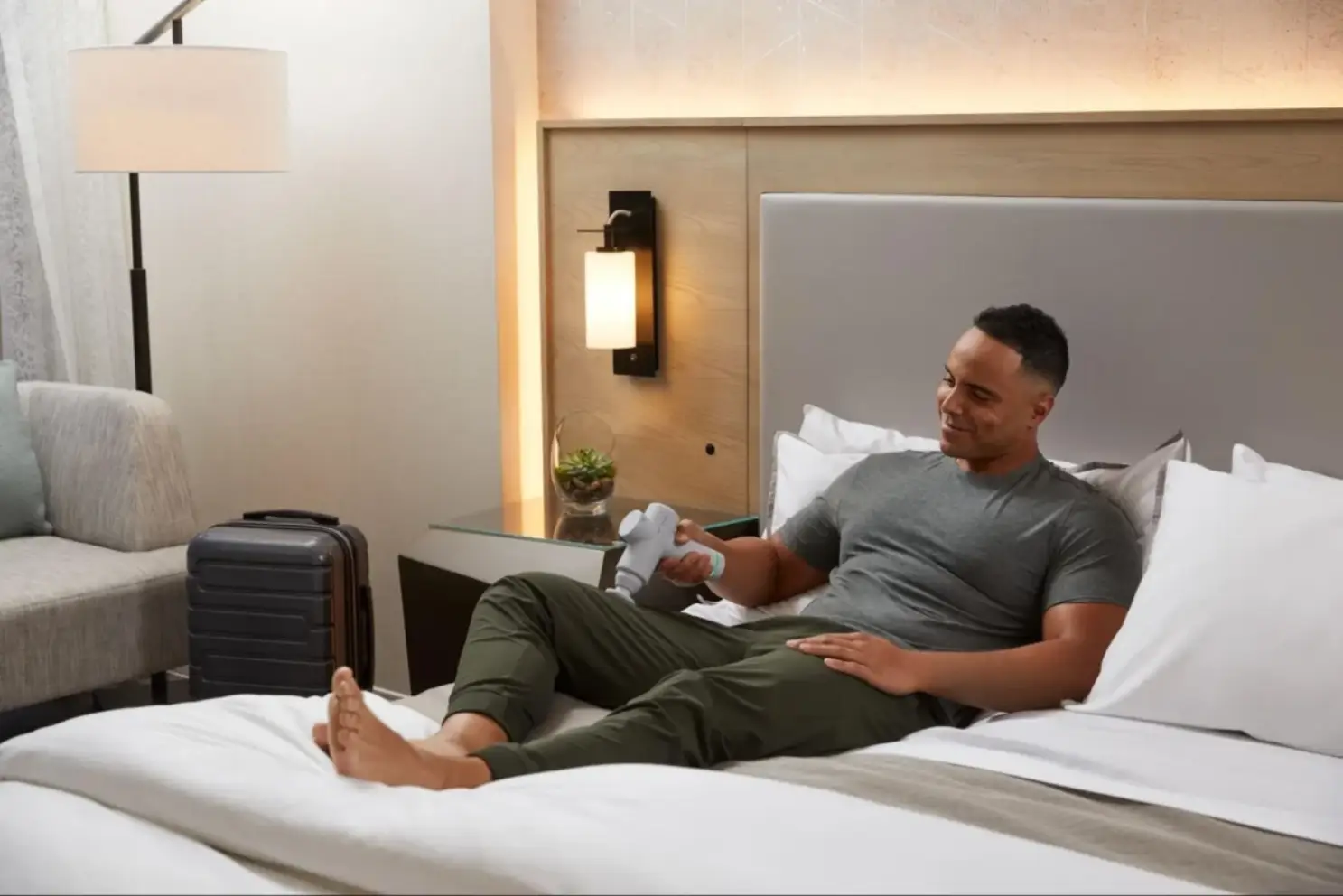
Brands across London leaned heavily into this transformation during marathon weekend. The Westin London City introduced a dedicated marathon package that included a pre-race pasta buffet, late check-out and a runner-specific kit stocked with recovery essentials. Positioned near mile 24 of the course, the hotel also created a recovery zone in partnership with Hyperice, offering stretching sessions and muscle therapy.
“At The Westin London City, supporting guests during the London Marathon is about anticipating the needs of runners at every stage of their journey,” said Raffaele Ruocco, the hotel’s general manager, emphasizing the brand’s focus on performance and recovery.
Nutrition emerged as another competitive differentiator. The London Edition provided energy gels, homemade snacks and hydration stations, while The Savoy delivered custom-designed pre-race desserts crafted by executive pastry chef Nicolas Houchet as part of Fairmont’s broader wellness initiative.
Personalization also played a key role. The Haymarket Hotel offered handwritten notes alongside endurance gels and curated race-day essentials, reinforcing the emotional connection many runners have with their race experience.
Recovery, however, remains the centerpiece of the runcation model. At Hotel Café Royal, the Akasha Spa introduced treatments featuring Therabody-assisted massage technology, while The Berkeley and The Emory granted access to Surrenne Belgravia, a high-end wellbeing club offering thermal circuits, hyperbaric chambers, red-light therapy and hydrogen inhalation.
But the shift extends well beyond luxury hotels. A growing network of travel operators is integrating accommodations into full-service race experiences, further embedding hotels into the performance journey. Companies like Marathon Tours & Travel and Sports Tours International now offer bundled packages that combine guaranteed race entry with multi-night hotel stays, early race-day breakfasts, transport to start lines and on-site logistical support.
These structured offerings are reshaping expectations across the market. Hotels participating in such packages – including many four-star and upscale properties – are increasingly selected not just for comfort, but for proximity to race routes, operational flexibility and their ability to accommodate strict pre- and post-race routines. Early meal service, late check-outs and coordinated transport have become standard features rather than premium add-ons.
At the same time, wellness-focused hotel brands are expanding year-round programming to capture this audience beyond race weekend. Westin Hotels & Resorts has scaled its “running concierge” concept globally, offering curated running routes and guided sessions, while Four Seasons is developing destination-based fitness experiences that blend travel with structured training.
Even independent hotels are adapting to the surge in demand, adjusting minimum stay requirements around marathon dates and positioning themselves strategically along race routes to appeal to both participants and spectators.
The message across the industry is clear. Marathon tourism is no longer a niche – it is a structural shift. As participation continues to grow and events draw record numbers, hotels are repositioning themselves as integral parts of the athletic journey.
For hospitality brands, marathon weekend is no longer just about filling rooms. It is about delivering measurable performance outcomes – and earning loyalty from a new class of traveler that is already redefining global tourism.