Air New Zealand is redefining long-haul comfort with two very different solutions for economy passengers – Skynest and Skycouch. While both aim to make ultra long-haul flights more bearable, they serve very different needs.
Here’s how they compare.
Two concepts, one goal: better sleep in economy
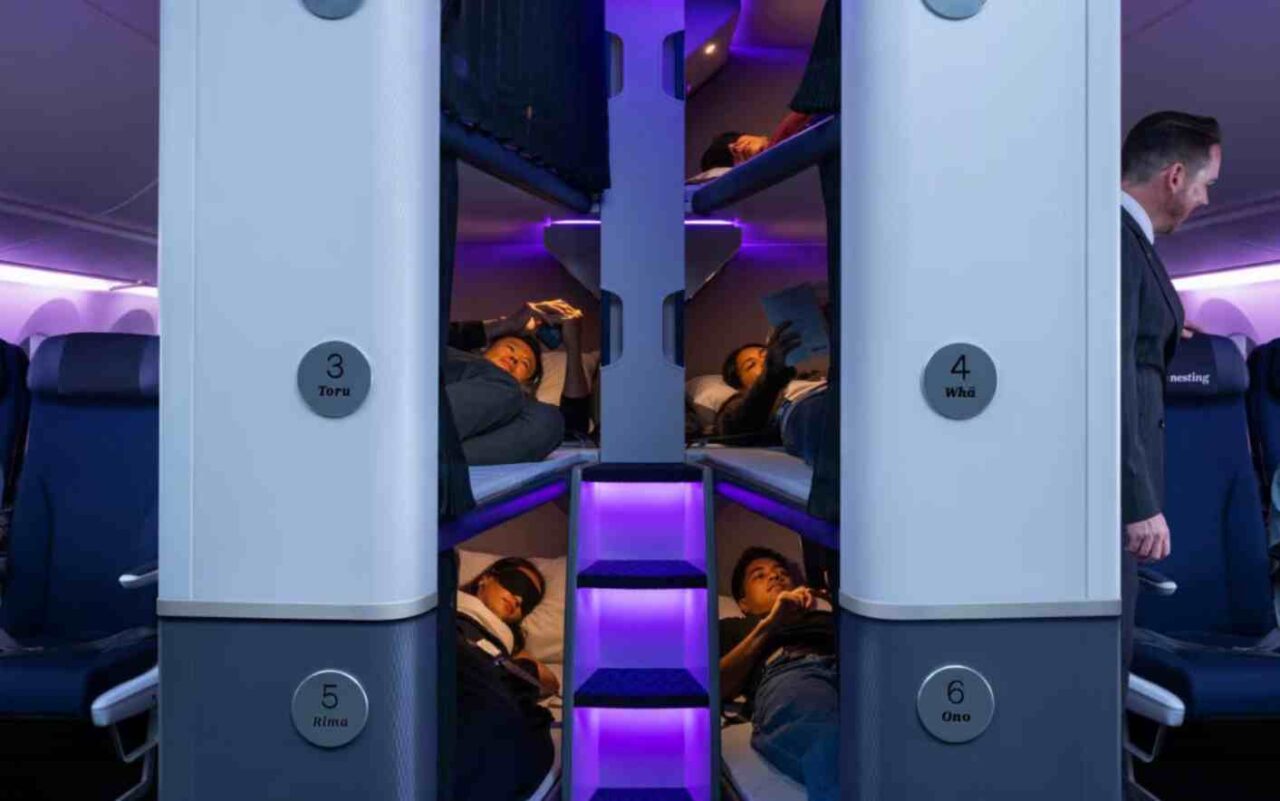
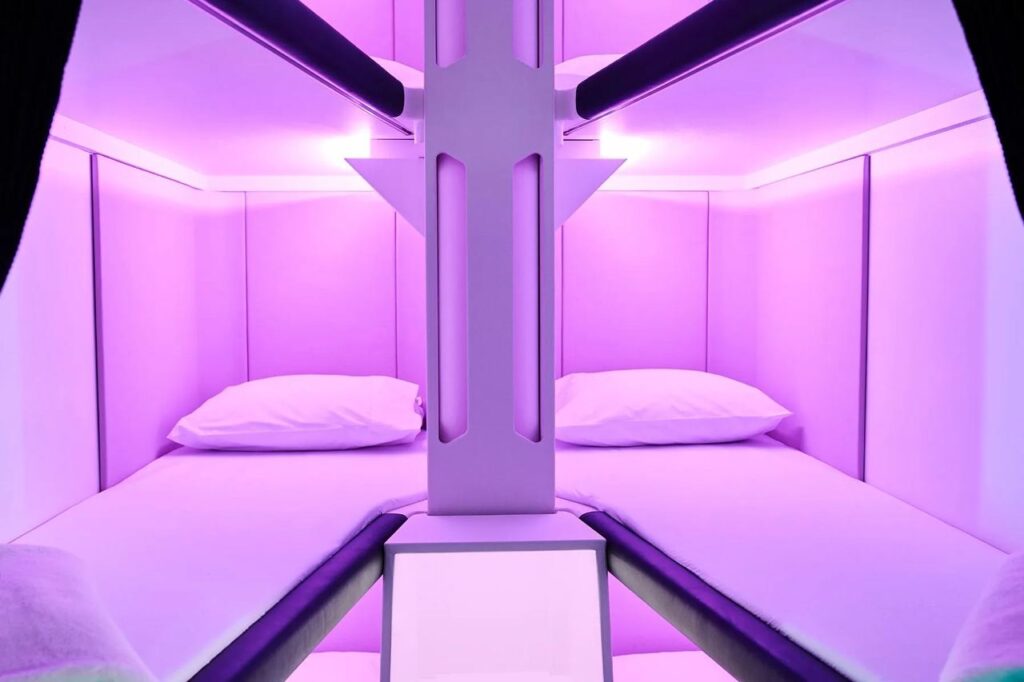
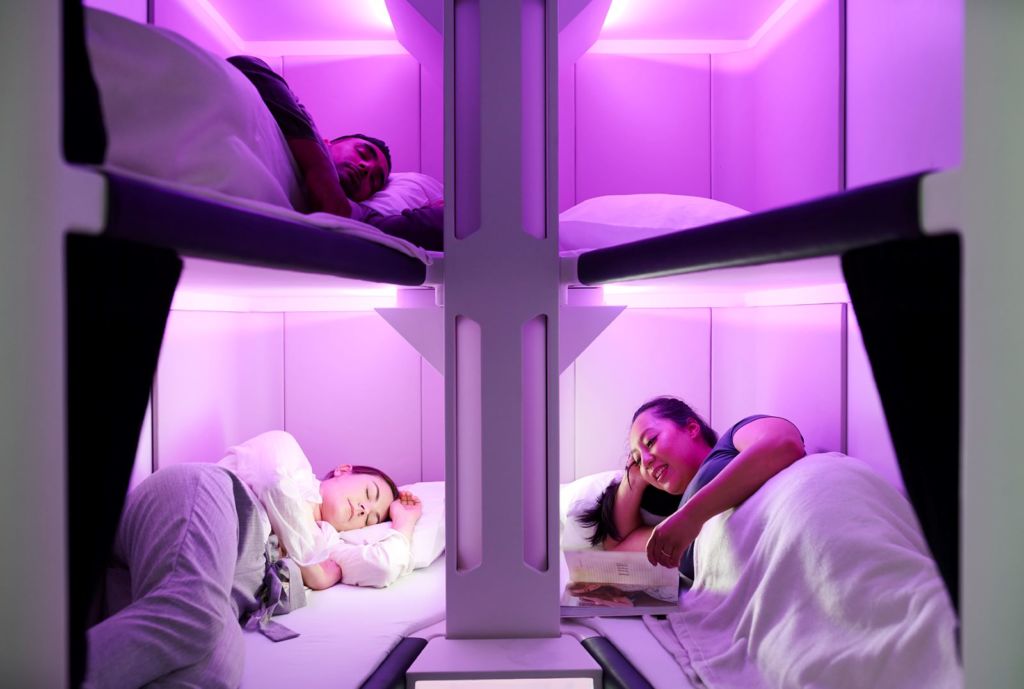
Skynest is a dedicated sleep zone inside the aircraft, offering lie-flat bunk-style pods that passengers can book for a limited time during the flight. It’s designed as a break from your seat – a chance to fully disconnect and rest.
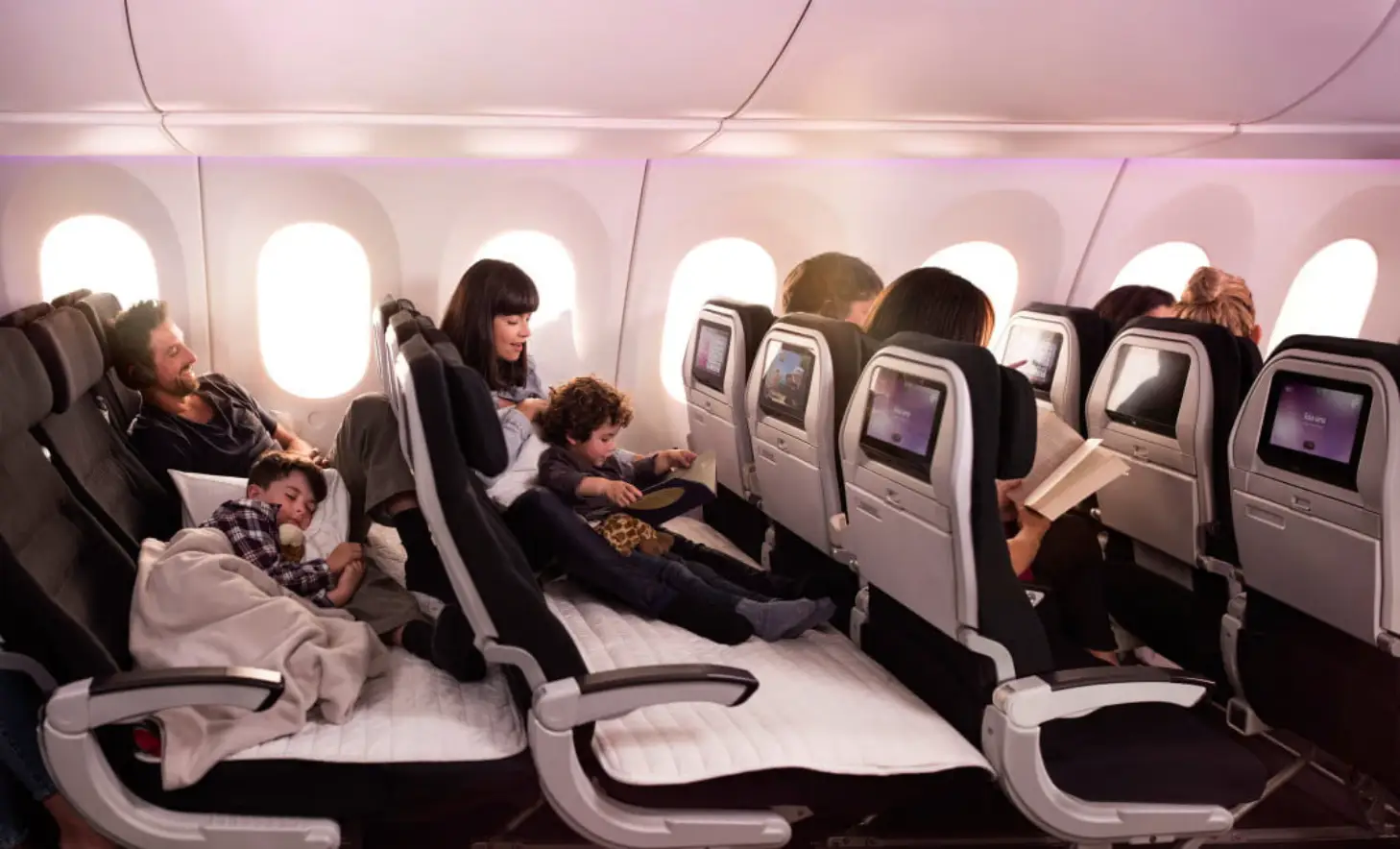
Skycouch, by contrast, transforms a row of standard economy seats into a flexible couch-style space. Instead of leaving your seat, you stay in your own row, adjusting leg rests to create a flat surface.
The difference is simple:
Skynest = separate sleep experience
Skycouch = upgraded seat experience
How the experience works
With Skynest, passengers book a four-hour session in one of six pods located in a dedicated section of the cabin. During that time, you leave your seat entirely and move into a quiet, enclosed space designed specifically for sleep.
Skycouch is yours for the entire flight. The seats function normally during take-off and meals, then convert into a flat surface whenever you choose. It offers flexibility rather than a fixed sleep window.
Comfort and sleeping experience
Skynest delivers the closest thing to a real bed in economy. Each pod measures around two metres in length and comes with bedding, a pillow, blanket and an amenity kit with essentials like an eye mask and earplugs.
Skycouch is shorter and wider, more like a compact sofa. At around 1.55 metres long, it works well for stretching out, especially for shorter passengers or those travelling with children, but it’s not a full bed.
Practical differences that matter
Access is a key consideration. Skynest requires passengers to climb or move into a bunk-style pod, which may involve bending or kneeling. It’s restricted to travellers aged 15 and over and requires independent mobility.
Skycouch is far simpler – it’s just your seat, adapted. That makes it more suitable for families, including those travelling with infants, thanks to additional safety features like belts and support loops.
Who each option is really for
Skynest is aimed at long-haul travellers who prioritise quality sleep, especially on ultra long routes like New York to Auckland. It’s ideal if you want a defined rest period away from the cabin.
Skycouch is better suited to those who value space and flexibility throughout the journey. It works particularly well for couples, solo travellers wanting extra room, or families needing a shared space.
A new era of modular comfort
Both products reflect a broader shift in aviation. Airlines are moving away from rigid cabin classes and toward customisable comfort, where passengers can choose how they experience the journey.
Instead of a simple upgrade to business class, travellers can now mix and match – keeping an economy ticket while adding sleep, space or privacy where it matters most.
In that sense, Skynest and Skycouch aren’t competitors as much as complementary options. One offers a true break from the cabin. The other reshapes it around you.
The real question is no longer whether you can sleep in economy – but how you want to do it.