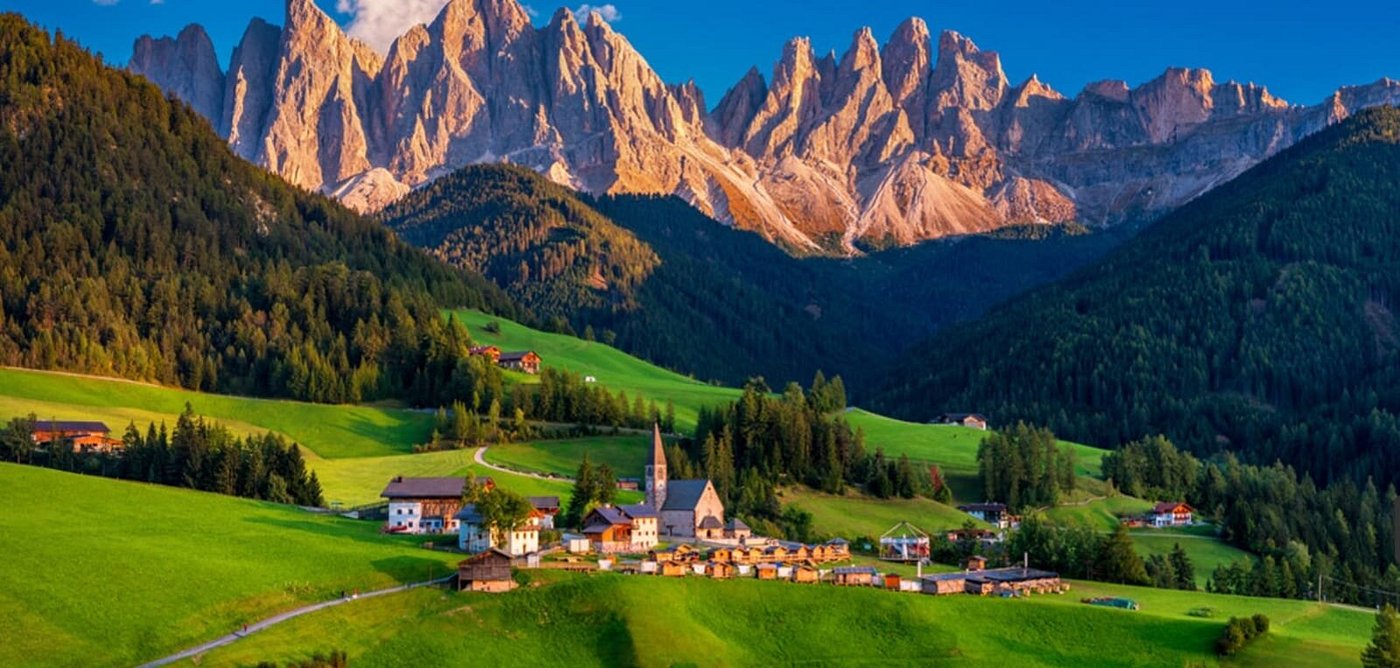
The Italian village of Funes in the Dolomites has announced new measures to restrict access to the church of Santa Maddalena, one of the region’s most photographed landmarks, following a surge in social-media-driven tourism, according to CNN.
The church, which lies within a UNESCO World Heritage Site area, has become a global visual icon thanks largely to Instagram. From May to November, access to the site will be controlled by a barrier, with entry granted only to local residents and visitors staying in the village for at least one night.
Day-trippers arriving by car or tour bus will no longer be allowed to drive to the church. Instead, they will be directed to designated parking areas located around a 30-minute walk away. If those spaces are full, drivers will be required to park even further from the site. The municipality has not yet decided whether a shuttle service will be introduced for these visitors.
Parking currently costs four euros, but prices are set to rise in an effort to discourage tourists who come solely to take photographs. Mayor Peter Pernthaler said the increase is intended to reduce short, high-impact visits rather than eliminate tourism altogether.
Local officials stress that the goal is to slow the pace of visitor traffic, not stop it entirely. City councillor Moret Niederwolfsgruber said day visitors frequently clog narrow roads and damage fields and private land as they search for the perfect photo opportunity.
The church’s image gained widespread recognition on Instagram, but its popularity also extends beyond social media. It is particularly well known among Chinese tourists after a local operator released SIM cards featuring the church’s image around a decade ago. Interest surged further in 2013 when a nearby peak, Seceda, appeared as a default wallpaper in Apple’s iOS 7 update, prompting many travellers to seek out the landscape in person.
The new restrictions reflect a growing trend across Europe’s most photogenic destinations, as local communities attempt to balance tourism with preservation, quality of life and protection of fragile alpine environments.