
At one level, the Vienna route is a straightforward network expansion. At another, it is a clear signal of how Royal Jordanian is trying to reassert itself in a fiercely competitive aviation market where mid-sized national carriers need to do more than simply connect capitals. They need to build relevance – as transit hubs, as tourism enablers and as airlines capable of carving out a distinct role between the giant Gulf carriers, European legacy airlines and a growing field of low-cost competitors.
Vienna is not just another European city – it is a strategic Central European gateway
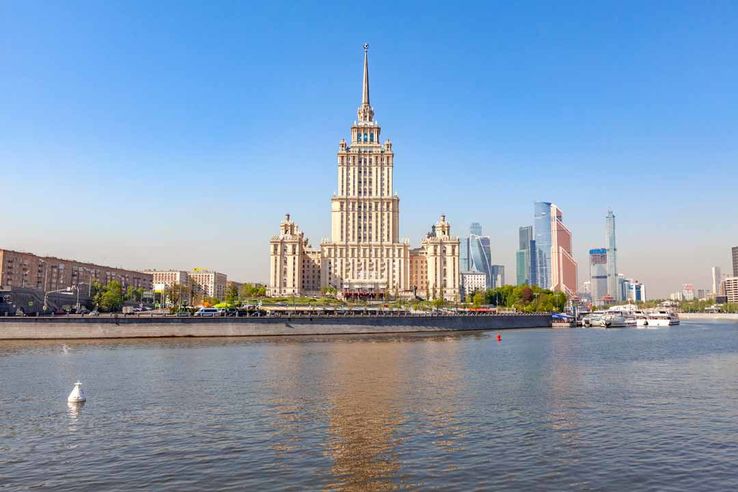
The choice of Vienna is revealing. Royal Jordanian’s chief executive, Samer Majali, described Europe as one of the airline’s most important markets, and Vienna fits neatly into the kind of route logic the carrier needs right now. Austria’s capital is not only a major leisure and business destination in its own right, but also a strong connecting hub for Central and Eastern Europe, giving Royal Jordanian access to a wider pool of passengers than a purely point-to-point route might suggest.
That matters because airlines like Royal Jordanian increasingly need routes that do double duty. They must serve local demand between Jordan and the destination itself, while also feeding traffic into a broader network. Vienna can do both. For inbound tourism, it opens another direct link between Jordan and a high-value European source market. For transit traffic, it offers access to travellers who may use Amman as a connecting point onward to the Middle East, Asia or Africa.
In other words, the route is not simply about linking Jordan to Austria. It is about inserting Amman more deeply into the European travel map through a city that has both local demand and wider network value.
Royal Jordanian is trying to grow its European presence without pretending it can outscale the giants
The airline’s messaging around the launch makes it clear that this is part of a bigger European push. Royal Jordanian says the Vienna service forms part of its strategy to reinforce its position as a leading regional carrier and increase market share across Europe. That is an ambitious goal, but it does not necessarily mean trying to compete head-on with the largest players on volume alone. More likely, it means building a smarter network of routes where Amman’s geography and Royal Jordanian’s hub model can create a useful niche.
This is where the Vienna route becomes strategically interesting. Royal Jordanian does not need to become the dominant airline between Europe and the Middle East to succeed. It needs to identify city pairs and traffic flows where it can offer a credible alternative – especially for passengers heading to Jordan itself, or for those connecting onwards to destinations where Amman makes sense as a transfer point.
That is a different game from the one played by the mega-hubs of the Gulf, but it can still be commercially effective if the network is disciplined and the product is competitive enough to win both leisure and transit travellers.
The route is also a tourism play for Jordan, not just an airline play
Royal Jordanian has been explicit that the Vienna launch is intended to support Jordan’s wider tourism ambitions, and that is a crucial part of the story. Airlines in smaller tourism-dependent markets often serve a dual role: they are commercial businesses, but they are also strategic infrastructure for the visitor economy. In Jordan’s case, that matters even more because the country is trying to strengthen its position as a global tourism destination in a region where competition for international visitors is intense.
A direct route to Vienna creates a new bridge into Central Europe at a time when tourism boards and airlines are increasingly aligned around the same goal – reducing friction for inbound travellers. A nonstop service does not just make Jordan more accessible; it makes it easier to sell. Tour operators, city-break travellers, cultural tourists and premium leisure visitors are all more likely to consider a destination when the journey is simple and direct.
For Jordan, that could mean stronger access not only to Austrian travellers but to passengers from neighbouring markets who view Vienna as a convenient departure point. That gives the route significance beyond bilateral demand and turns it into a tool for widening Jordan’s reach in Europe’s central corridor.
Amman is being positioned as a connector between Europe, Asia and Africa
The other major rationale behind the new service is transit. Royal Jordanian says Vienna’s location will improve connectivity for passengers travelling through Amman to destinations across Asia and Africa, reinforcing the carrier’s ambition to use Jordan’s capital as a bridging hub between continents. That has long been part of Royal Jordanian’s pitch, but it is becoming more important as airlines across the Middle East continue to invest in network growth and fight for a larger share of international transfer traffic.
Amman does not have the scale of Doha, Dubai or Abu Dhabi, but it does have a geographic position that can still be valuable if deployed well. For passengers travelling from parts of Europe to selected destinations in the Levant, Gulf, South Asia or North and East Africa, Amman can function as a viable and less overwhelming transit point. The challenge is to ensure the network is broad enough, schedules are well-timed and the onboard and airport experience is strong enough to make that option attractive.
The Vienna route contributes to that by widening the top of the funnel. Every additional European city with reliable service into Amman improves Royal Jordanian’s ability to capture passengers who may not be flying to Jordan itself, but through it.
Passenger experience is part of the competitive pitch, even on a network story like this
Royal Jordanian has also highlighted that the Vienna service will be operated with latest-generation aircraft equipped with onboard Wi-Fi and upgraded in-flight entertainment systems. On one level, that is standard airline launch messaging. On another, it reflects the reality that network expansion alone is no longer enough. If an airline wants to win higher-yield passengers or convince transit travellers to choose it over a better-known competitor, product matters.
That is especially true in Europe, where passengers are used to a wide range of airline options and increasingly compare not just price and schedule, but also digital convenience, onboard connectivity and the overall feel of the journey. For Royal Jordanian, investments in newer aircraft and passenger experience upgrades are therefore not cosmetic. They are part of the airline’s effort to remain relevant in a market where even mid-haul routes can be fiercely contested.
The Vienna launch becomes more compelling if it is not simply a new route, but a route that visibly reflects the airline’s broader transformation programme – newer aircraft, a cleaner product and a more competitive proposition for both local and connecting traffic.
The bigger picture is Royal Jordanian’s long-term transformation
The Vienna announcement fits into a much wider effort by Royal Jordanian to modernise and reposition itself. The airline has spent recent years pursuing a transformation strategy aimed at fleet renewal, network expansion and improving the customer proposition, while trying to sharpen its role as Jordan’s national carrier. That is a complex balancing act. Royal Jordanian must remain a symbolically important airline for the country while also operating with enough commercial discipline to survive in one of the most competitive aviation regions in the world.
New routes like Vienna are therefore not isolated wins. They are test cases for whether the airline’s broader strategy is working. Can Royal Jordanian grow in Europe without overextending? Can it turn Amman into a more compelling transfer point? Can it support Jordan’s tourism ambitions while also improving its own market share and financial resilience? These are the bigger questions hanging behind what might otherwise look like a routine route launch.
The answer will depend on execution as much as ambition. Frequency, pricing, onward connectivity, local sales and schedule reliability will all matter. So will the airline’s ability to continue building a coherent European network rather than a scattered set of routes that are individually useful but collectively weak.
Why the Vienna route matters now
Royal Jordanian’s new Amman-Vienna service matters because it sits at the intersection of several trends shaping aviation in 2026. Airlines across the Middle East are once again in expansion mode. National tourism strategies are increasingly tied to air connectivity. European travellers remain valuable targets for both inbound tourism and transfer traffic. And mid-sized airlines are under pressure to prove they can still carve out meaningful space in a market dominated by giants.
For Royal Jordanian, Vienna is not the final answer to those pressures, but it is a meaningful step. It strengthens the airline’s footprint in one of its most important markets, gives Jordan another direct connection into Central Europe, and supports the long-term effort to make Amman more than just a national capital with an airport – instead, a hub with genuine regional relevance.
That is why this route is more important than it might first appear. It is not simply a new four-times-weekly service to Vienna. It is part of Royal Jordanian’s attempt to rebuild scale, relevance and connectivity at a moment when the airline is trying to prove that Jordan can play a larger role in the international aviation map than its size alone might suggest.