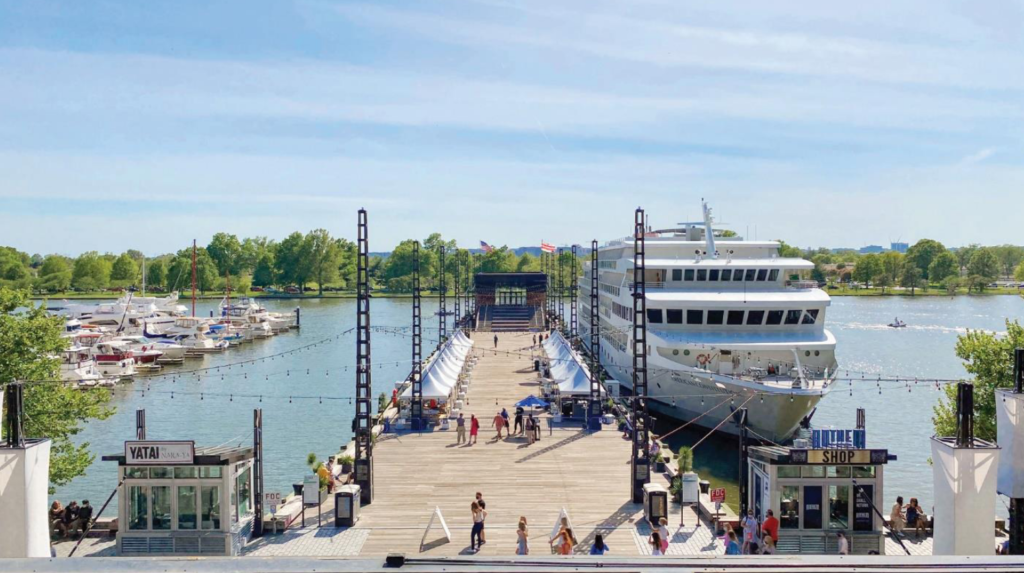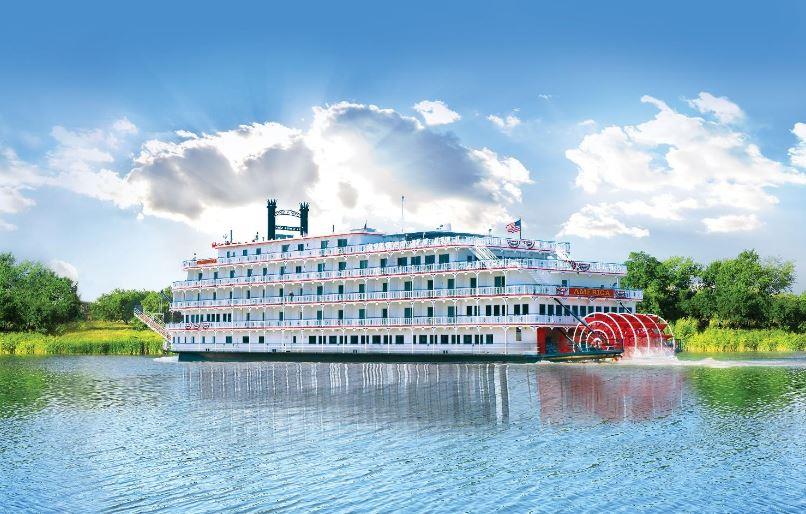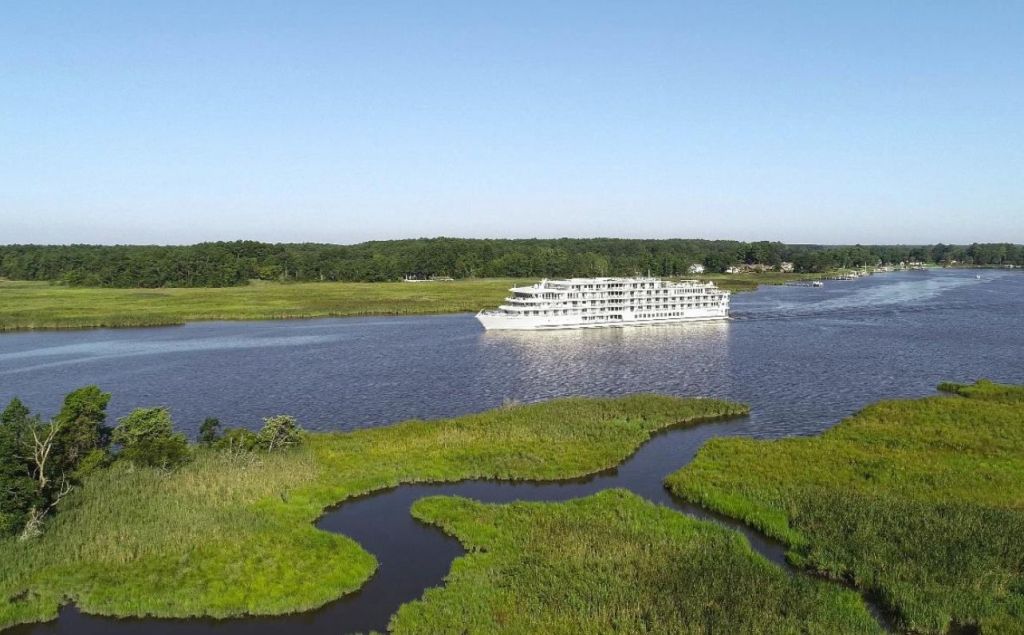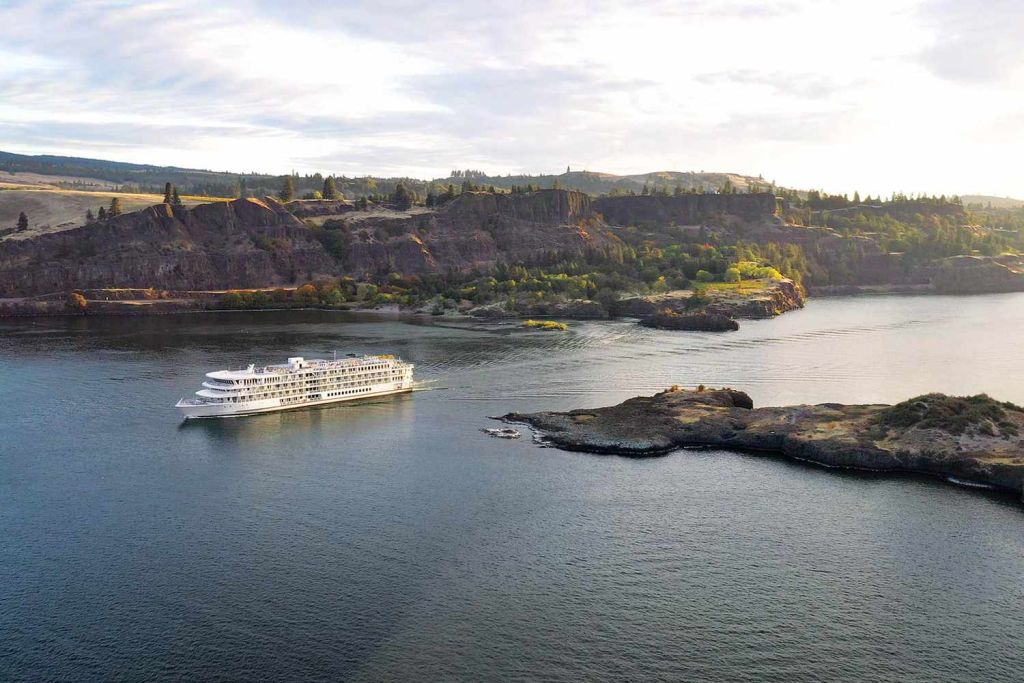
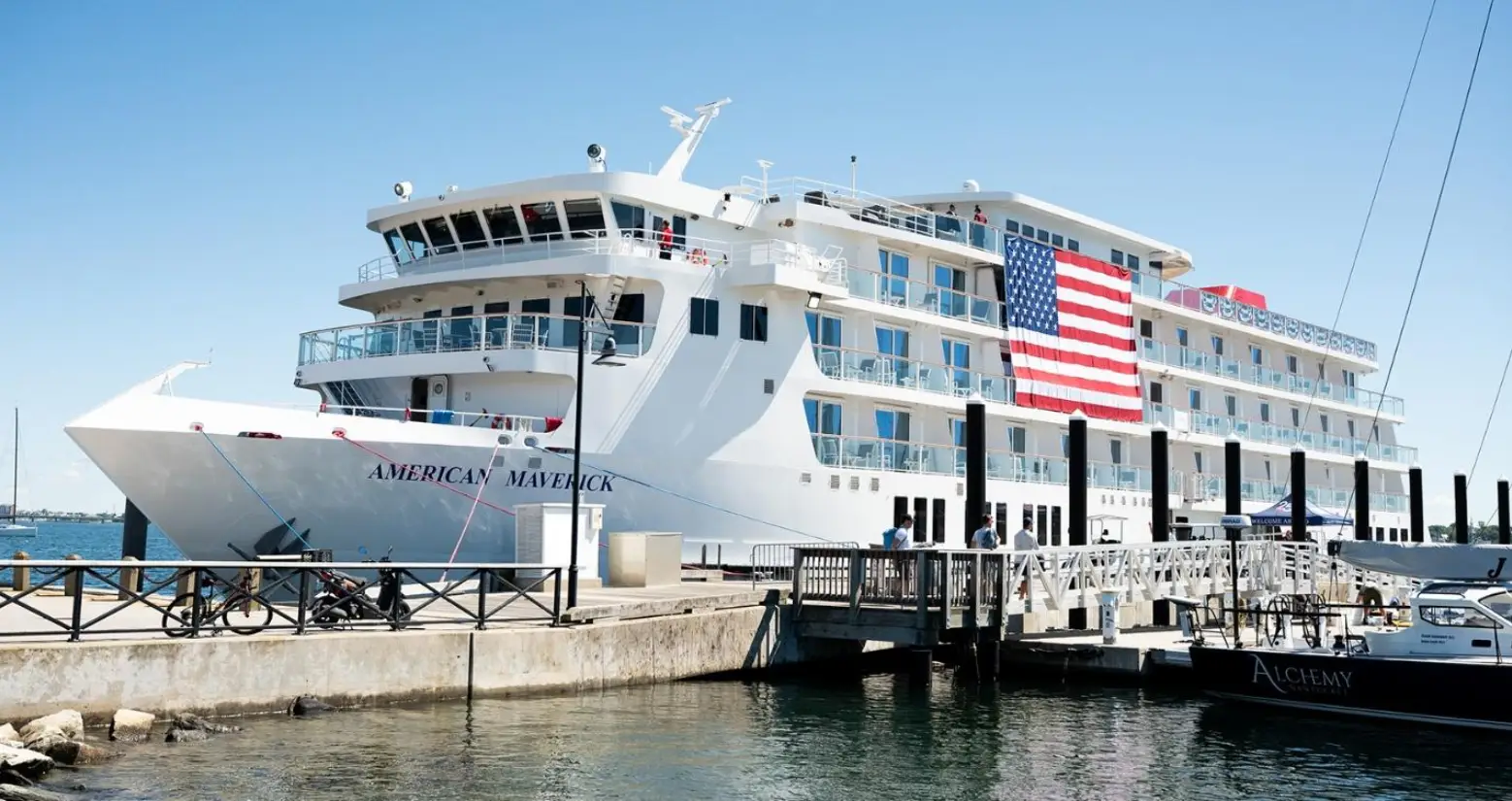
The 130-guest American Maverick entered service during its inaugural 9-Day New England Islands cruise, sailing roundtrip from Providence. On paper, it is the newest cruise ship built in the United States. In strategic terms, it is also a statement about where American Cruise Lines sees the next chapter of the cruise business heading: not toward ever-larger floating resorts, but toward a growing fleet of purpose-built small ships designed specifically for U.S. waterways and coastal itineraries.
American Maverick is more than a ship launch – it is a signal of where the U.S. cruise market is heading
The christening of American Maverick comes at a moment when American Cruise Lines is aggressively expanding both its coastal and river cruise footprint. The ship is the latest in a pipeline that will soon include American Ranger, American Mariner and American Navigator, while the company also launched the new riverboat American Encore in May. Together, those deliveries show a company moving at unusual speed for a niche operator, with domestic cruise growth becoming central to its identity rather than a side segment of the wider cruise industry.
That is what makes American Maverick interesting beyond the christening photos and ceremonial bottle smash. It represents a very specific thesis: that there is room in the market for a scaled-up version of premium domestic cruising, built around smaller ships, U.S. itineraries and travellers who want a more curated experience than the mass-market cruise sector typically offers.
American Cruise Lines is trying to redefine what “small ship” means in the U.S.
Small-ship cruising has often been treated as a niche corner of the travel industry, associated either with riverboats or expedition-style vessels. American Cruise Lines is pushing for something broader. American Maverick accommodates 130 guests and includes features more commonly associated with higher-end boutique ships: all-private balcony staterooms, suites and single cabins, multiple lounges, a chart room, a main restaurant, a casual café, a fitness centre and a top-deck lounge with a walking track.
That product positioning matters. The company is not simply selling a smaller vessel – it is selling a different type of cruise proposition. The idea is that a ship can remain compact enough to feel intimate and destination-focused, while still offering the kind of comfort, privacy and premium touches that appeal to modern travellers used to upscale hotels and river cruises.
In effect, American Cruise Lines is trying to create a category that sits between classic river cruising and large-ship ocean cruising: a premium domestic small-ship experience with a distinctly American geographical and cultural focus.
Why New England is the perfect stage for the launch
There is a reason American Maverick made its debut in Newport during a New England Islands itinerary rather than somewhere flashier or more tropical. New England is one of the clearest examples of the kind of market American Cruise Lines wants to own – a region rich in heritage, coastal scenery, culinary identity and manageable port-to-port distances, all of which lend themselves well to a small-ship cruise model.
Launching the ship on a roundtrip Providence sailing also reinforces the company’s focus on domestic convenience. Travellers do not need passports, long-haul flights or complicated international logistics. Instead, they get a cruise built around iconic regional experiences, from harbours and historic towns to the kind of shore atmosphere that a traditional New England lobster bake can symbolise perfectly.
In a broader sense, that is part of the brand’s appeal. American Cruise Lines is packaging familiar parts of the country in a way that makes them feel elevated, slow-paced and immersive – not just as places to visit, but as landscapes to travel through.
The domestic cruise market is becoming a serious growth play
For years, the mainstream cruise conversation has been dominated by the giant global brands and their floating cities at sea. But American Cruise Lines is making a case for a different growth story: one rooted in domestic travel, smaller vessels and a guest base that may be less interested in waterslides and mega-entertainment than in comfort, scenery and ease.
That proposition looks especially relevant at a time when some travellers are prioritising simplicity, proximity and lower-friction travel choices. Domestic cruising offers a compelling answer to several current travel trends at once: it removes many of the hassles associated with international trips, it taps into nostalgia and regional identity, and it aligns with the growing appetite for more experience-led, less crowded forms of travel.
American Cruise Lines’ all-U.S.-flagged fleet also gives it a distinctive position in the market. This is not just a branding detail. It reinforces the company’s claim that it is building something structurally different from the international cruise giants – a cruise network dedicated entirely to American waterways, coastlines and home-grown itineraries.
American Maverick arrives as the company pushes a much bigger fleet story
The christening would be notable on its own, but it is even more significant in the context of what comes next. American Cruise Lines says it has multiple new ships under construction, and the cadence of launches suggests it is moving with real confidence in future demand. American Maverick is therefore less of a standalone product debut and more of a fleet signal – one ship in a much larger effort to expand capacity, refresh the product and establish leadership in a segment that still has room to grow.
That fleet-building strategy also allows the line to sharpen its identity across different domestic cruise formats. With coastal small ships like American Maverick and newer riverboats like American Encore, the company is broadening the ways it can sell the United States as a cruise destination, from New England and the Southeast to river corridors deeper inland.
In other words, the company is not just adding ships. It is building a domestic cruise ecosystem.
The bigger bet is on travellers choosing the U.S. as the destination, not just the departure point
One of the most interesting elements of American Cruise Lines’ strategy is that it treats the United States itself as the core cruise attraction. That may sound obvious, but it marks a meaningful contrast with much of the global cruise business, where the ship often overshadows the destination. Here, the product is built around the waterways, coastlines, small towns and regional culture of the U.S. itself.
That is a powerful angle at a time when domestic travel is being reimagined across multiple sectors. Hotels, rail operators and tour companies are all finding new ways to sell familiar destinations back to American travellers through a more premium, story-driven lens. American Cruise Lines is doing the same on the water, framing the country’s rivers and coasts not as second-tier alternatives to Europe or the Caribbean, but as destinations worthy of dedicated exploration in their own right.
The timing is also symbolically convenient. As the United States approaches its 250th birthday, the company is leaning into a narrative of American waterways, American shipbuilding and American travel heritage – one that positions its fleet as both a modern luxury product and a celebration of domestic exploration.
Why American Maverick matters now
The launch of American Maverick matters because it captures a shift that is becoming easier to see across the travel industry: growth is no longer coming only from bigger, farther, more international. In some corners of the market, it is coming from the opposite direction – smaller, closer, slower and more place-driven.
American Cruise Lines is betting that this is not a passing mood but a durable market opportunity. If that bet pays off, American Maverick will be remembered not simply as another ship christening in Newport, but as part of the moment when domestic small-ship cruising started to move from niche product to serious travel category.
For now, the ship begins its life carrying 130 guests around New England. But strategically, it carries something larger: American Cruise Lines’ belief that the future of premium cruising in the U.S. can be built on American rivers, American coasts and a fleet of small ships designed to make the journey itself feel personal again.