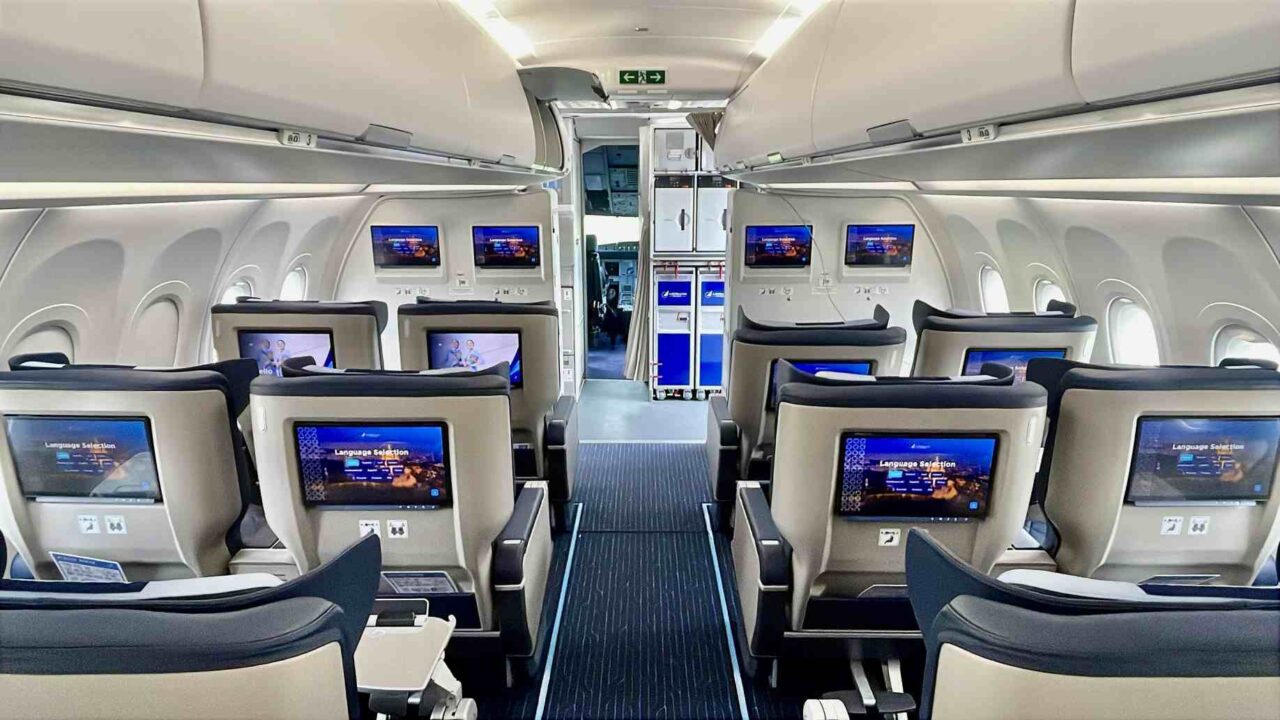
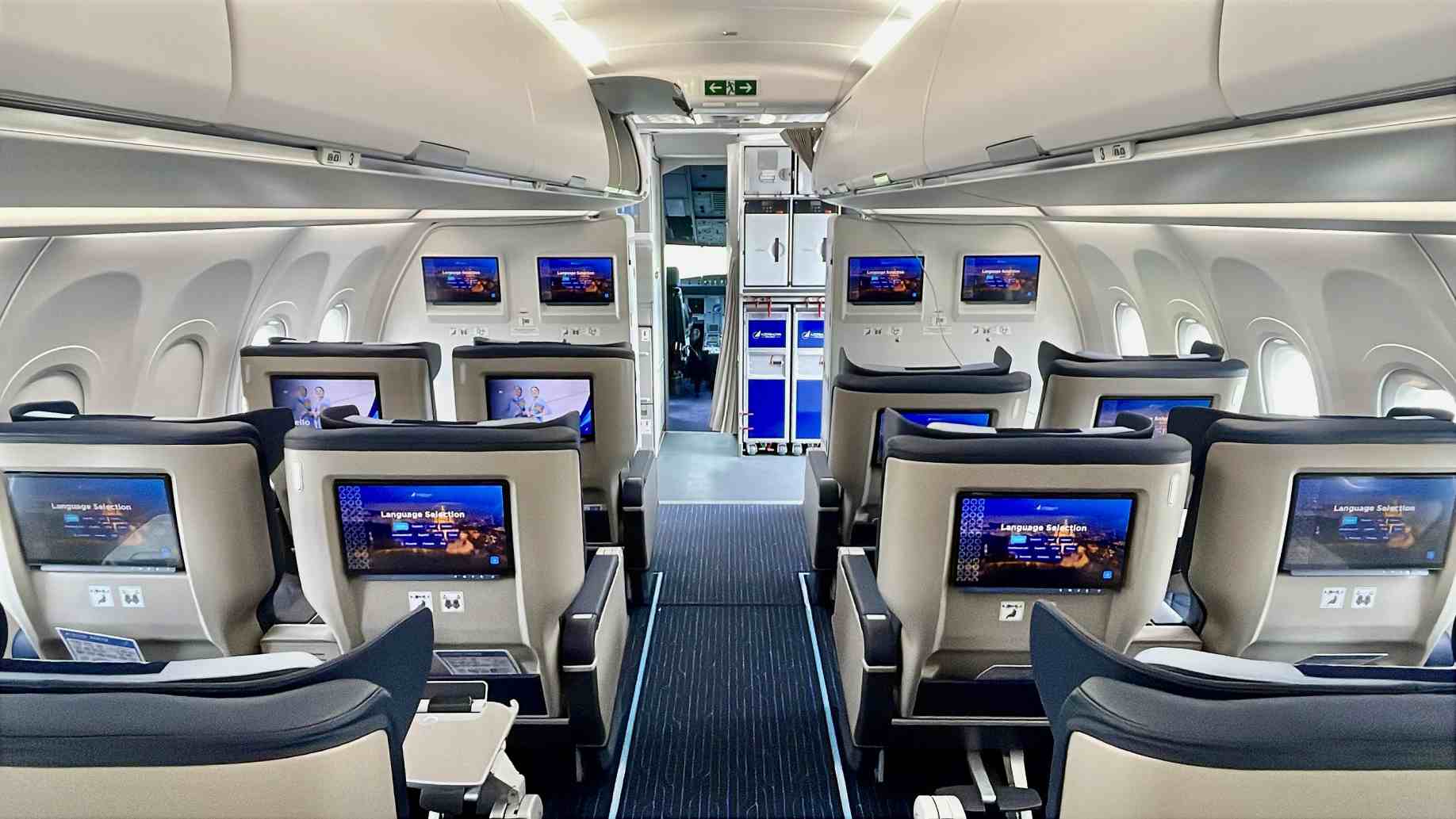
Azerbaijan Airlines has begun rolling out Panasonic Avionics’ latest generation inflight entertainment technology across its Airbus narrowbody fleet, introducing 4K seatback displays, Bluetooth connectivity and personalized passenger experiences as part of a wider fleet modernization strategy.
The deployment marks the commercial launch of Panasonic Avionics’ Astrova entertainment platform and Modular Interactive technology on the airline’s Airbus A320neo family aircraft.
The move positions Azerbaijan Airlines among a growing number of carriers investing heavily in premium onboard technology beyond long-haul cabins.
22 Aircraft To Receive New Entertainment Technology
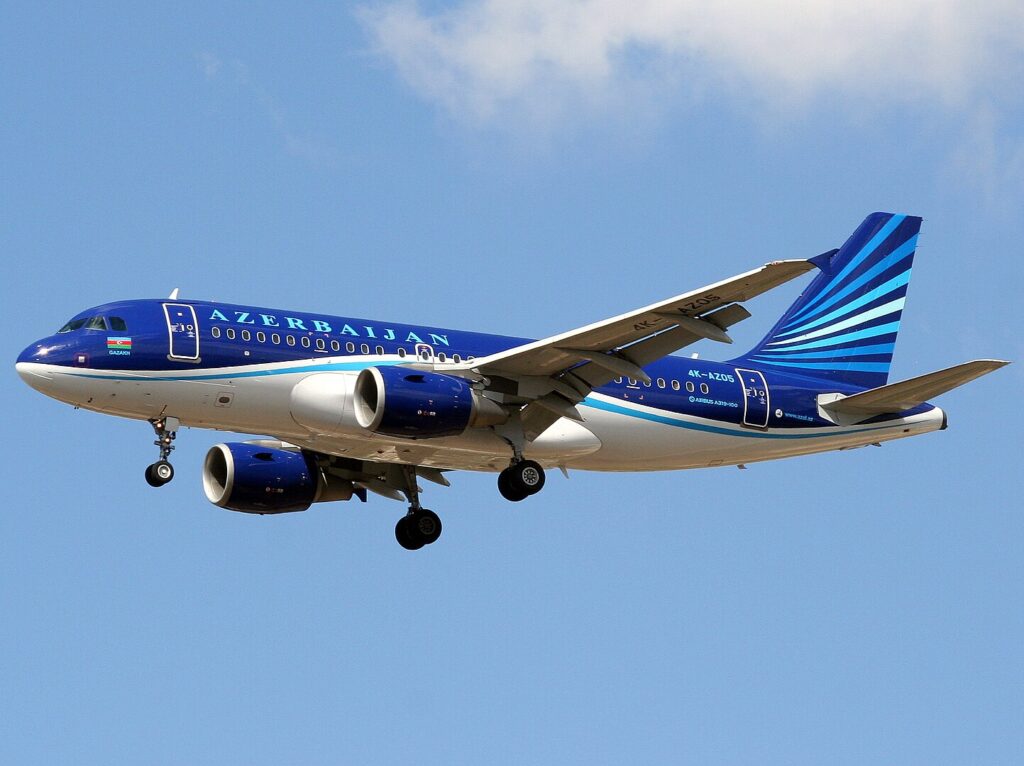
The rollout initially covers 11 aircraft currently entering service, including six Airbus A321neo aircraft and five Airbus A320neo aircraft.
Panasonic says the full deployment will eventually extend across 22 aircraft in Azerbaijan Airlines’ fleet.
The installations include both factory-fitted aircraft deliveries and retrofit programs for existing aircraft.
The investment forms part of the airline’s broader customer experience transformation strategy as competition intensifies across regional and international markets.
Passengers Gain 4K Screens, Bluetooth And Fast Charging
Passengers onboard upgraded aircraft will receive access to Panasonic’s Astrova inflight entertainment platform featuring 4K OLED HDR10+ displays and enhanced personalization tools.
Each seat will also include USB-C charging with power delivery of up to 67 watts, allowing passengers to charge laptops, tablets and smartphones throughout flights.
Bluetooth audio support enables travelers to connect personal wireless headphones directly to seatback entertainment systems, removing the need for wired alternatives.
The technology reflects broader passenger expectations as airlines increasingly compete on onboard digital experiences even on short and medium-haul routes.
Airline Gains More Control Over Passenger Experience
The new Modular Interactive platform gives Azerbaijan Airlines greater flexibility to modify onboard content, promotional campaigns and personalized experiences without lengthy development cycles.
Using Panasonic’s cloud-based MI Studio system, the airline can introduce targeted experiences based on cabin class, route, loyalty status and destination.
The platform also enables faster testing and optimization of entertainment interfaces and promotional content.
As airlines increasingly focus on ancillary revenue, customer retention and personalization, investments in configurable entertainment ecosystems are becoming a growing competitive differentiator across global aviation.