
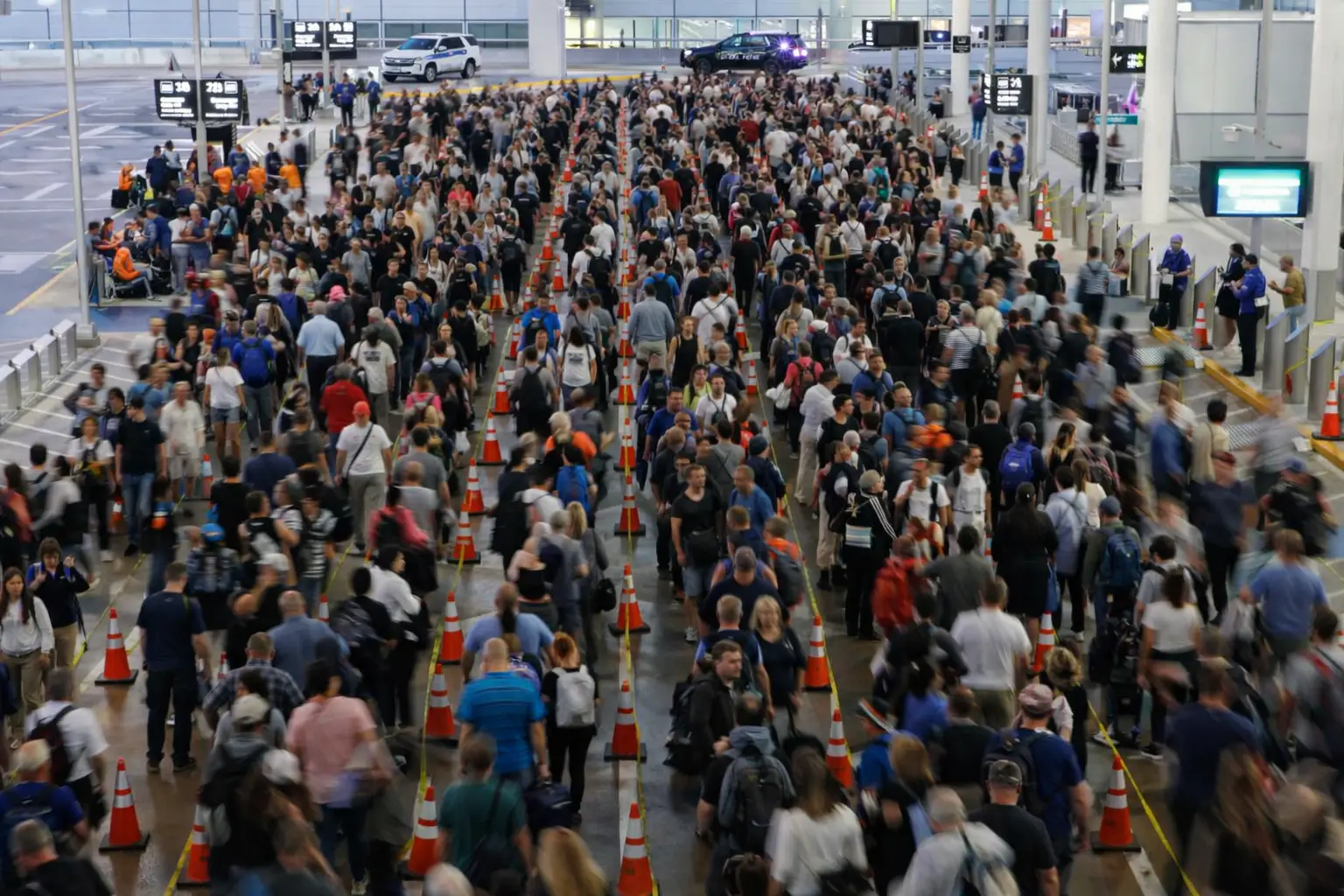
Spanish airports have introduced new measures to help families with children as long border queues linked to the new European Union Entry/Exit System continue to disrupt travel.
The changes affect a growing number of passengers passing through Spain’s busiest airports, where families have faced delays while border staff adapt to the new biometric checks. Airport operators say the new arrangements are designed to make the process smoother for people travelling with young children.
Under the updated rules, families are being directed to priority lanes or separate assistance points at selected airports, reducing waiting times for those with pushchairs, infants and other small children. The move comes as Spain, one of Europe’s most popular holiday destinations, sees continued pressure on arrivals processing at major hubs.
The Entry/Exit System, or EES, is the European Union’s new digital border system for non-EU travellers. It records passport details and biometric data, replacing manual passport stamping at external Schengen borders.
Airports in Spain have reported that the transition has been uneven, with some travellers experiencing longer waits during busy periods. Families are among those most affected, particularly at peak holiday times when queues at passport control can build quickly.
Officials say the new family-friendly measures are intended to ease congestion and improve the passenger experience while border teams become familiar with the system. The changes are also expected to help staff manage the higher workloads created by the additional checks.
The rollout of the EES has been closely watched across Europe because it affects millions of short-stay visitors from outside the bloc. The system is meant to strengthen border security and improve the tracking of overstays, but its introduction has also raised concerns about delays at airports and ferry terminals.
Travellers with children have been repeatedly highlighted as a group needing special assistance because they are often less able to stand in long queues for extended periods. At Spanish airports, the new arrangements are being presented as a practical response to that problem rather than a change to border rules themselves.
Airport authorities have not said the measures are permanent, but they reflect a wider effort to reduce the impact of the EES on passengers during the early phase of implementation. As more airports adjust their procedures, families are likely to see the effects first at major gateways serving leisure and holiday traffic.