El Escorial stands as one of Spain’s most remarkable historic sites, combining royal, religious and artistic history in a single vast complex. Often described as the world’s largest Renaissance building, it continues to attract visitors interested in architecture, heritage and the legacy of the Spanish monarchy.
The site was built to reflect power and faith on an enormous scale. Its size, design and collection of cultural treasures have helped make it a major destination for travellers who want to understand how religion and royalty shaped Spanish history.
The monastery-palace was commissioned by King Philip II in the 16th century and later became one of the most important monuments in Europe. With hundreds of rooms and a monumental layout, it remains a strong symbol of the period in which Spain was a dominant global power.
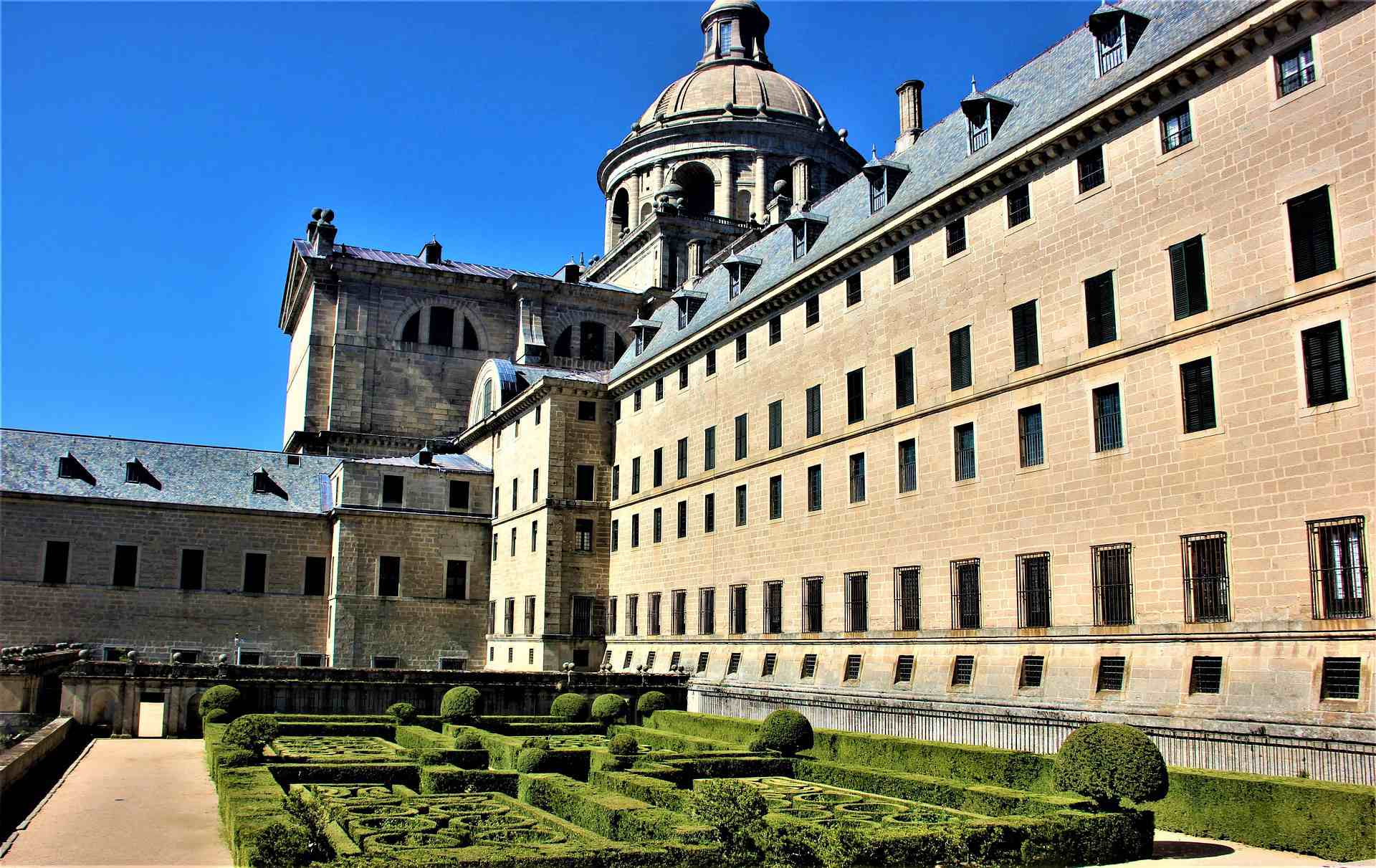
Located in the town of San Lorenzo de El Escorial, around 45 kilometres north-west of Madrid, the complex brings together a palace, monastery, basilica, library, mausoleum and museum spaces. The site is recognised for its austere exterior and for the intricate detail found inside its chapels, halls and collections.
Historians say Philip II wanted a building that would serve several purposes at once. It was intended to honour his father, Emperor Charles V, and to act as a royal burial place, a religious centre and a statement of imperial authority.
The project began after the Battle of Saint-Quentin in 1557, a victory Philip linked to St Lawrence. That connection influenced the dedication of the site, which was designed in the shape of a gridiron, the instrument associated with the saint’s martyrdom.
Construction lasted more than two decades and involved some of the leading architects, builders and artists of the time. The result was a monumental stone complex with strict geometric lines, reflecting the sober tastes of the king and the religious climate of the Counter-Reformation.
Inside, El Escorial houses an important library with thousands of manuscripts and printed works. Its collection once made it one of the great centres of learning in Europe, drawing scholars as well as pilgrims and courtiers.
The basilica sits at the heart of the complex and contains elaborate altarpieces and funerary monuments. Beneath the church lies the Royal Pantheon, where many Spanish monarchs are buried, reinforcing the site’s role as a dynastic memorial.
For many visitors, the scale of the building is its most striking feature. The complex covers a vast area and includes more than 450 rooms, along with courtyards, gardens and public and private spaces that reveal how the Spanish court lived and ruled.
El Escorial has also endured as a UNESCO World Heritage Site, which has helped preserve its artistic and historical value for future generations. Its status places it among the most significant heritage attractions in the country.
Tourism officials and guides continue to present the site as essential for anyone interested in Spanish culture. The blend of architecture, religion, royal ceremony and scholarship makes it more than a monument, and more like a complete record of an era.
Visitors today can explore the complex as part of a day trip from Madrid, with the surrounding mountain town offering views and a quieter pace than the capital. That combination of easy access and historical depth has kept El Escorial firmly on the itinerary for culture-minded travellers.
The appeal is likely to remain strong because the site tells several stories at once: the ambitions of a king, the influence of the Catholic Church and the artistic achievements of the Renaissance. For travellers seeking history with scale and substance, El Escorial remains one of Europe’s standout cultural landmarks.
Photo by Lusia