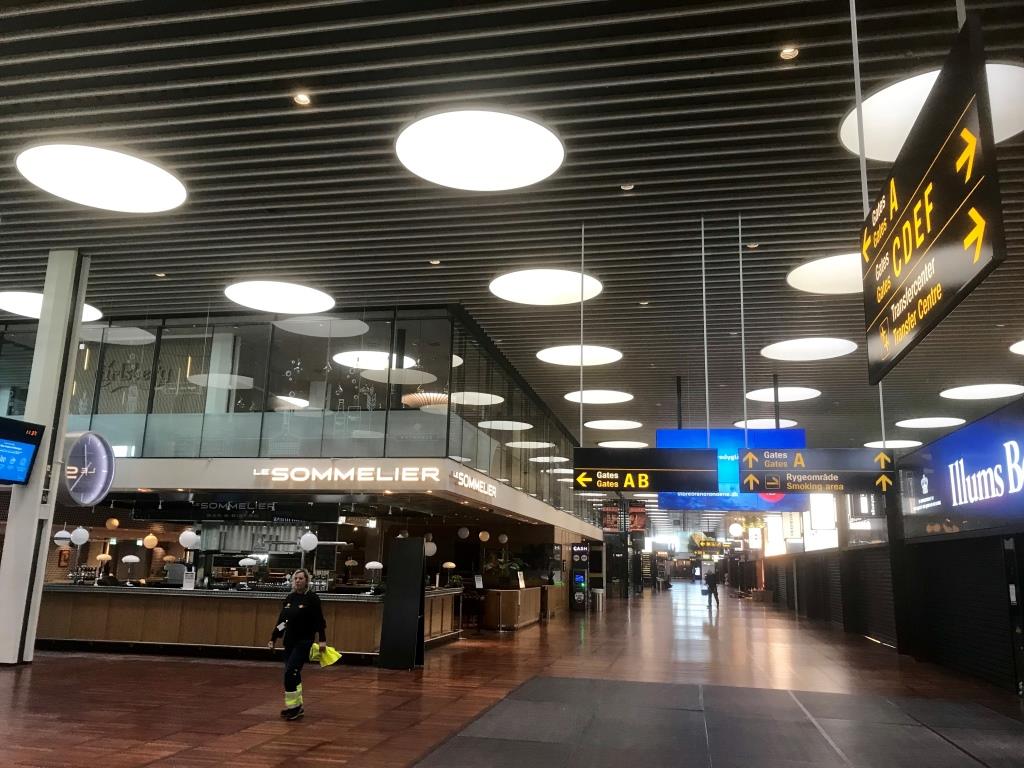
Passengers at Copenhagen Airport continue to face long queues six months after the introduction of the European Union’s Entry/Exit System (EES), with delays affecting both arrivals and departures. The system, designed to strengthen border control through biometric data collection, has led to processing bottlenecks during peak travel periods.
The EES requires non-EU travellers to register fingerprints and facial images when entering or leaving the Schengen Area. While authorities say the system improves security and tracking of overstays, travellers report waiting times stretching well beyond an hour, particularly during busy morning and evening schedules.
Airport operators acknowledge the disruption but say adjustments are ongoing. Additional staff and revised passenger flows have been introduced, yet congestion remains a persistent issue as passenger numbers recover to pre-pandemic levels.
The European Union launched the EES to replace manual passport stamping with a digital system that records travellers’ movements. It aims to streamline border management across member states, but its rollout has proven complex. Copenhagen Airport, one of Scandinavia’s busiest hubs, has become a visible example of the challenges involved.
Passengers describe a sense of inevitability about the delays, with many arriving earlier to avoid missing flights. Travel industry groups say the uncertainty is affecting traveller confidence, particularly among long-haul visitors unfamiliar with the new procedures.
The system requires first-time users to undergo full biometric registration, which can take several minutes per passenger. Even returning travellers, though processed more quickly, still add to overall queue times. During peak hours, the cumulative effect has created extended lines at border control points.
Airport authorities have responded by increasing staffing levels and deploying additional guidance personnel to direct passengers through the process. Temporary queue management systems and clearer signage have also been introduced to improve flow.
Despite these measures, capacity constraints remain. Border control areas were not originally designed for the extended interaction required by biometric checks, limiting how quickly passengers can be processed. Industry experts note that infrastructure upgrades may be needed to fully accommodate the system.
Airlines operating from Copenhagen have advised passengers to arrive earlier than usual, particularly for international departures. Some carriers have adjusted boarding procedures to account for potential delays at security and passport control.
The European Commission has defended the EES, stating that initial disruptions were expected during the transition period. Officials argue that once travellers are registered in the system, processing times should improve, reducing queues over time.
However, with the busy summer travel season approaching, concerns remain about whether airports can manage increased passenger volumes without further delays. Travel organisations warn that prolonged waiting times could impact tourism and business travel if not addressed.
Copenhagen Airport continues to work with national border authorities and EU agencies to refine the system. Further technological updates and operational adjustments are expected in the coming months.
For now, travellers passing through the airport are adapting to the new reality, allowing extra time and preparing for longer waits as biometric border controls become a permanent feature of European travel.