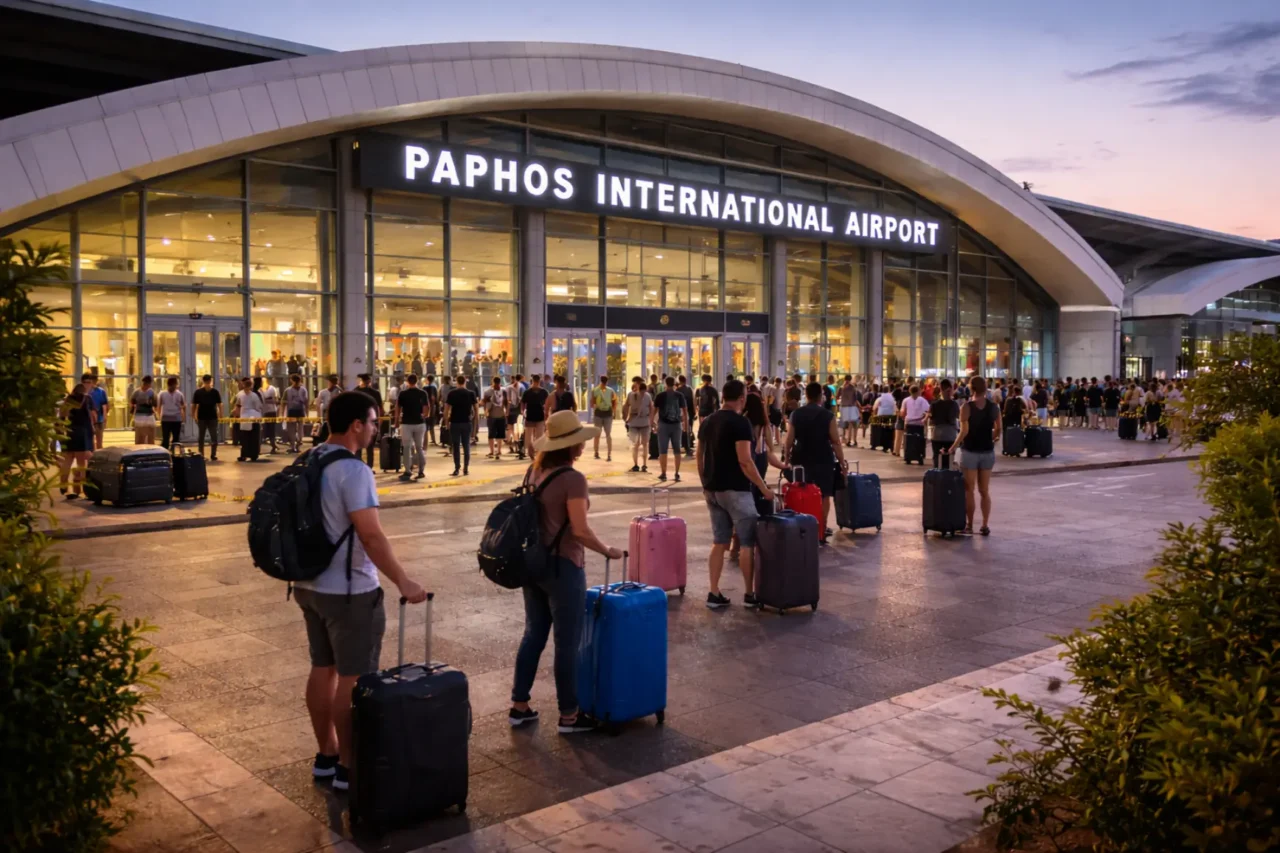

Cyprus has removed the requirement to use the EU’s Entry Exit System (EES) for British travellers this summer, in a move aimed at reducing airport congestion during the peak holiday season. The decision applies to UK passport holders arriving at Cypriot airports, where authorities expect a surge in visitor numbers.
The government said the temporary measure is designed to streamline border procedures and prevent long queues as passenger traffic rises. Cyprus, a major Mediterranean destination for British tourists, has faced pressure to maintain smooth arrivals as demand rebounds.
The change comes as the European Union prepares to roll out the EES across Schengen area countries, requiring non-EU travellers to register biometric data on entry and exit. Cyprus, which is not part of the Schengen zone, has flexibility over how it implements the system and has chosen to suspend it for UK visitors during the busiest months.
Tourism officials say the move will help airports cope with high volumes of arrivals, particularly from the United Kingdom, one of Cyprus’s largest source markets. British travellers account for a significant share of summer bookings, with families and package holidaymakers driving demand.
Airports have faced concerns that the introduction of biometric checks could slow processing times, especially during peak hours. Industry groups across Europe have warned that the initial rollout of EES may lead to longer waiting times as systems bed in and staff adapt to new procedures.
By removing the requirement, Cypriot authorities aim to keep passenger flows steady and avoid bottlenecks at passport control. Airport operators are also expected to deploy additional staff and open more lanes to manage traffic efficiently.
The decision has prompted questions about whether other popular destinations, including Spain, could adopt similar measures to ease pressure on their own border systems. Spain, a Schengen member, is required to implement EES rules once they come into force, limiting its ability to opt out.
Spanish airports, particularly in tourist hotspots such as Mallorca, Tenerife and the Costa del Sol, handle millions of British visitors each year. Any increase in processing times could have a noticeable impact on queues and overall passenger experience.
Travel industry experts say that while Cyprus can act independently due to its non-Schengen status, most EU countries will need to comply fully with EES requirements. This means travellers to those destinations should expect additional checks once the system is operational.
The EES is designed to enhance border security by recording the entry and exit of non-EU nationals, replacing manual passport stamping with a digital system. It will collect fingerprints and facial images, allowing authorities to monitor overstays and improve data accuracy.
However, airlines and airport operators have warned that infrastructure and staffing must be ready to handle the added complexity. Without adequate preparation, they say, queues could lengthen significantly during busy periods.
Cyprus’s approach highlights the balance between security measures and tourism needs. By prioritising speed and convenience for a key visitor group, the country hopes to maintain its competitiveness as a holiday destination.
Travellers heading to Cyprus this summer are still advised to check entry requirements before departure, as rules may change. Authorities have indicated that the suspension of EES for UK visitors is temporary and will be reviewed after the peak season.
For now, the move is expected to offer a smoother arrival experience for British holidaymakers and reduce pressure on airport facilities during one of the busiest travel periods of the year.
Image: LaraKoptseva