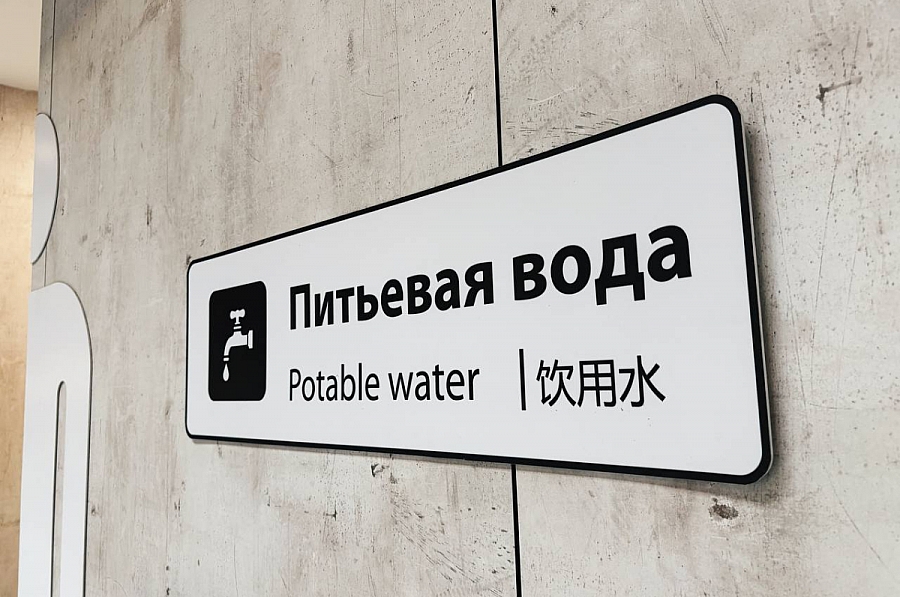
If you’re flying through Russia this summer, you might want to pack more than just your passport and boarding pass—bring an empty water bottle, too. With flight delays becoming a new normal and temperatures soaring, free access to drinking water in Russian airports is more than a comfort—it’s essential. But not every airport offers it, and even among the big ones, the experience varies.
Moscow Airports: Leading the Way
In the capital, the situation is significantly better than in most regional airports, thanks to clear infrastructure and some airline support.
Sheremetyevo Airport (SVO) has provided free drinking water to all passengers since 2015. Terminals are equipped with drinking fountains and purifiers—devices that filter, cool, and heat water. During flight disruptions, Aeroflot staff even hand out bottled water near ticket counters. If you prefer bottled water, it’s available from 59 rubles (about $0.65) for 0.5 liters in both the arrivals and departures zones.
Vnukovo Airport (VKO) is also on the hydration map. All terminals feature drinking fountains, and partner airlines occasionally distribute free bottled water to passengers near check-in counters. Bottled water is also sold in shops and cafes, starting at 45 rubles (about $0.50) for 0.5 liters.
Domodedovo Airport (DME) says water access is not a problem. The terminal is equipped with purifiers, and free water is available in various locations including the DME Med medical center, Family Service area, children’s playroom, and the waiting area for passengers with limited mobility. Bottled water is sold throughout the terminal. At the “Alyonka” store, 0.5-liter bottles of still water are just 43.99 rubles, while prices in chain stores like Magnit GO and Magnit City range from 89 to 99.99 rubles, depending on the brand. In the sterile zone of Gallery C, you’ll find water in shops and cafes priced between 75 and 100 rubles.
Pulkovo and Kazan: Reliable Options Outside Moscow
Pulkovo Airport (LED) in St. Petersburg is well-equipped, with drinking fountains available in key post-security areas. Likewise, Kazan Airport (KZN) provides accessible water sources across its terminals.
Tolmachevo Airport
Novosibirsk’s Tolmachevo Airport, the largest aviation hub east of the Ural Mountains, has begun installing free drinking water fountains following repeated complaints about overpriced bottled water. The initiative comes after Russia’s Federal Antimonopoly Service (FAS) raised concerns over excessive retail markups at airport shops.
The airport’s press service confirmed that installation work is already underway, with the fountains expected to be fully operational by the end of 2025.
A drinking fountain has been installed at Stavropol Airport.
Most Other Russian Airports? Bring Your Own
Unfortunately, the picture changes quickly once you leave the major hubs. Regional airports such as Kaluga, Tambov, Yaroslavl, Murmansk, or Chita rarely have drinking fountains, and you’ll likely need to buy bottled water. Prices typically range from 100 to 150 rubles ($1–$1.60).
Even airports in larger cities like Samara, Novosibirsk, and Rostov-on-Don have inconsistent infrastructure. You may find a water source—or you may not.
Reusable Bottles: Still Your Best Bet
Security won’t let you bring liquids through checkpoints, but you can bring an empty reusable bottle and refill it after security where fountains exist. In airports without water sources, bottled water is your only option.
Lounges Offer Guaranteed Hydration
Airport lounges remain the most reliable way to access clean, free water—bottled or otherwise. If you have lounge access through a membership, credit card, or frequent flyer status, that’s your backup hydration plan.
Final Boarding Call: Plan Ahead
With over 1,000 flight cancellations and hundreds of diversions reported since May, travelers are spending more time in terminals. Heatwaves and long layovers only add to the stress—and dehydration. While airports in Moscow, St. Petersburg, and Kazan have stepped up, most others lag behind. Stay prepared and bring your own bottle—hydration might just be a DIY project in Russian airports.