
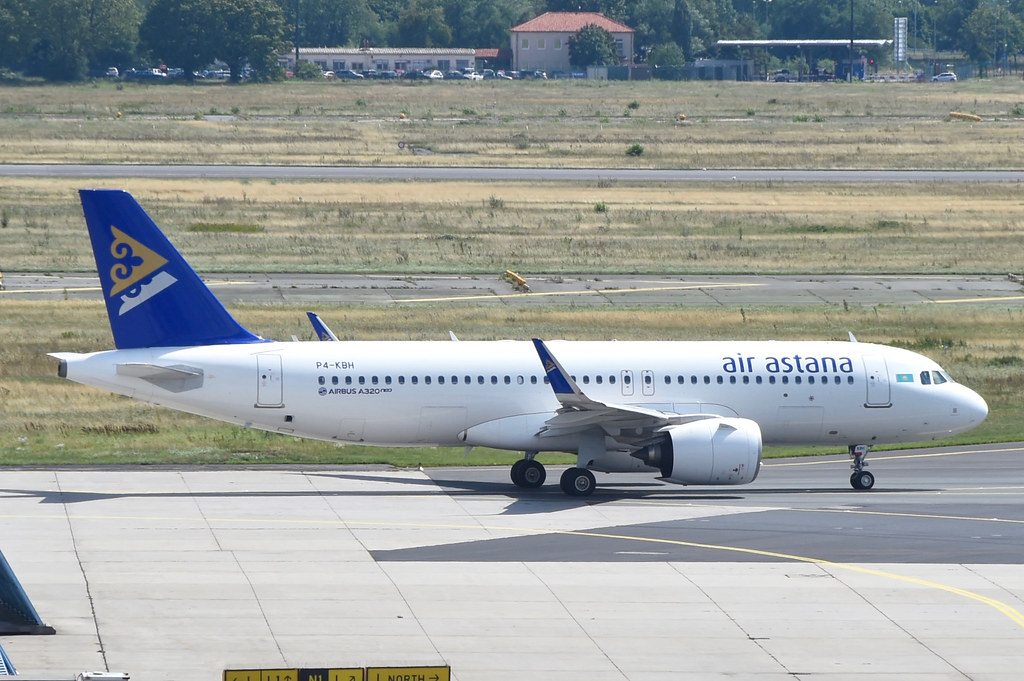
For Air Astana, the order is not simply a fleet renewal decision. It is a long-term growth investment that will shape the future of both the full-service airline and its low-cost subsidiary FlyArystan. For Kazakhstan, the deal carries broader economic and transport significance, with the potential to expand route networks, improve domestic and international connectivity and strengthen the country’s position as a key aviation and transit hub across Eurasia.
Air Astana places the biggest aircraft order in Kazakhstan’s history
The new agreement covers up to 50 Airbus A320neo family aircraft, including 25 confirmed aircraft and 25 additional options that can be exercised later depending on market demand and the group’s expansion plans.
In scale alone, the deal is unprecedented for Kazakhstan. No Kazakh airline has previously placed a direct order of this size with a single manufacturer. At a time when passenger traffic in Central Asia continues to grow and competition for transit flows is intensifying, Air Astana is making a clear statement that it intends to scale up its fleet in a systematic way rather than through small, incremental additions.
The fact that this is a direct Airbus order also matters. It deepens the strategic relationship between the airline and the manufacturer and signals that Air Astana is planning for long-term fleet growth built around the Airbus narrowbody platform.
The A320neo family is central to Air Astana’s expansion strategy
The choice of the Airbus A320neo family reflects the current structure and ambitions of the Air Astana Group. These aircraft are well suited to regional and medium-haul flying, offering improved fuel efficiency, lower operating costs and the flexibility to support both route expansion and higher frequencies on existing services.
For Air Astana and FlyArystan, the order creates room to grow both domestic and international operations. In Kazakhstan, where large distances between cities make air travel especially important, fleet expansion directly supports regional connectivity and mobility. More aircraft mean greater flexibility to add routes, strengthen schedules and serve underserved markets more effectively.
The A320neo family is also a practical fit for the group’s dual-brand model. It can support Air Astana’s full-service operations while also giving FlyArystan the aircraft platform it needs to continue expanding as a low-cost carrier. That makes the order a strategic investment across the entire airline group rather than a fleet decision for just one brand.
The order supports Kazakhstan’s ambitions as a Eurasian transit hub
The significance of the deal extends well beyond Air Astana itself. Kazakhstan has been working to strengthen its role as a transport and logistics hub linking Europe and Asia, and aviation is becoming an increasingly important part of that strategy.
Expanding the Air Astana fleet should allow the airline group to add new destinations, increase frequencies and improve connectivity both within Kazakhstan and across international markets. That matters in a country positioned between Europe, China, South Asia, the Middle East and Russia – a location that gives Kazakhstan natural potential to serve as a transit point for passengers moving across the Eurasian landmass.
The stronger and more modern the national airline’s fleet becomes, the more realistic those transit ambitions are. In that sense, the Airbus order is not only a corporate milestone but also part of a much wider national transport strategy.
Air Astana and FlyArystan both stand to benefit
Air Astana Group already operates a mixed fleet of Airbus and Boeing aircraft, with Airbus narrowbodies playing an important role across both Air Astana and FlyArystan networks. The new order will give the group more flexibility to replace older aircraft over time while also supporting sustained expansion.
For FlyArystan, the deal could accelerate growth on domestic and short-haul international routes where low-cost demand continues to build. For Air Astana, it creates room to strengthen its network across Central Asia, the Caucasus, the Middle East and beyond, while also adding capacity on existing routes where demand is growing.
In effect, the group is buying not only aircraft but also strategic freedom – the ability to grow two different airline models at the same time, one focused on full-service international connectivity and the other on lower-cost, high-volume regional traffic.
A sign of confidence in Central Asia’s aviation growth story
The Air Astana-Airbus agreement also says something important about the wider Central Asian aviation market. The region is becoming increasingly relevant in global aviation thanks to rising populations, stronger tourism flows, expanding business links and the growing ambitions of local carriers.
Kazakhstan is positioning itself at the centre of that shift, and Air Astana remains one of the country’s most important tools for achieving it. A record aircraft order of this scale not only improves the airline’s competitive position, but also signals to the market that Kazakhstan is serious about building long-term aviation capacity and relevance.
For investors, industry partners and passengers, that matters. Large fleet commitments are among the clearest indicators that an airline and its home market are preparing for sustained future growth rather than short-term recovery or opportunistic expansion.
A multi-billion-euro bet on the next decade of growth
The Air Astana order can ultimately be seen as a bet on the next decade of aviation growth in Kazakhstan. It is about more than buying new jets. It is about building the scale needed to support a larger route network, stronger transit flows, better connectivity and a more competitive airline group.
For Air Astana, the order creates a platform for long-term expansion in a market where demand is rising and competition is evolving. For FlyArystan, it supports continued growth in the low-cost segment. And for Kazakhstan, it represents one of the clearest signs yet that the country intends to strengthen its role as a major aviation bridge between Europe and Asia.
That is why this Airbus deal stands out as more than just a fleet announcement. It is one of the most significant aviation development projects in Kazakhstan in recent years – and a clear signal of how ambitious Air Astana’s next phase of growth is likely to be.