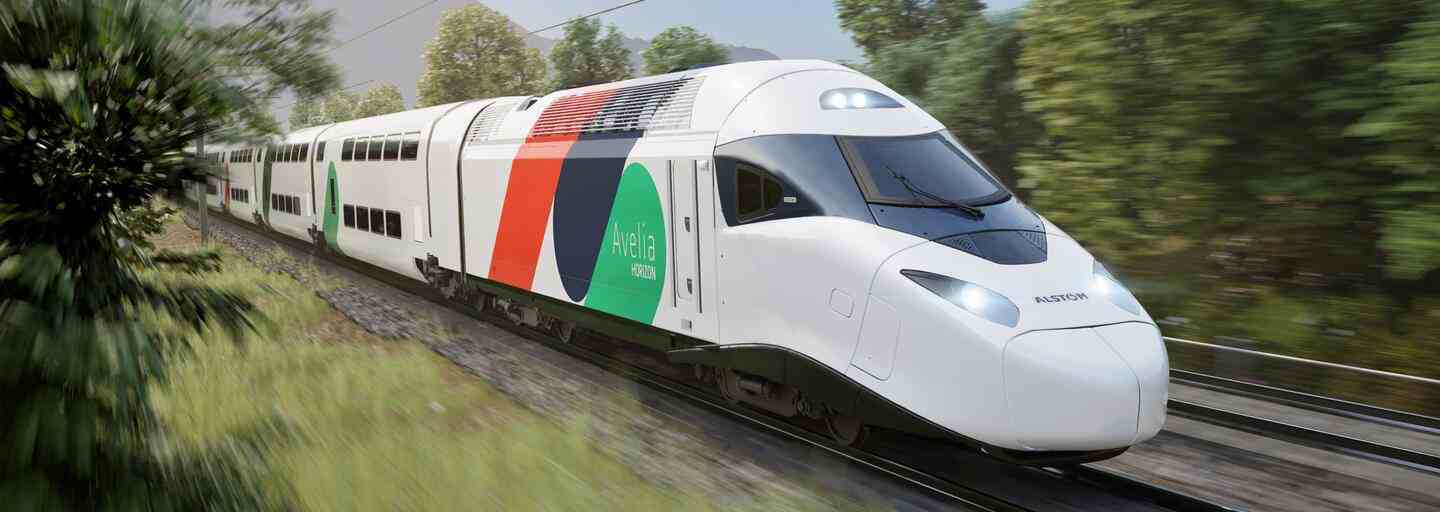
France has officially approved the new Avelia Horizon high-speed trains, also known as TGV M, for operation at speeds of up to 320 km/h on the national rail network.
The approval marks a major milestone for France’s next generation of high-speed rail transport following several delays to the project’s rollout.
New TGV M Trains Approved For High-Speed Service
The authorisation was issued through the European Register of Authorised Types of Vehicles.
According to the approval documentation, two Avelia Horizon trainsets are permitted to operate together using multiple-unit systems.
The trains are also certified for operation in temperatures ranging from -25°C to +45°C, allowing them to function in a wide variety of European climate conditions.
SNCF Ordered 115 Next-Generation Trains
French national railway operator SNCF has ordered a total of 115 Avelia Horizon trains from Alstom.
The first order for 100 trainsets was placed in 2018, followed by an additional order for 15 units in 2022.
The total value of the contracts is estimated at approximately €3.29 billion.
Higher Capacity And Improved Efficiency
The double-decker trains consist of eight passenger coaches and two power cars.
Each train is designed to carry up to 740 passengers, increasing capacity compared with earlier generations of French high-speed trains.
The trains are technically capable of reaching a maximum speed of 350 km/h, although commercial operation has currently been approved at 320 km/h.
The Avelia Horizon platform is expected to become the fifth generation of France’s iconic TGV high-speed fleet.
Launch Faced Multiple Delays
The introduction of the new trains has been postponed several times as testing, certification and technical development continued.
SNCF and Alstom have positioned the TGV M programme as a key part of France’s future rail strategy, focusing on increased energy efficiency, passenger capacity and operational flexibility.
The approval comes as European countries continue investing heavily in high-speed rail infrastructure and next-generation train technology as part of wider transport modernisation and sustainability initiatives.