Even nowadays, as global travel becomes more accessible than ever, there are still places where entry is restricted based on gender. Some of these locations are deeply rooted in centuries-old religious traditions, while others reflect more modern social tensions.
From sacred mountains in Japan to hidden streets in Germany, these male-only destinations continue to spark debate – and curiosity – among travelers.
Mahamuni Pagoda, Mandalay (Myanmar)
The Mahamuni Pagoda is one of Myanmar’s most revered pilgrimage sites, home to a nearly four-meter-tall Buddha statue believed, according to legend, to have been created during the lifetime of Gautama Buddha himself.
Over centuries, male devotees have covered the statue in layers of gold leaf, creating a striking contrast: the face remains smooth and defined, while the body has transformed into a thick, textured mass of gold.
But access is not equal. Women and girls are not allowed to approach the statue inside the inner sanctuary, let alone touch it. Men, on the other hand, can sit beside the statue and apply gold leaf as an act of devotion – a ritual believed to bring healing, merit, and spiritual benefit.
Mount Athos, Greece
On the Greek peninsula of Halkidiki lies Mount Athos, one of the most important spiritual centers of Orthodox Christianity. The area hosts more than 20 monasteries and has followed a strict rule known as avaton for over a thousand years – women are not permitted to enter.
Even for men, visiting is not simple. Access requires a special permit called a diammonitirion, and entry is limited to pilgrims rather than casual tourists. Men of any religion can apply, but the experience remains deeply spiritual rather than recreational.
Mount Ōmine, Japan
Mount Ōmine in Japan’s Nara Prefecture is a sacred site for followers of Shugendō, an ascetic mountain religion. At its summit, 1,719 meters above sea level, stands the important temple Ōminesan-ji.
The climb takes around four hours and is part of intense spiritual training practiced by yamabushi monks – including fasting, meditation, and standing under freezing waterfalls.
Women have been traditionally banned from ascending the mountain for over 1,300 years. While the restriction has no legal enforcement today, it remains observed by religious communities, rooted in beliefs about purity and the need to avoid distraction during ascetic practice.
Okinoshima Island, Japan
Okinoshima, a UNESCO World Heritage site located in the Genkai Sea, is one of Japan’s most strictly protected sacred places.
Access is highly restricted: only selected priests and a small number of male visitors are allowed to step on the island for specific rituals. Women are entirely forbidden from entering, in line with Shinto beliefs that consider certain bodily processes impure.
Even for men, visiting requires ritual purification, and photography or removal of objects from the island is prohibited.
Herbertstraße, Hamburg (Germany)
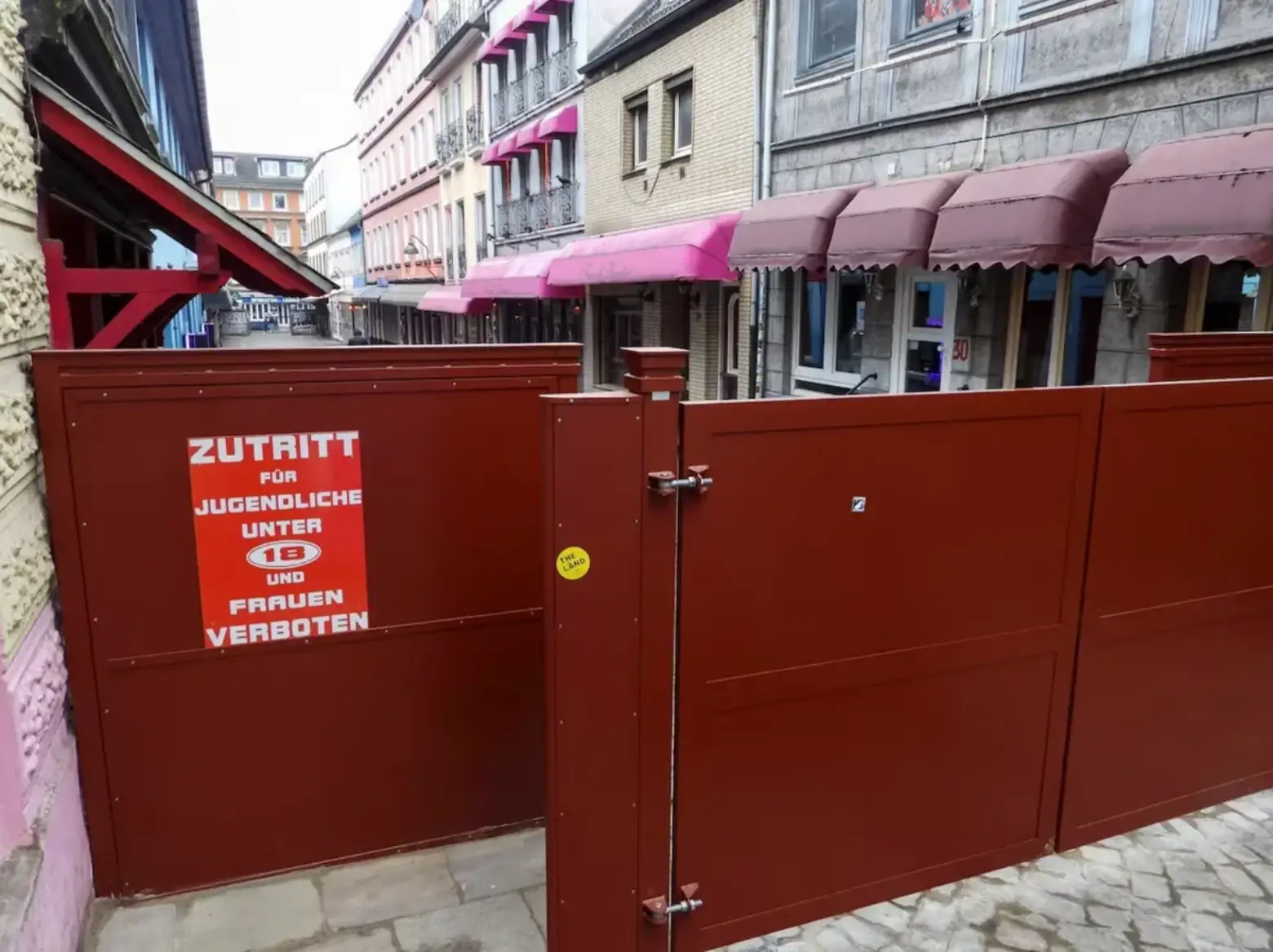
Not all male-only spaces are religious. In Hamburg’s St. Pauli district, Herbertstraße is a short, enclosed street lined with brothels, where sex workers display themselves in illuminated windows.
At the entrance, a sign clearly states: no entry for women or anyone under 18.
The restriction dates back decades. Originally, barriers were installed to conceal the area, but later the ban was reinforced after repeated conflicts between tourists, passersby, and workers. Today, the street has become a controversial attraction, with the prohibition itself often drawing as much attention as what lies behind it.
A controversial legacy in modern travel
These places highlight a complex intersection of tradition, religion, and modern tourism.
While some restrictions are increasingly questioned in a world that values equality and accessibility, others remain firmly protected as part of cultural and spiritual heritage.
For travelers, they serve as a reminder: not every destination is open to everyone – and some of the world’s most intriguing places remain defined as much by who cannot enter as by what lies inside.