Russian outbound travel remains resilient despite a cooling in overall demand
Turkish Airlines emerges as the leading carrier for international flights from Russia
Premium cabins show greater stability as traveller behaviour becomes more selective
Despite a measurable cooling in overall travel demand, international travel among Russian travellers continues to demonstrate notable resilience. According to new research from online travel agency Anywayanyday, while total user demand for overseas trips declined by 13%, international flights accounted for 54% of all bookings, up from 52% a year earlier.
The findings point to a market in transition rather than retreat. Russian travellers are flying less frequently, but with greater intent – prioritising comfort, value, and duration over spontaneity. Within this shifting landscape, Turkish Airlines has emerged as the leading carrier for Russian outbound travel, reflecting both structural changes in connectivity and evolving passenger preferences.
A market increasingly divided by travel class
One of the most revealing aspects of the research is the growing polarisation between economy and premium travel.
Demand for economy-class international flights fell by 14%, while the average one-way fare declined to 29,000 roubles, down 9% year on year. This segment is bearing the brunt of price sensitivity and shortened planning horizons.
By contrast, business class has proven markedly more resilient. Demand declined by just 3%, while its share of Russian international flights increased to 13%, up from 12% the previous year. Average business-class fares stood at 147,000 roubles, down 6%.
This divergence suggests that while casual or price-driven travel is contracting, a core segment of travellers continues to prioritise space, time efficiency, and onboard comfort, even amid broader economic pressure.
For Russian outbound travellers, fewer trips do not necessarily mean lower expectations.
Trip duration shortens, but commitment remains
The average length of an international trip declined modestly to 10 days, compared with 11 days in autumn 2024. Rather than signalling reduced appetite for travel, this points to a more calibrated approach.
Travellers are trimming excess days while preserving meaningful stays, favouring well-structured itineraries over extended but less purposeful travel. The result is a market that values efficiency without sacrificing experience.
Turkey strengthens its position as the anchor destination
Once again, Turkey emerged as the most popular foreign destination for Russian travellers, reinforcing its status as a dependable and flexible choice.
Demand increased by 9%
Market share rose to 10%, up from 8% a year earlier
Average economy fare declined to 28,000 roubles (-15%)
Average trip duration stood at nine days
Istanbul remained the primary entry point, benefiting from its role as both a destination and a global transfer hub. Among resort destinations, Antalya recorded a 16% increase in demand, highlighting continued interest in accessible leisure travel with predictable value.
Turkey’s performance underscores why Turkish Airlines’ Russian outbound travel has strengthened: network depth, competitive pricing, and seamless onward connectivity continue to resonate in a constrained international environment.
UAE demand softens amid rising competition
The United Arab Emirates retained second place in the rankings, but demand declined by 19%. The steepest drop was recorded for Dubai, where demand fell by 25%.
Average economy fares remained unchanged at 55,000 roubles, while the average stay shortened to 8.5 nights. This contraction reflects intensifying competition from more affordable beach destinations and growing scrutiny of value in premium urban markets.
China’s visa-free access fails to unlock growth
Despite the removal of visa requirements, China did not experience the anticipated rebound in demand from Russian travellers. The destination retained third place with a 6% market share, but overall demand declined by 12%.
The key limiting factor was cost. Average economy fares rose sharply to 45,300 roubles, an increase of 23%, effectively neutralising the benefits of simplified entry. Average trip duration declined to 8.5 nights, reinforcing the conclusion that pricing now outweighs administrative ease.
Regional realignment in the Caucasus
A notable shift occurred closer to home. Georgia overtook Armenia in popularity among Russian travellers:
Georgia’s share rose to 4%
Demand increased by 9%
Average trip length approached seven days
Average fare reached 26,700 roubles
Armenia, by contrast, lost around one-third of its Russian visitors, despite a significant 24% reduction in ticket prices. Its market share fell to 3%, indicating that price alone is no longer decisive in regional travel choices.
The data points to a redistribution of demand driven by perception, momentum, and experience, rather than cost.
Europe shows selective resilience
While Europe remains broadly constrained, France stood out as one of the few destinations to record growth. Demand increased by 3%, driven primarily by Paris, where Russian travellers flew 19% more often than a year earlier.
France also recorded one of the longest average stays at 11.5 days, suggesting that when Russian travellers choose Europe, they commit to longer, more immersive visits.
Spain and Japan recorded the longest trips overall, averaging 16.5 days and nearly 13 days respectively, reinforcing the idea that complex or long-haul destinations are increasingly reserved for travellers willing to invest both time and resources.
Booking behaviour becomes more deliberate
Russian travellers are also planning further ahead. The share of tickets purchased three weeks or more before departure increased to 39%, while last-minute bookings declined to 40%.
This shift reflects heightened price sensitivity and a desire to secure favourable fares amid ongoing volatility, rather than reduced willingness to travel.
Turkish Airlines consolidates leadership among Russian travellers
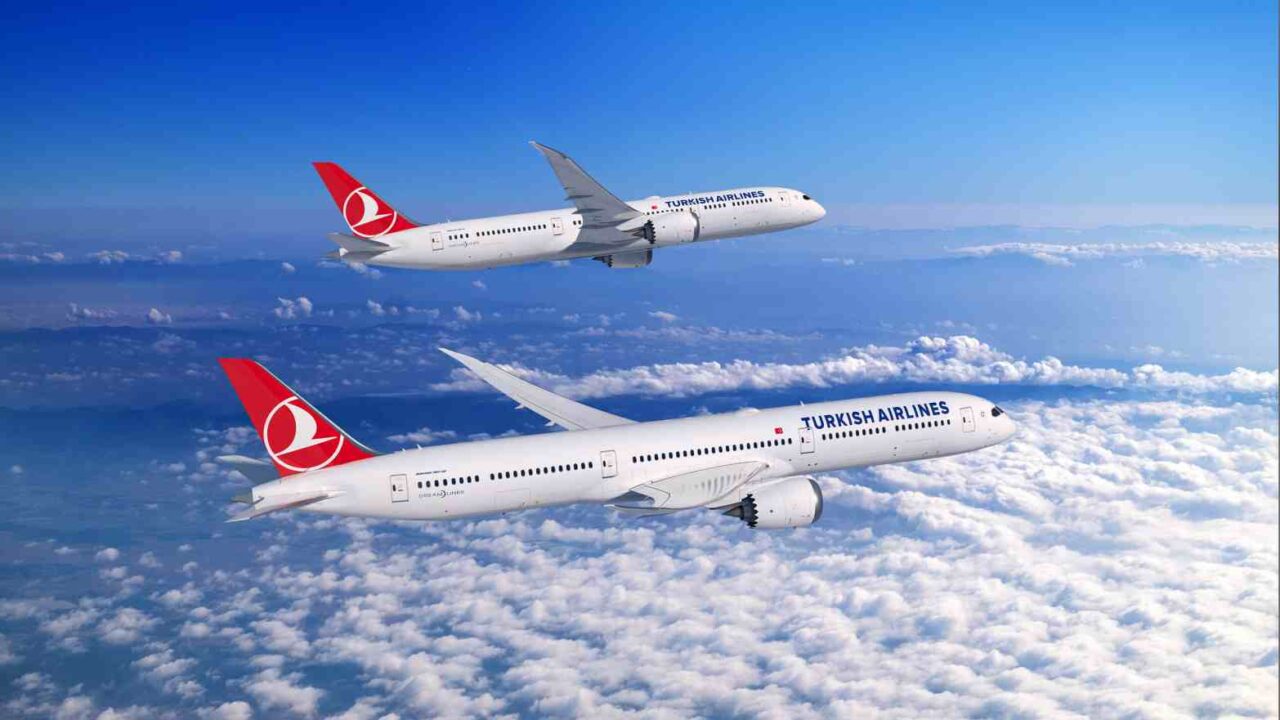
In terms of airline choice, Turkish Airlines emerged as the most popular carrier for Russian international flights, securing a 12% market share. Despite a modest decline in absolute demand, the airline retained its leadership position.
Its strength lies in a combination of competitive pricing, dense global coverage, and Istanbul’s role as a highly efficient transfer hub. As direct international connectivity remains uneven, Turkish Airlines Russian outbound travel continues to benefit from flexibility and reach.
By contrast, Aeroflot lost its leading position, shedding roughly a quarter of its international passengers, while Pegasus Airlines recorded the fastest growth, increasing its share to 7%, driven largely by affordable European fares.
A market refining itself, not retreating
Taken together, the research paints a clear picture. Russian outbound travel is not disappearing – it is refining itself. Volume is down, but intent is stronger. Comfort matters more. Planning horizons are longer. And airline choice increasingly reflects strategic value rather than habit.
In this recalibrated landscape, Turkish Airlines’ leadership is less a coincidence than a signal – of how connectivity, pricing, and adaptability now define success in international travel from Russia.