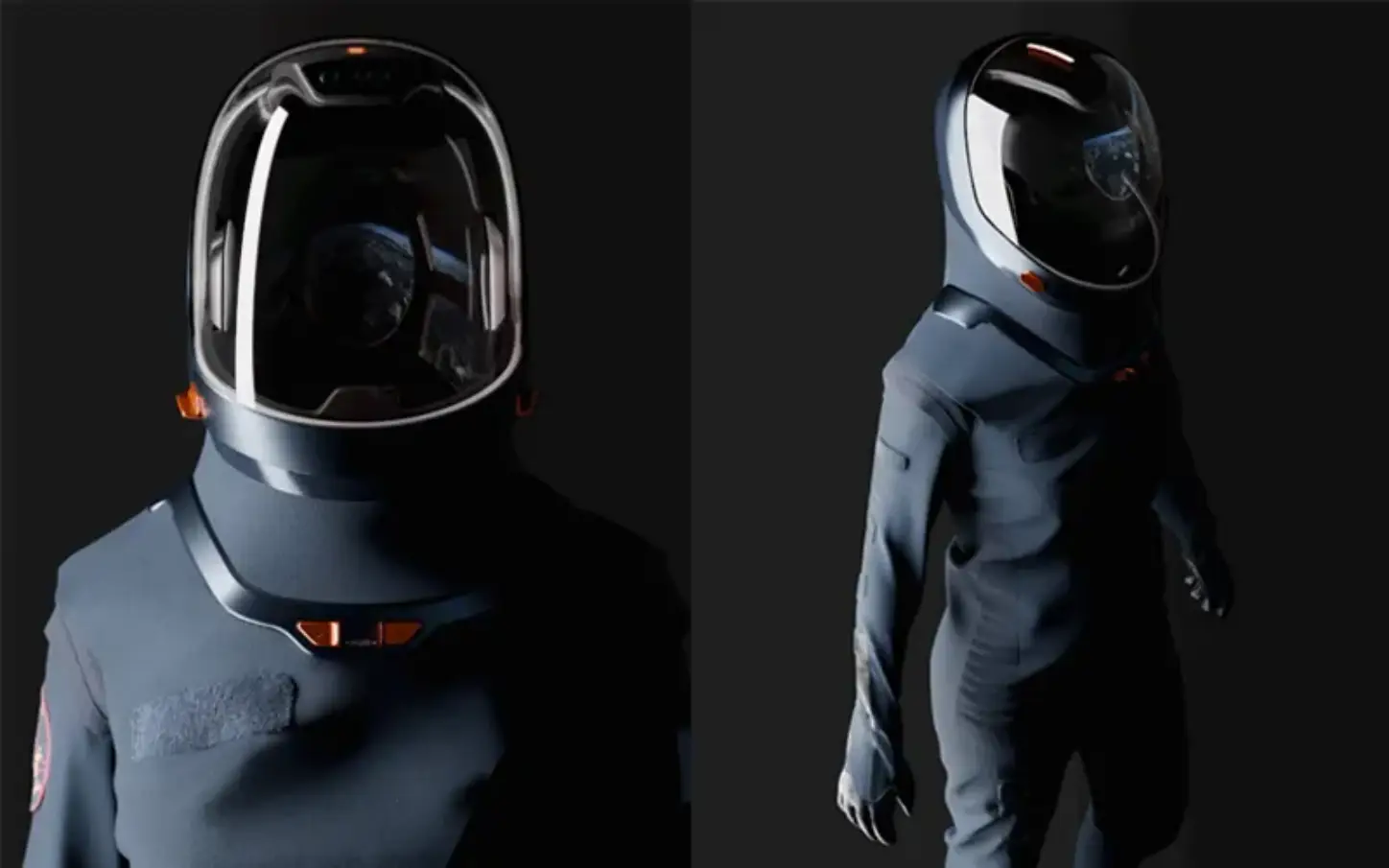
French astronaut Sophie Adenot will test a prototype European intravehicular activity (IVA) spacesuit during her 2026 mission to the International Space Station, advancing a CNES-led effort to develop homegrown capability in human-rated space systems. The assignment follows nearly two years of accelerated research and design work by CNES, Spartan Space, MEDES and sporting goods company Decathlon.
The project began in late 2023 with a CNES contract to explore early concepts for a European IVA suit. After completing the initial study, the consortium received a second contract in late 2024 to design and build a prototype capable of being evaluated aboard the ISS. The resulting system, known as EuroSuit, will be one of the flagship scientific and technological activities of Adenot’s upcoming long-duration mission.
Adenot and Belgian astronaut Raphaël Liégeois were the first of ESA’s newest astronaut class assigned to extended missions, an announcement made by the agency in May 2024. CNES then confirmed in July 2025 that EuroSuit would be part of Adenot’s experiment portfolio, bringing the prototype into operational testing for the first time.
On 14 November, Decathlon CEO Javier López Segovia released the first public images of the suit, describing the effort as a convergence of “space exploration, science, medicine and sport.” The design aims to optimise comfort, mobility and usability for astronauts working inside spacecraft. A key focus of the ISS test campaign will be assessing suit ergonomics, particularly how quickly astronauts can put on and remove the garment. According to López Segovia, EuroSuit is intended to be donned or doffed in under two minutes.
While the immediate objective is functional testing, CNES has positioned the program within a broader strategic aim: supporting Europe’s long-term sovereignty in human space exploration. The continent currently lacks its own crew transportation capability, relying instead on international partners. However, ESA’s ongoing LEO Cargo Return Services initiative has directed industrial teams to design cargo vehicles that could evolve toward future crewed spacecraft.
That dual-use design requirement is expected to be a major topic at ESA’s forthcoming Ministerial Council meeting, where Member States will be asked to approve Phase 2 funding. The EuroSuit project underscores growing momentum behind Europe’s ambitions to expand its role in human spaceflight — from orbital logistics to astronaut-tested systems onboard the ISS.
Adenot’s evaluation of the IVA suit in microgravity will mark the program’s first real operational milestone, providing data that will help determine how European-engineered systems could support future missions as the continent considers a larger, more autonomous role in low-Earth-orbit and beyond.