At Meta’s Connect Developers Conference, Mark Zuckerberg unveiled three new AI glasses — and a bold vision for the future. “Glasses are the only devices that can enable AI to see what users see and hear what users hear,” he said, arguing that they can offer help “without interrupting real-world experiences.” He even predicted that people who don’t wear smart glasses might one day face “a significant cognitive disadvantage.”
The highlight of the launch was the Meta Ray-Ban Display, the company’s first consumer smart glasses with a built-in high-resolution screen. Priced at $799, they feature a semi-transparent head-up display in the right lens that reaches a dazzling 5,000 nits of brightness — bright enough to read even under harsh sunlight. The display is invisible from the outside, blending technology with everyday style.
To control the glasses without touching them, Meta also introduced a Neural Band EMG wristband that detects tiny finger and wrist movements. With a pinch or swipe, users can navigate apps, scroll messages, or even “write” in the air. The glasses operate independently from smartphones, showing social notifications, handling video calls, or displaying real-time translations and navigation prompts directly in view. Battery life reaches 6 hours of use or 30 hours with the charging case — enough for all-day wear.
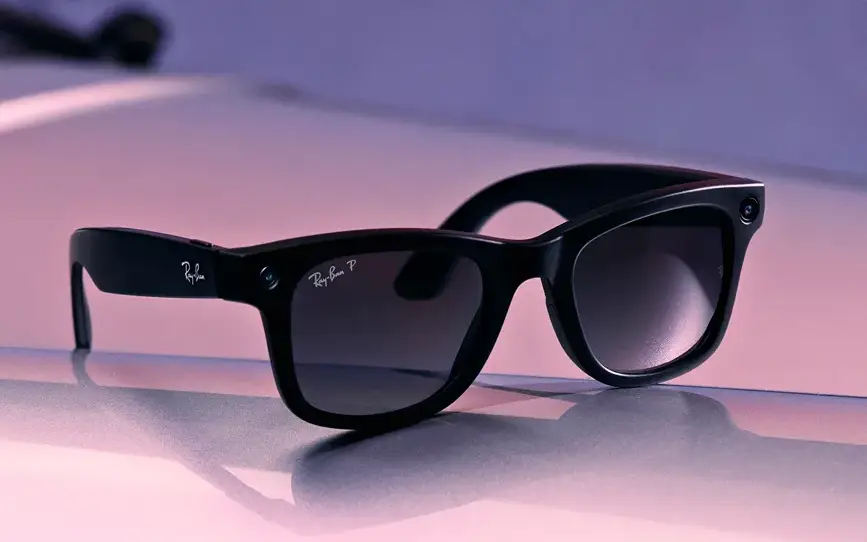
For everyday users, Meta launched the more affordable Ray-Ban Meta (2nd generation) at $379, keeping the timeless Ray-Ban look but upgrading nearly everything inside. The new model doubles battery life to eight hours, adds a 12-megapixel camera, and records in 3K resolution. A clever “conversation focus” mode amplifies voices during chats and cuts background noise — and a new “Live AI” feature lets users talk naturally with Meta AI without saying a wake word.
For sports enthusiasts, Meta teamed up with Oakley to create the Oakley Meta Vanguard, priced at $499. These are rugged, water- and dust-resistant smart glasses built for outdoor action. They use Oakley’s PRIZM lenses, which automatically adjust to sunlight intensity, and a wide-angle 3K camera that supports slow-motion and time-lapse recording. The upgraded speakers remain clear even in strong wind, and a red LED indicator alerts wearers when their heart rate drifts from the target zone — turning workouts into data-driven experiences.
But perhaps the most important news was Meta’s decision to open its smart-glasses developer platform. The new Wearables Device Access Toolkit gives developers access to the glasses’ sensors and AI features to build new apps. Twitch is already developing a first-person live-streaming experience, Disney plans an AI park guide for its theme parks, and golf platform 18Birdies is working on sports data overlays.
With this launch, Meta isn’t just releasing another gadget — it’s laying the groundwork for a world where AI doesn’t live on screens, but in what we see and hear every day. And if Zuckerberg is right, wearing smart glasses could soon be as common — and as essential — as carrying a phone.