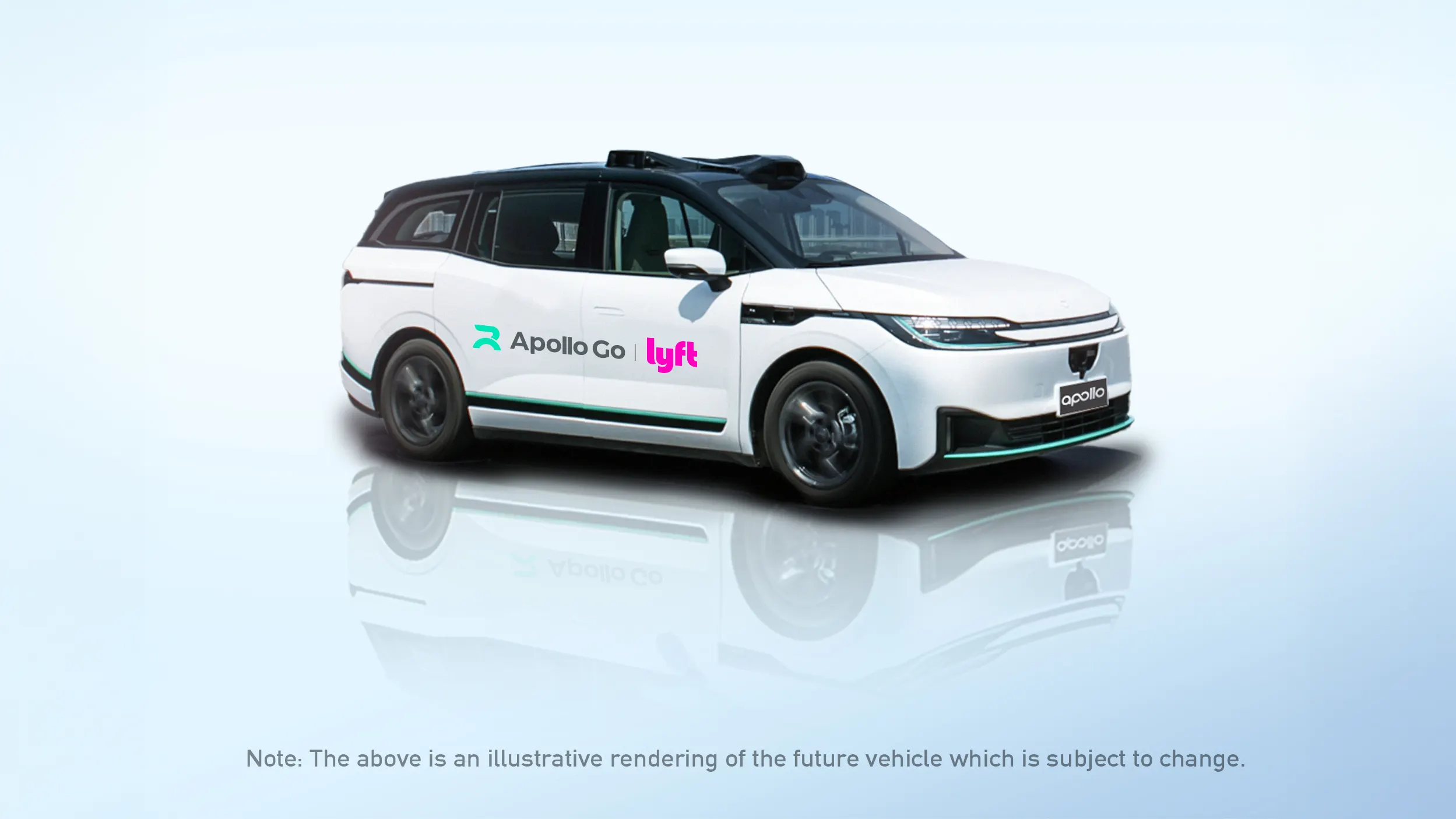
In a move set to redefine the future of urban mobility across Europe, Baidu, Inc. (NASDAQ: BIDU) and Lyft, Inc. (NASDAQ: LYFT) today announced a strategic partnership to deploy Baidu’s Apollo Go autonomous vehicles through the Lyft platform. The rollout begins in 2026 with pilot programs in Germany and the United Kingdom, pending regulatory approval.
This collaboration marks Baidu’s most ambitious international expansion to date and strengthens Lyft’s position as a frontrunner in autonomous transportation networks across both North America and Europe. The companies plan to scale the AV fleet to thousands of vehicles across the continent in the coming years.
The Tech Behind the Shift
Baidu’s Apollo Go is already the world’s largest autonomous ride-hailing service, with more than 11 million rides completed across 15 cities in China. It brings to the partnership not only cutting-edge technology but also unmatched real-world operational experience.
The vehicles in question — Baidu’s sixth-generation RT6 models — are fully electric and purpose-built for ride-hailing. Powered by the Apollo Autonomous Driving Foundation Model (ADFM), these vehicles include a 10-layer safety redundancy system and intelligent human-machine interaction design.
“Our partnership with Lyft to deploy Apollo Go in Europe is a significant milestone,” said Robin Li, Co-founder, Chairman, and CEO of Baidu. “By combining our AV expertise with Lyft’s operational capabilities and local reach, we’re creating a safer, greener, and more accessible mobility solution.”
Lyft’s New Role in European AV Mobility
Lyft will own and operate the customer-facing and operational value chain while Baidu provides the autonomous technology and vehicle infrastructure. The integration of Baidu’s vehicles into the Lyft app means riders in Europe will have seamless access to AV rides alongside traditional driver options.
The partnership also gains strategic momentum through Lyft’s acquisition of FREENOW, a major European rideshare platform operating in over 180 cities across nine countries, including the UK and Germany. This gives Lyft an established foundation for AV deployment, complete with regulatory relationships and market familiarity.
“Partnering with Baidu allows us to bring the proven benefits of AVs—safety, reliability, and privacy—to millions of European riders,” said David Risher, CEO of Lyft. “It’s another step in our hybrid network strategy where AVs and human drivers coexist to provide customer-first choices.”
Europe: A New Frontier for AVs
The partnership outlines four key pillars that make this expansion uniquely poised for success:
Advanced AV Technology Deployment – RT6 vehicles will debut in Europe via the Lyft platform with full integration of Apollo’s autonomous software and safety architecture.
Proven Operational Scale – Baidu’s record of completing millions of rides across large Chinese metro areas proves its readiness for European-scale deployment.
Strategic Partnership Model – Lyft leads the operations; Baidu supplies the tech. This symbiosis allows for rapid adaptation without sacrificing safety or user experience.
Accelerated Market Integration – FREENOW’s European presence enables Lyft to hit the ground running, particularly in AV-friendly urban markets like Berlin, London, and Manchester.
What’s Next?
Pending approval, pilot AV ride-hailing operations will begin in Germany and the UK in 2026, with additional cities and countries expected to follow. The companies have pledged to work hand-in-hand with European regulators, ensuring full compliance with safety, data, and operational standards.
As demand surges for greener and smarter transport, Baidu and Lyft’s alliance could place Europe at the center of the global AV revolution—redefining public expectations for safety, convenience, and sustainability in urban travel.