Logan International Airport is set to roll out a new real-time system designed to help passengers better navigate security screening, with a launch expected in mid-April.
The initiative, first reported by The Boston Globe, will allow travellers to check estimated TSA wait times via the airport’s website, mobile app and on-site displays.
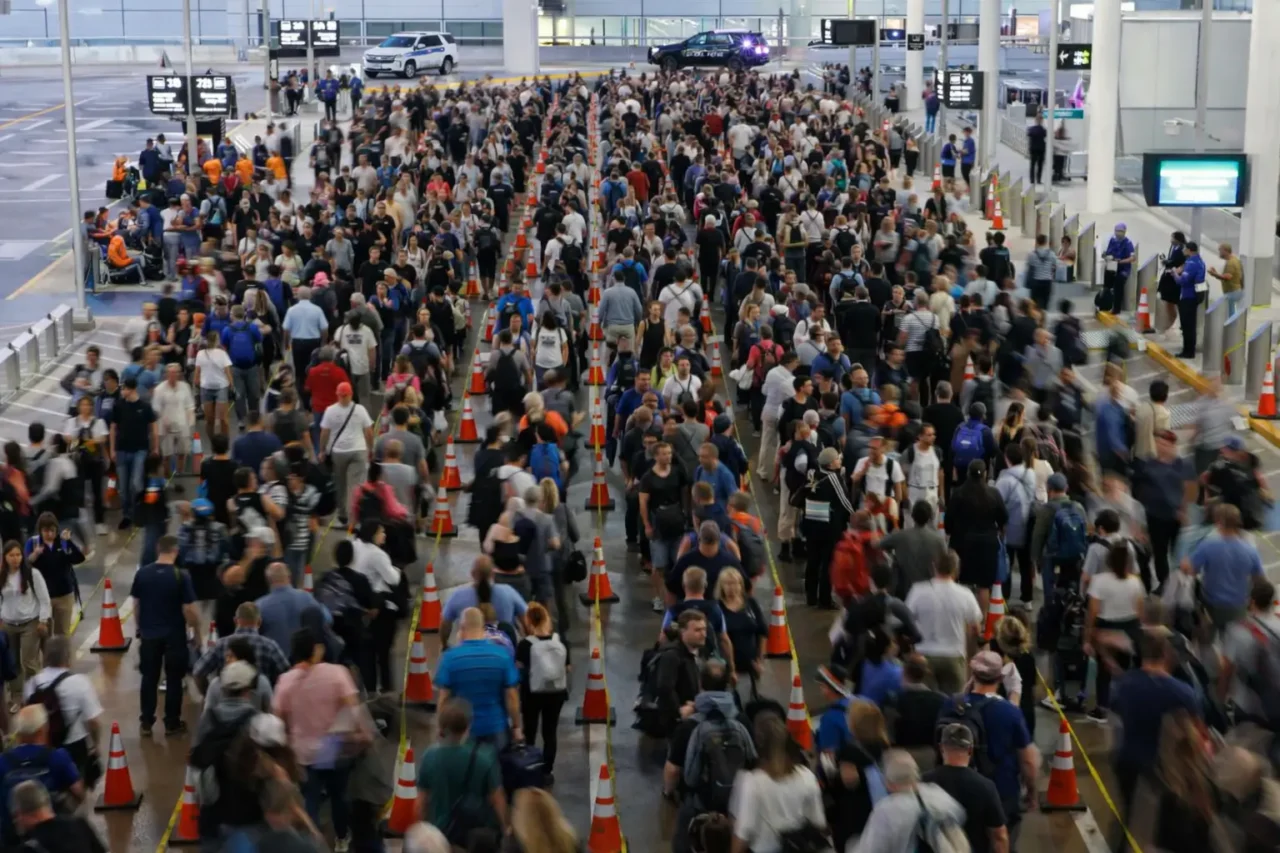
The move comes as airports across the US face mounting pressure over long security lines, driven in part by staffing shortages and operational disruptions linked to the Department of Homeland Security shutdown.
System designed as long-term customer improvement
Despite the timing, airport operator Massport said the project was not a direct response to recent federal disruptions.
Spokesperson Jennifer Mehigan told WBUR that the tracker “began a while ago as a customer improvement,” emphasising its role in enhancing the passenger experience rather than addressing short-term issues.
Camera analytics to power wait time estimates
The system, currently being tested in Terminal B, uses camera-based analytics provided by a third-party vendor to assess queue conditions in real time.
According to Massport, the technology measures how many passengers are in line and how quickly queues are moving. Officials stressed that the system does not capture identifiable personal details such as facial features or clothing.
Data collected is used to calculate average wait times, which will then be displayed across multiple platforms, including the airport’s digital channels and in-terminal screens.
Rollout depends on accuracy validation
Airport officials are taking a phased approach, focusing first on testing and calibration before expanding the system across all terminals.
Mehigan said teams are currently “making sure the data is accurate” prior to a full public rollout.
The new system will operate independently from existing tools such as the TSA’s own wait time app, which has experienced disruptions during the DHS shutdown.
A broader push toward passenger transparency
The introduction of real-time wait tracking reflects a broader industry trend toward greater transparency and digital passenger tools, particularly as airports seek to improve flow management and reduce uncertainty during peak travel periods.
For Boston Logan, the system represents a practical step toward modernising the pre-flight experience, giving travellers clearer expectations before they even arrive at security.