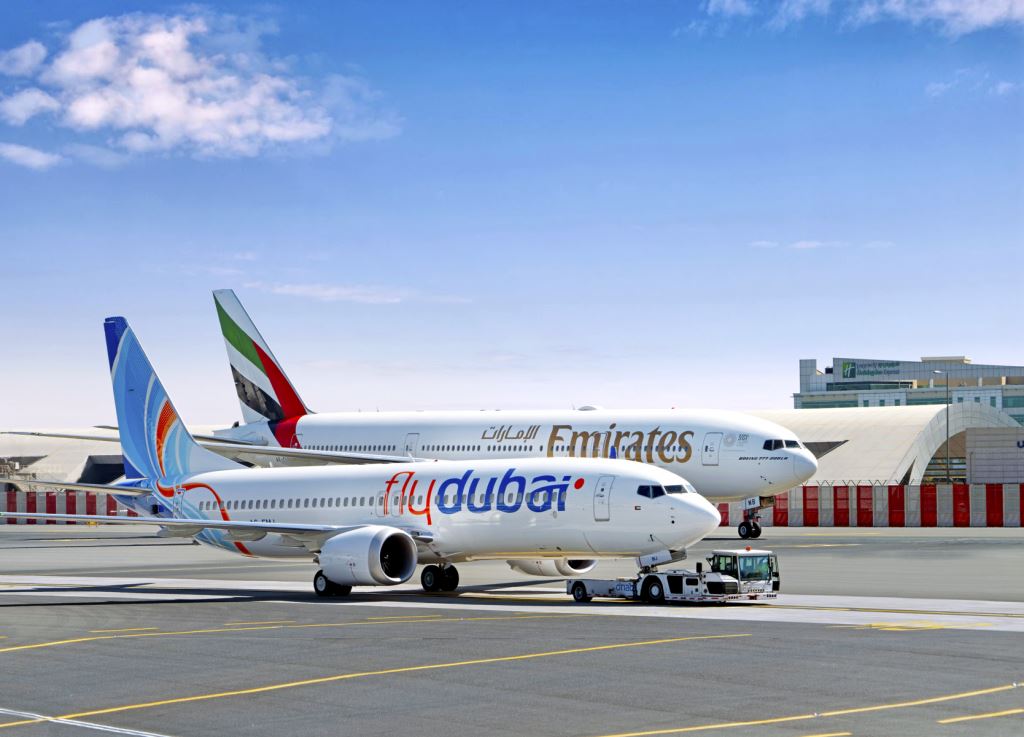

The global aviation market is facing one of its most turbulent periods in decades after disruptions affecting major Gulf aviation hubs, including Dubai International Airport — the world’s busiest airport for international travel.
The sudden loss of capacity across key Middle East hubs has triggered a severe shortage of available seats and sent ticket prices between Europe and Asia soaring.
Flights linking Europe with Asia and Australia have been particularly affected. Routes traditionally dominated by Emirates and Qatar Airways have been heavily disrupted, forcing passengers to search for alternative routes through Asia or even North America.
Travelers are increasingly rerouting through hubs such as Singapore, Chinese cities, and other long-haul gateways, turning previously straightforward journeys into lengthy and expensive multi-stop trips.
Ticket prices surge across Asia-Europe routes
Airfares on major long-haul routes have jumped dramatically. On flights operated by Cathay Pacific between Hong Kong and London, economy-class seats have reportedly sold out for nearly a week in advance.
The few remaining seats are priced at around $2,700 one way — roughly four times the typical fare.
A similar pattern is emerging on routes from Bangkok to the United Kingdom, where one-way tickets that once cost a few hundred dollars are now priced at more than $2,200.
Even Chinese airlines, usually known for offering more affordable long-haul options, have raised prices sharply. In some cases the only seats available for immediate travel are business-class tickets costing around $7,300 one way.
Alternative airlines fill the gap
Airlines operating outside the conflict zone have temporarily benefited from the surge in demand. Carriers such as Singapore Airlines, Turkish Airlines and EVA Air have seen aircraft filling to near 100 percent capacity.
However, these airlines are also facing operational challenges. To avoid restricted airspace over Iran and Iraq, many flights are being rerouted along longer paths through the Caucasus and Afghanistan or via southern corridors passing over Saudi Arabia and Egypt.
These detours add several hours to flight times and significantly increase fuel consumption at a moment when global oil prices are also rising.
Industry analysts warn that if the disruption continues, long-haul travel between continents could become significantly more expensive and less accessible for many travelers, marking a potential shift in the economics of global aviation.