Some geographical names are so long and intricate that they can stump almost anyone. If you want to impress – or amuse – your friends, here are places with the longest place names worth remembering.
Bangkok, which is not really Bangkok
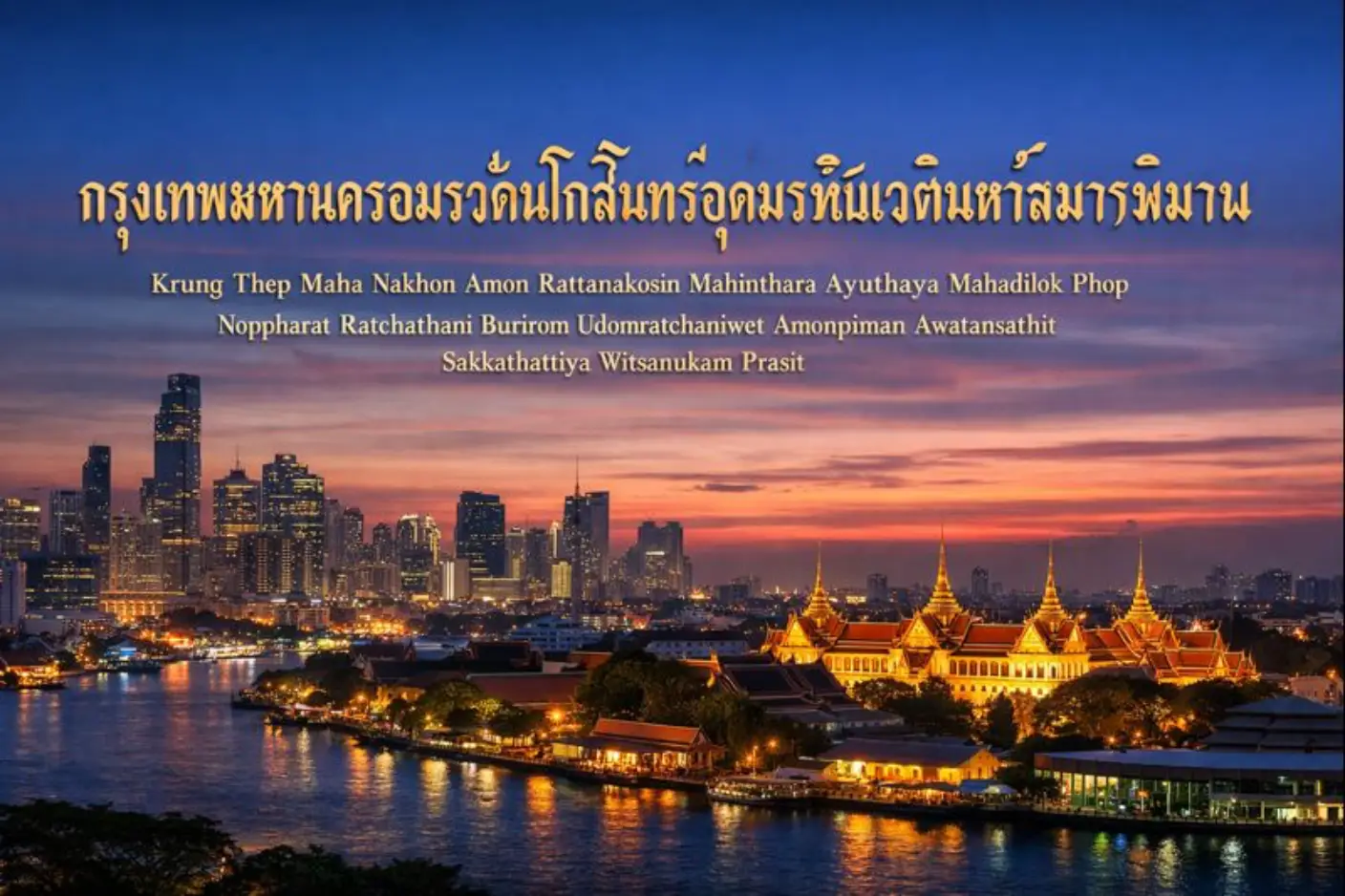
The capital of Thailand is not officially called Bangkok at all. Its original name is one of the longest place names in the world, consisting of 168 Latin characters without spaces, a record recognised by Guinness World Records.
In Thai script, the name contains 139 characters without spaces:
กรุงเทพมหานครอมรรัตนโกสินทร์อุดมราชนิเวศน์มหาสถานอมรพิมาน
In 2022, Thai authorities announced that the capital’s name in foreign languages would be standardised to better reflect its original pronunciation, changing it from Bangkok to Krung Thep Maha Nakhon. However, the sheer difficulty of pronunciation prevented the new version from gaining widespread use.
The full ceremonial name of the city consists of 32 words and reads like a hymn rather than a place name. Translated loosely, it means:
“City of angels, great city, residence of the Emerald Buddha, impregnable city, great capital of the world, endowed with nine precious gems, rich in vast royal palaces resembling heavenly dwellings, ruled by the reincarnated god, a city bestowed by Indra and built by Vishvakarman.”
In a slightly shortened original version, it is rendered as:
Krung Thep Maha Nakhon Amon Rattanakosin Mahin Thara Ayutthaya Mahadilok Phop Noppharat Ratchathani Burirom Udomratchaniwet Amonphiman Awatan Sathit Sakkathattiya Witsanukam Prasit.
Those wishing to master the pronunciation can listen to the song “Krung Thep Mahanakhon” by Thai band Asanee–Wasan (1989), whose lyrics consist entirely of the city’s full name.
Take a deep breath: New Zealand’s famously long hill
Another champion of lengthy names is a hill in New Zealand:
Taumatawhakatangihangakoauauotamateaturipukakapikimaungahoronukupokaiwhenuakitanatahu (85 letters).
The name belongs to a 305-metre-high hill south of Waipukurau, between Hastings and Dannevirke. It follows the syllabic structure of the Māori language and is meant to be pronounced smoothly, without sharp stress. To make it easier, locals often break it into parts when teaching visitors how to say it.
In everyday use, the hill is simply called Taumata. The full name, however, tells a legend about the warrior Tamatea and translates as:
“The summit where Tamatea, the man with the big knees, who slid, climbed and swallowed mountains, known as the eater of land, played his flute to his beloved.”
Although Māori tradition holds that the name has existed for centuries, New Zealand’s Honorary Geographic Board shortened it to 57 letters in 1941. That version became official in 1948, but the abbreviated local form remains far more common.
Europe’s longest place name – memorable, if only at the end
Europe’s longest place name belongs to a village in Wales:
Llanfairpwllgwyngyllgogerychwyrndrobwllllantysiliogogogoch (58 letters).
Linguists jokingly suggest that the easiest part to remember and pronounce is the last two letters.
The village lies on the island of Anglesey near the Menai Strait. Its famously long name was deliberately created in the 19th century – according to some accounts by a tailor, according to others by a pub owner – with one clear aim: to attract tourists.
The name poetically describes the surroundings as:
“The church of St Mary in the hollow of the white hazel near a rapid whirlpool and the church of St Tysilio by the red cave.”
The strategy worked. The railway station sign bearing the full name has become one of Wales’ most photographed landmarks. In 2002, the village’s website domain even entered Guinness World Records as the longest URL on the internet.
In daily life, locals simply call the village Llanfair or Llanfairpwll.
A curious footnote: Llanfairpwllgwyngyllgogerychwyrndrobwllllantysiliogogogoch is twinned with a village called IJ in the Netherlands and another called Y in France – a reminder that opposites really do attract, even when it comes to place names.