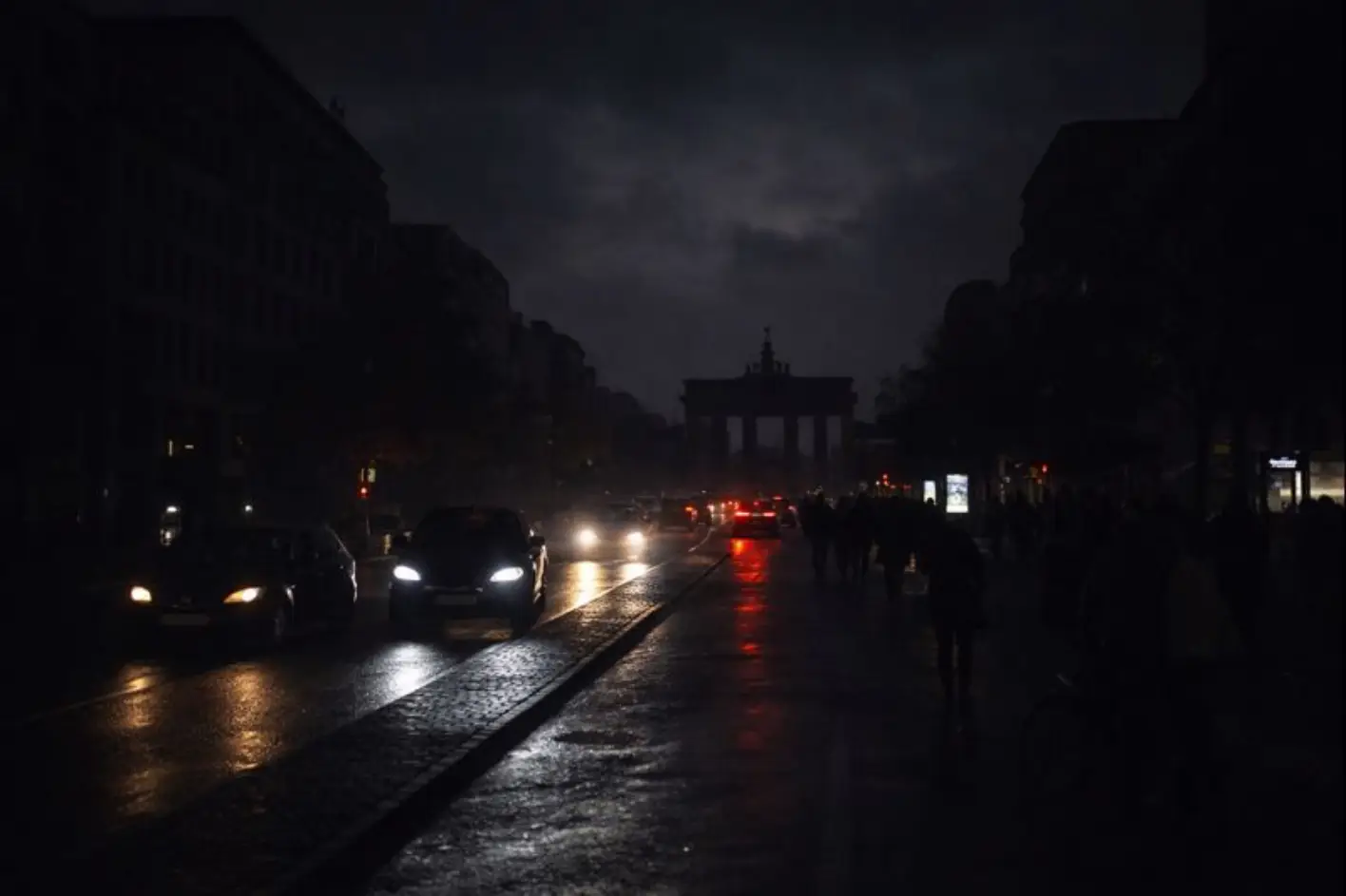
Ukrainian refugees in Berlin have opened a temporary “point of resilience” to support local residents during a major power outage in the German capital.
The hub is located at the German-Ukrainian centre AdlerA e.V. in the Steglitz-Zehlendorf district, one of the areas most severely affected by the blackout. The centre, founded by Ukrainian refugees, retained electricity because the building is connected to a different power line, according to centre representative Oksana Orel.
During the outage, both Ukrainian and German families have been visiting the centre, particularly residents of apartment blocks who rely on electric cookers and water heaters. At the hub, visitors can warm up, charge electronic devices, socialize, and prepare food while electricity remains unavailable in their homes.
The blackout has disrupted daily life across large parts of Berlin. City authorities confirmed that hospitals have already been reconnected to the power supply, and a central emergency support point has been set up in a concert hall at the district administration building. Officials stated that full restoration of electricity across the affected areas is expected by January 8.
The power outage was caused by a fire that broke out on 3 January on a bridge near the Lichterfelde power station. The blaze destroyed five high-voltage and ten medium-voltage cables, triggering a major failure in the electricity network. As a result, around 45,000 households and more than 2,200 businesses were left without power.
The outage also forced the closure of local supermarkets and shops, while many residential buildings were left without central heating.
The Berlin blackout follows a broader pattern seen in Spain, where widespread power outages last year disrupted transport, telecommunications and daily life in several regions, highlighting the growing vulnerability of urban infrastructure to sudden failures.