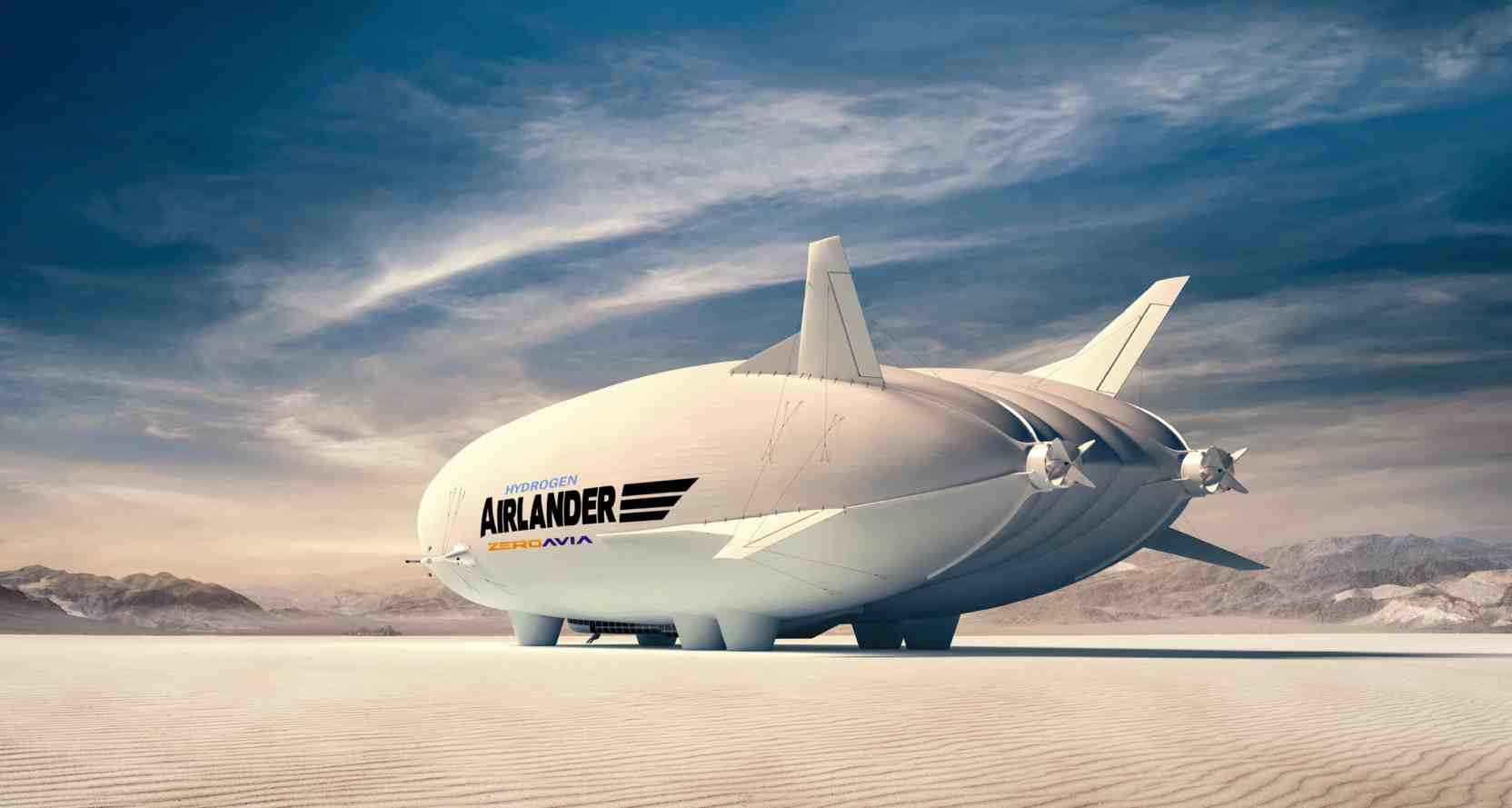
ZeroAvia and Hybrid Air Vehicles have signed a Memorandum of Understanding that sets the stage for a hydrogen-electric variant of the Airlander 10, a next-generation hybrid aircraft designed for low-emission, long-range operations. The partnership aims to integrate ZeroAvia’s hydrogen-electric propulsion technology into future models, establishing Airlander 10 as one of the first large-scale aircraft capable of zero-emission in-flight performance.
Airlander 10 is a hybrid platform combining aerostatic lift, aerodynamic lift and vectored thrust. With a payload capacity of 10 tonnes and a maximum range of 4,000 nautical miles, the first production version will operate with four diesel engines. Even that configuration is expected to cut emissions by up to 90 per cent compared with conventional aircraft of similar capacity. The hydrogen-electric variant would support more than 100 passengers and deliver fully zero-emission flight while reducing ongoing maintenance requirements.
ZeroAvia’s 600 kW ZA600 propulsion system sits at the centre of the collaboration. The powertrain has cleared several regulatory milestones and has secured significant pre-orders from launch customers. It has already undergone flight testing on a 19-seat aircraft and is being prepared for integration into a range of fixed-wing platforms as the company advances toward commercial certification.
Airlander’s design offers particular advantages for hydrogen adoption. The hull provides extensive storage volume for hydrogen, enabling the aircraft to incorporate first-generation certified technologies such as liquid hydrogen storage, low-temperature PEM fuel cells and electric propulsion systems that are nearing market readiness. The agreement will build on Hybrid Air Vehicles’ previous research into electric propulsion and broaden the development roadmap for future Airlander models.
As part of the MoU, the companies will also assess the applicability of ZeroAvia’s systems to larger HAV aircraft and examine future Airlander 10 routes to outline hydrogen fuel infrastructure needs.
Hybrid Air Vehicles CEO Tom Grundy noted that the partnership accelerates the company’s ambition to offer a fully zero-emission Airlander. He cited ZeroAvia’s commercial, technical and regulatory progress as a key factor in advancing the aircraft’s environmental and operational profile.
ZeroAvia founder and CEO Val Miftakhov described Airlander as a compelling airframe for hydrogen-electric integration due to its range, efficiency and operational versatility. He emphasised the broader economic impact of the collaboration, noting that both companies are scaling manufacturing and job creation across multiple UK regions, with applications that could extend into defence use cases.
The agreement marks a significant step forward for the UK’s hydrogen aviation ecosystem, with Airlander 10 positioned as one of the most ambitious demonstrations of large-scale zero-emission flight now in development.