
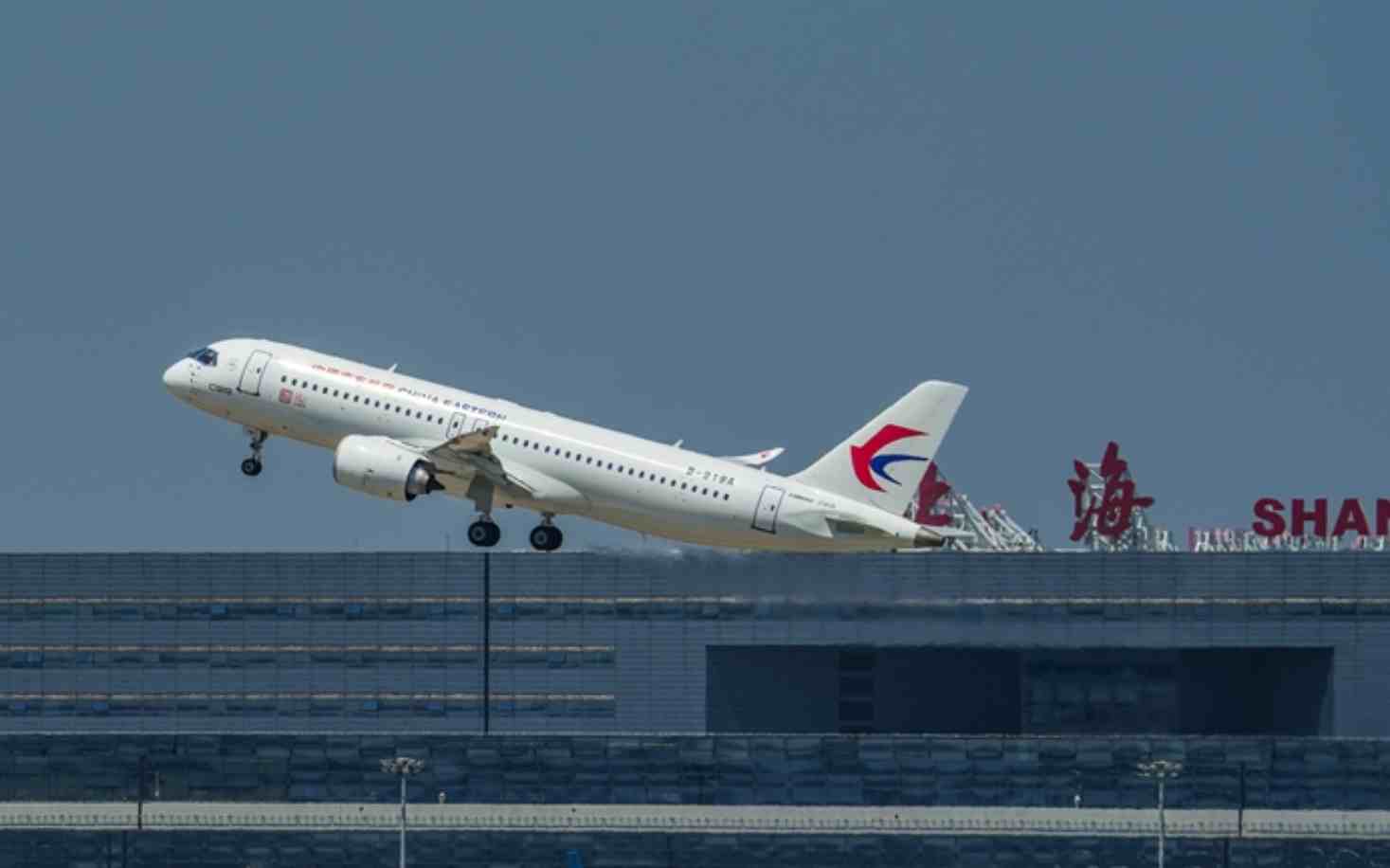
China’s COMAC has begun taxi tests on the first C919-600, a shortened version of its C919 aircraft designed to serve high-altitude airports.
The tests mark one of the key stages of ground trials before the aircraft’s first technical flight. The C919-600 is being developed to handle thinner air and the operational demands of airports at higher elevations.
The new variant is part of COMAC’s wider effort to expand the commercial reach of the C919 family. The original C919 has already been positioned as China’s answer to rival narrow-body jets used on domestic and regional routes.
Taxi testing is a standard part of aircraft development and helps engineers assess braking, steering, engine performance and systems integration before taking to the air. For a new variant such as the C919-600, it is also used to verify how the aircraft behaves on the ground in conditions that may be more challenging than at sea level.
High-altitude airports are common in parts of western China and other mountainous regions, where lower air density can affect aircraft performance. Airlines operating in those environments often need aircraft or engine settings that can cope with reduced lift and take-off capability.
The C919-600 is expected to support that market by offering a version of the jet more suited to those airports. COMAC has not released further details in the text provided on the timing of the first technical flight or any wider certification schedule.
The development comes as COMAC continues to build momentum around the C919 programme, which has become a symbol of China’s push to strengthen its domestic aerospace industry. The company is aiming to increase the aircraft’s usefulness beyond standard hub-and-spoke routes by tailoring variants to specific operating conditions.
Aircraft testing usually moves from ground checks to taxi trials and then to airborne testing once engineers are satisfied with performance. For COMAC, the progress of the C919-600 will be watched closely by airlines and industry observers looking for signs of how quickly the manufacturer can expand the aircraft family.
Although the C919 remains a relatively new commercial aircraft, variants such as the C919-600 suggest that COMAC is already planning for different route types and airport environments. That could help the company compete for orders in markets where geography shapes airline operations as much as passenger demand.