British travelers received an early warning of potential summer disruption after the European Union’s new biometric border system triggered lengthy queues at the Port of Dover during the late-May bank holiday weekend.
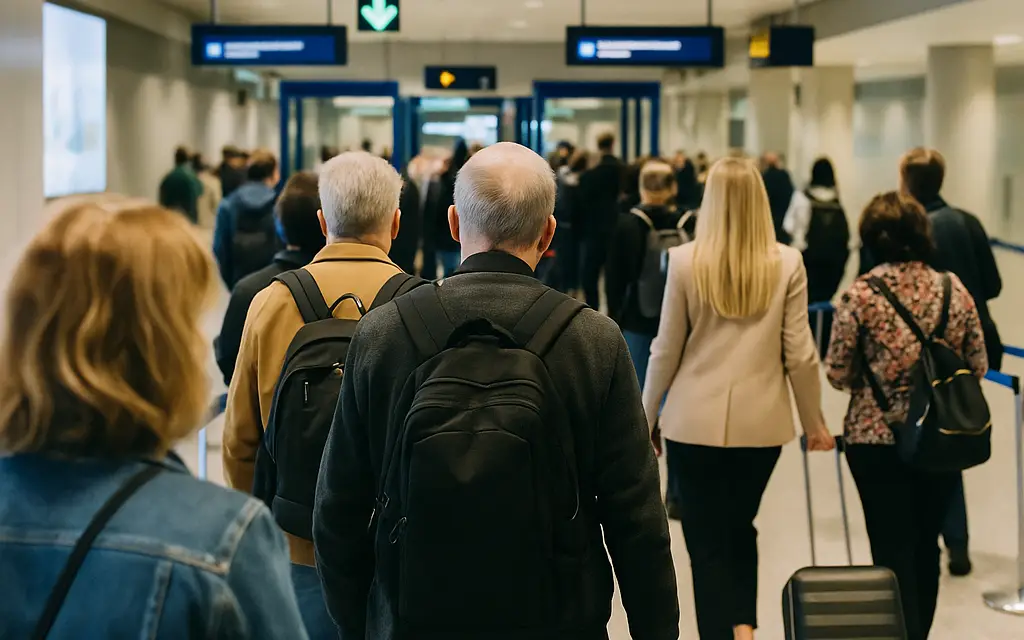
Passengers traveling to continental Europe faced waits of up to six hours as border authorities struggled to process large volumes of travelers using the newly implemented Entry/Exit System.
The delays highlight growing concerns that Europe’s biggest transport gateways may face significant pressure throughout the peak summer season.
New EU Border Rules Create First Major Stress Test
The Entry/Exit System became fully operational across the Schengen Area on 10 April 2026, introducing new biometric checks for non-EU travelers entering and leaving participating countries.
Under the new rules, travelers must provide fingerprint scans and facial biometrics during border processing.
The system is designed to improve border security and replace manual passport stamping with more automated monitoring of traveler movements.
However, the first major holiday weekend under full implementation quickly exposed operational challenges.
Dover Queues Force Temporary Suspension
Heavy passenger volumes on 23 and 24 May overwhelmed processing capacity despite months of preparation by British and French authorities.
French border officials eventually suspended biometric processing and temporarily returned to manual passport stamping to reduce waiting times and clear congestion.
The emergency measures allowed traffic flows to recover but raised questions about how infrastructure will cope during busier periods.
Governments Introduce Contingency Measures
British officials confirmed contingency arrangements had already been negotiated with French authorities before implementation.
These include minimum staffing agreements alongside temporary six-hour suspension windows that can be activated if congestion becomes severe.
Authorities say these measures are intended to maintain traffic flow during periods of exceptional demand.
Industry groups, however, warn that temporary workarounds do not solve longer-term capacity challenges.
More Disruption Could Spread Beyond Dover
The issues experienced at Dover may represent only the beginning.
Transport operators warn similar challenges could soon emerge at other major crossing points including LeShuttle terminals and international rail services.
Large numbers of passengers traveling through Eurostar and Channel Tunnel services continue to rely heavily on British passport holders who now require full biometric processing.
As more transport hubs fully transition to EES procedures, additional bottlenecks remain possible.
Summer Travel Faces New Reality
The introduction of biometric border controls represents one of the largest changes to European travel procedures in decades.
While authorities argue the system improves security and modernizes border management, travelers are increasingly confronting the practical consequences of more complex processing requirements.
For millions planning European holidays this summer, arriving earlier may no longer simply be good advice.