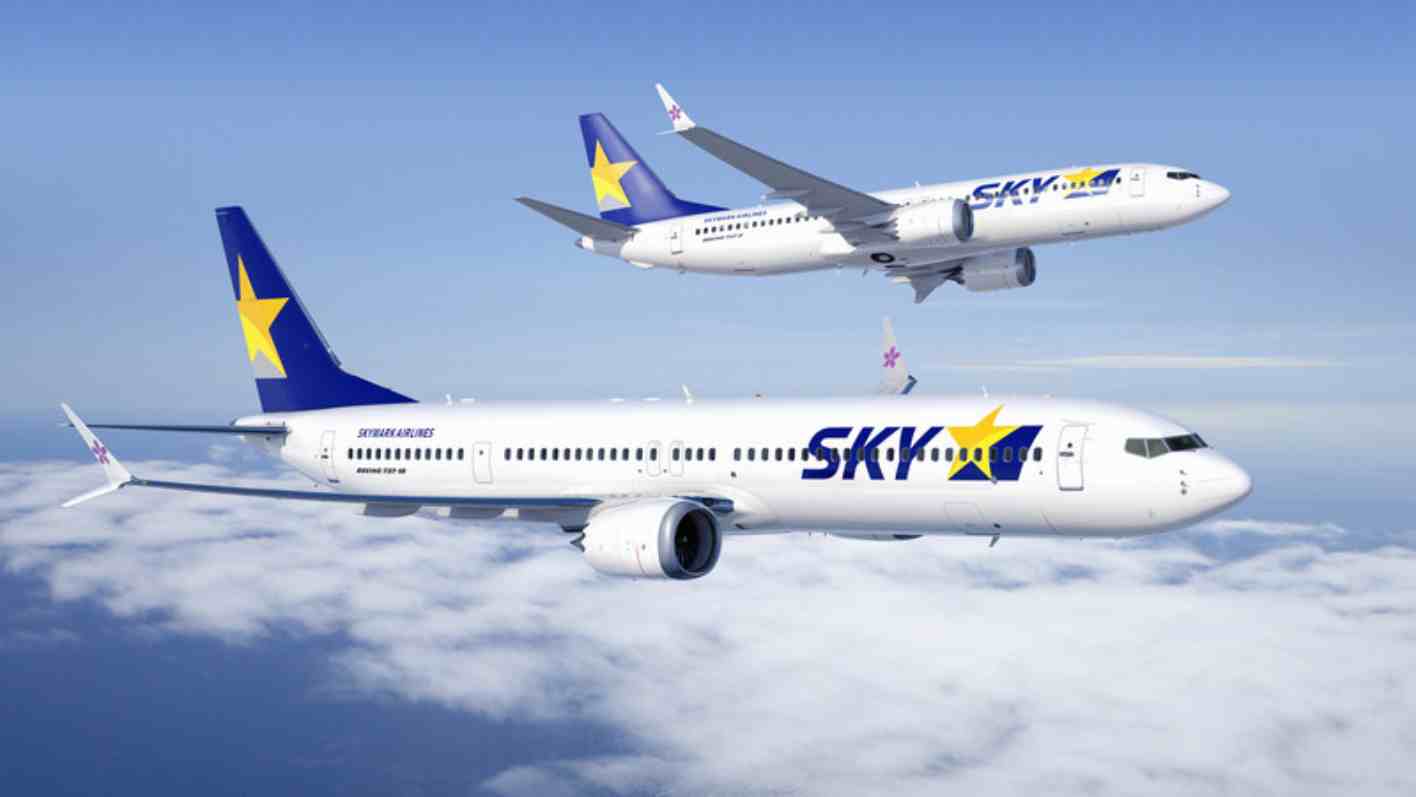
Skymark Airlines has become the latest operator of Boeing 737 MAX aircraft after taking delivery of its first 737-8 at the end of April. The Japanese carrier is set to receive 20 of the type, and this aircraft is the first MAX to operate in Japan.
The delivery marks a notable step for both the airline and the Japanese market, which has not previously seen the Boeing 737 MAX in regular service. Skymark’s order will eventually give the low-cost carrier a fleet of 20 MAX jets, expanding a narrowbody operation that has long relied on Boeing 737 family aircraft.
For Skymark, the new aircraft adds a more modern version of a familiar type. The 737-8 belongs to the MAX family, Boeing’s updated narrowbody line designed to improve efficiency and range compared with earlier 737 variants.
The move also places Skymark among a growing list of airlines worldwide that have added the MAX back into service and fleet plans after years of scrutiny around the type. The aircraft family has remained one of Boeing’s most important commercial programmes, with operators using it across short and medium-haul routes.
In Japan, the arrival is significant because it introduces the MAX model to a market with a large and competitive domestic airline sector. The country has several major carriers and a dense network of routes linking its islands and cities, making fleet choices important for costs and scheduling.
Skymark’s first delivery comes as airlines across Asia continue to refresh fleets with newer, more fuel-efficient jets. Carriers have been under pressure to balance capacity growth with operating costs, and narrowbody aircraft such as the 737 MAX remain central to that strategy.
The airline’s order for 20 aircraft suggests a longer-term commitment to the type. As more MAX jets join the fleet, they are expected to support domestic operations and give the carrier more flexibility in route planning and aircraft deployment.
The Boeing 737-8 is one of the most widely used versions in the MAX family. Airlines often choose it for medium-density routes because it offers an update to the long-established 737 platform while keeping training and maintenance aligned with existing narrowbody operations.
Skymark’s delivery also reflects the continuing recovery and renewal of aircraft fleets in the post-pandemic period. Many carriers are replacing older aircraft, aiming for lower fuel burn and improved reliability as demand strengthens across key markets.
For Japanese aviation, the first MAX delivery is a milestone that may shape future fleet decisions at other airlines too. While Skymark is the first operator in the country, the aircraft’s performance in service will be watched closely by the wider market.
The arrival of the first 737-8 therefore carries both symbolic and practical weight. It gives Skymark a new generation aircraft, introduces the MAX to Japan, and sets the stage for the rest of the airline’s 20-jet order to follow.