
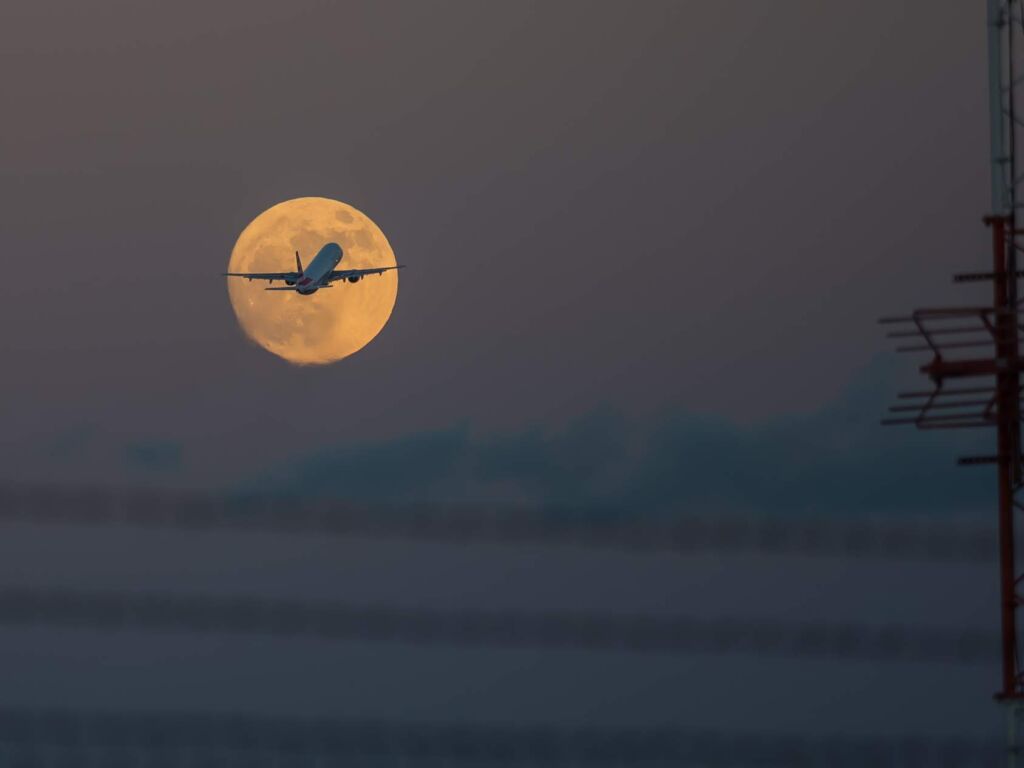
If you are counting the days until winter finally loosens its grip, the March full moon is your first celestial reassurance that spring is closing in. Known traditionally as the Worm Moon – a name rooted in the seasonal thaw – this year’s lunar display comes with an extraordinary twist.
March’s full moon will coincide with a total lunar eclipse, transforming the familiar silver disc into a dramatic red orb. For skywatchers across North America, parts of Asia, Australia, and the Pacific, this will not be just another full moon – it will be a rare Blood Moon.
The March full moon is traditionally called the Worm Moon, a name widely attributed to seasonal changes observed by Native American tribes and later popularized in almanacs. As temperatures slowly rise and the ground begins to thaw, earthworms reappear in the soil, signaling the return of robins and the gradual shift toward spring.
Unlike February’s harsher lunar symbolism, March’s moon marks transition – melting frost, longer daylight hours, and the first subtle hints of renewal.
In 2026, that symbolic shift aligns with a powerful astronomical event.
A total lunar eclipse occurs when Earth moves directly between the Sun and the Moon, casting a full shadow over the lunar surface. As sunlight passes through Earth’s atmosphere, shorter blue wavelengths scatter while longer red wavelengths bend toward the Moon. The result is a copper or crimson glow – hence the term Blood Moon.
Unlike a solar eclipse, no special equipment is needed. The event is safe to watch with the naked eye, and clear skies are the only real requirement.
Because the eclipse coincides exactly with the full phase, viewers in North America, parts of Asia, Australia, and across the Pacific region will see the Moon darken and then turn shades of deep red during totality.
When to watch
March’s full moon will occur on Tuesday, March 3. According to Time and Date, it will reach peak illumination at 6:37 a.m. ET. The timing means some locations will experience the eclipse before dawn, while others may see it after sunset, depending on their time zone and local moonrise or moonset.
For the best experience, find a location away from city lights with a clear view of the western or eastern horizon, depending on your region.
A seasonal turning point
Astronomically and symbolically, this year’s Worm Moon feels like a pivot point. Winter constellations are beginning to give way to spring skies. Daylight saving adjustments are approaching in many countries. And the equinox is only weeks away.
A red-hued full moon rising against a still-chilly landscape is a reminder that seasonal change rarely arrives quietly – sometimes it paints the sky to make its point.
If you have been waiting for a sign that spring is truly on its way, this Blood Moon may be the most dramatic one yet.