
Rising ocean temperatures and increasingly powerful El Niño events are causing sharks to alter their traditional migration routes, leading to sightings in areas where some species have rarely been observed before.
Marine biologists say the changes are part of a broader shift in ocean ecosystems as climate patterns continue to influence water temperatures and the distribution of marine life.
Warming Waters Are Changing Shark Behaviour
According to marine researchers, many shark species are moving in search of water temperatures that better suit their biological needs.
“When water temperatures rise, sharks move to areas where they can find more comfortable conditions,” explained Chris Lowe, a professor of marine biology.
Scientists are already anticipating the arrival of species rarely seen along parts of the California coast, including tiger sharks, bull sharks, whale sharks, hammerheads and manta rays.
Similar trends are being observed on the Atlantic coast of North America. Marine scientist John Chisholm noted that spinner sharks and blacktip sharks are increasingly appearing in more northern waters as ocean conditions continue to change.
The Role of El Niño
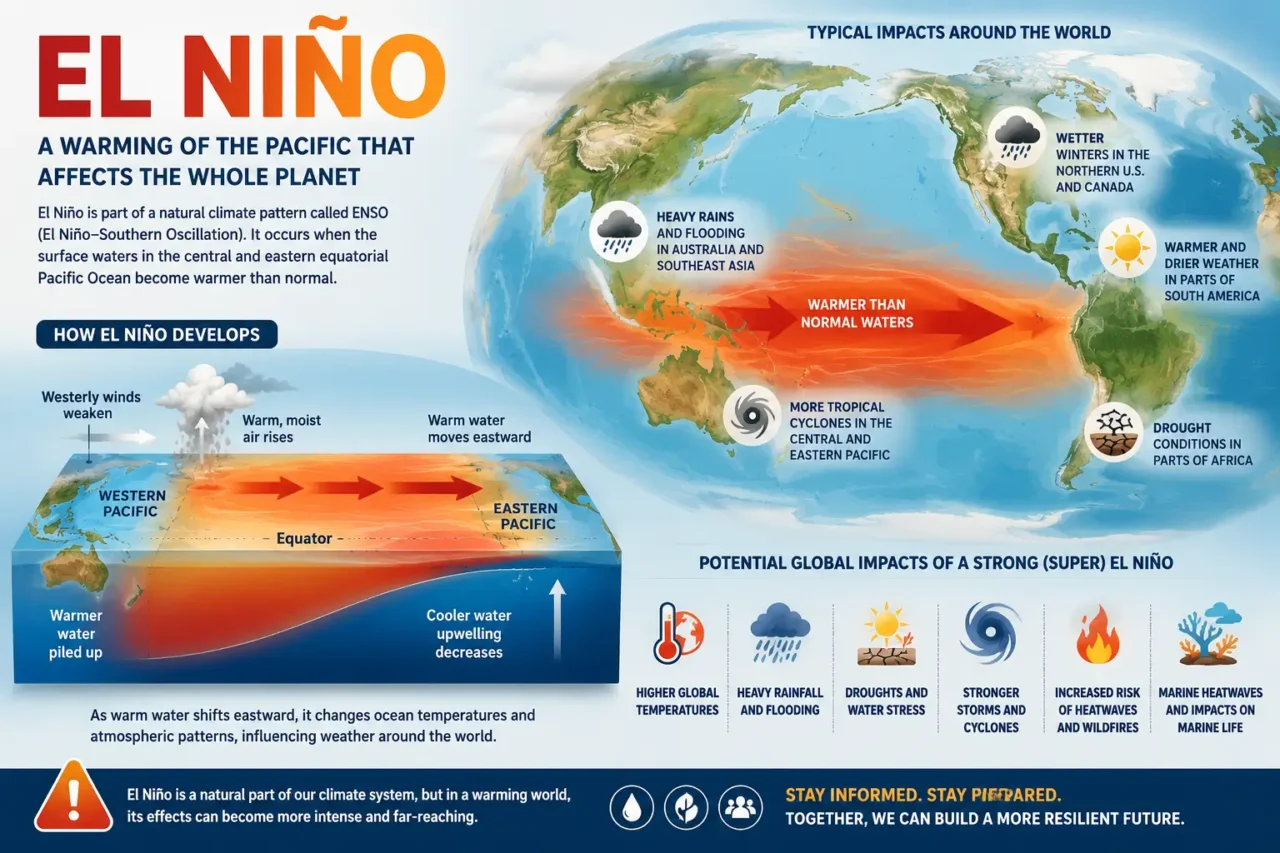
The phenomenon is closely linked to El Niño, a naturally occurring warming of surface waters in the Pacific Ocean that develops every few years.
El Niño can significantly alter global weather patterns, triggering floods in some regions while causing droughts, heatwaves and wildfires in others. It also affects ocean temperatures and food availability, prompting marine species to shift their ranges.
As prey species move, predators such as sharks often follow, creating noticeable changes in their seasonal distribution.
Shark Encounters Remain Rare
Despite growing attention around shark sightings, experts emphasize that attacks on humans remain extremely uncommon.
The International Shark Attack File recorded 65 unprovoked shark bites worldwide in 2025. By comparison, millions of people enter the ocean every day.
The United States recorded 25 incidents, while Australia reported 21. Florida remained the state with the highest number of encounters, accounting for 11 cases.
“If you look at the number of people entering the ocean every day and compare it with the number of incidents, it becomes clear that sharks are not interested in humans,” Lowe said.
Most Sharks Ignore Swimmers
Researchers say many beachgoers are already swimming near sharks without ever realizing it.
Drone studies conducted in California have revealed that white sharks frequently swim close to surfers and swimmers without showing any interest in them.
“We see sharks passing right by people without even changing direction,” Lowe explained. “They completely ignore them.”
Scientists also believe that modern technology contributes to the perception that shark encounters are becoming more common. Smartphones, drones and social media ensure that almost every sighting or incident is quickly shared with a global audience.
How to Stay Safe at the Beach
Marine experts recommend becoming “shark aware” rather than fearful.
Beachgoers are advised to avoid swimming near large schools of fish or areas where seals are present, as these locations naturally attract predators. Swimming with companions rather than alone is also recommended.
If a shark is spotted near a beach, experts encourage people to notify lifeguards or local authorities so appropriate precautions can be taken.
While warming oceans may bring sharks into new areas, scientists stress that understanding their behaviour remains the best way to share coastal environments with these important marine predators safely.
Source: Newsweek