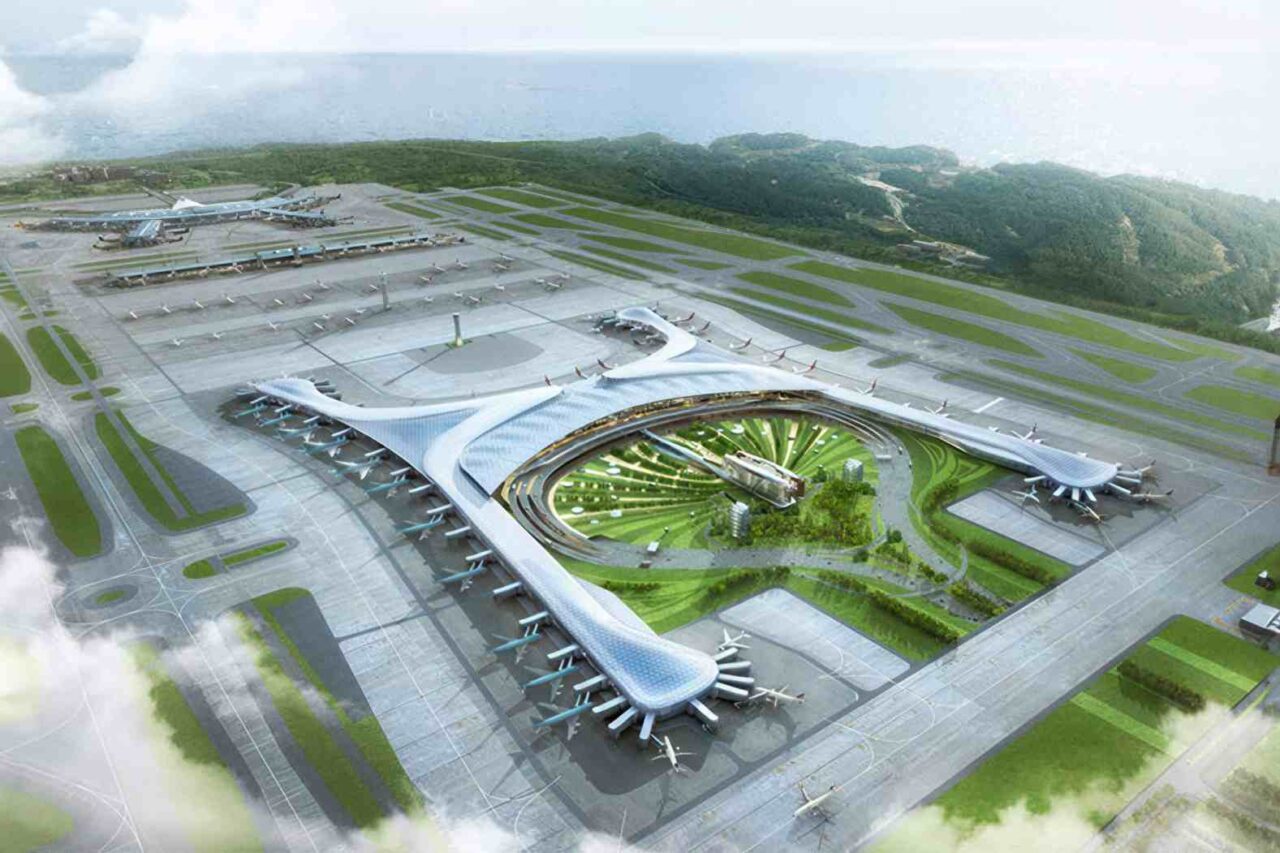

Construction has begun on a vast new African hub airport at Bishoftu, a flagship infrastructure project designed to transform Ethiopia’s role in global aviation and ease pressure on the country’s main gateway in Addis Ababa.
The new airport will be connected to the capital and the existing Bole International Airport by a 38 km railway, offering fast rail links between the two facilities. Trains on the line are expected to run at speeds of between 120 km/h and 200 km/h, significantly cutting travel times for passengers and airport staff.
Ethiopian Railway Corporation, the country’s sole institution responsible for railway development, said the project will be carried out entirely by domestic companies. Prime Minister Abiy Ahmed Ali officially launched construction during a ceremony on January 10, highlighting the project as a milestone for local engineering capacity.
“What distinguishes this railway project from the Addis Ababa–Djibouti railway we previously built is that it will be constructed entirely by domestic companies,” Abiy told local media.
The airport itself is a US$12.5 billion development designed by Zaha Hadid Architects and is being built around 40 km southeast of Addis Ababa, near the town of Bishoftu. At an altitude of 1,910 metres, it will sit roughly 400 metres lower than Bole International Airport, a factor expected to improve aircraft performance and operating efficiency.
The first phase of the new airport is scheduled to open in 2030 with an annual capacity of 60 million passengers. That figure is more than double the current throughput of Bole International Airport, which is approaching its maximum capacity of around 25 million passengers per year.
Once fully completed, the Bishoftu airport is designed to handle up to 110 million passengers annually, positioning it among the world’s largest aviation hubs. Around 80% of that traffic is expected to be transit passengers, underlining Ethiopia’s ambition to establish itself as a key connecting point between Africa, Europe, Asia and the Middle East.
The combined airport and rail projects reflect a broader push by Ethiopia to invest heavily in transport infrastructure, reduce reliance on foreign contractors and strengthen its role as a regional and continental gateway for trade and travel.